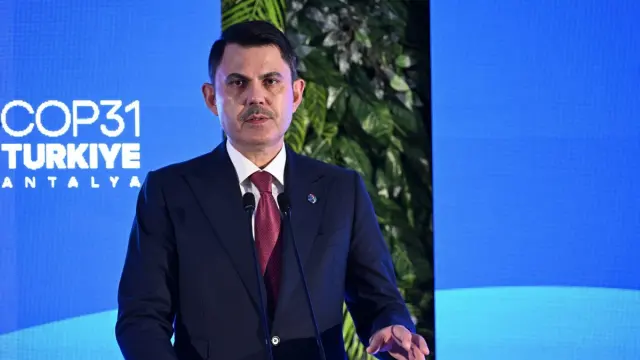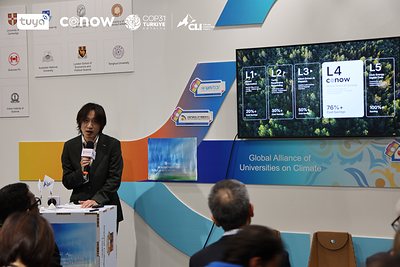
While world leaders gathered in Antalya for COP31, one side event zoomed in on something closer to home: what happens to your electricity when the weather turns extreme. Tuya Smart, a Chinese AI cloud platform listed in both New York and Hong Kong, was invited into the UN Blue Zone for a UNITAR-backed session titled 'From Early Warning to Action: Global Climate Diplomacy and Cooperation', sitting alongside heavyweights from the WMO, IRENA, ICIMOD, Trina Solar and LONGi.
The pitch from Leslie Wang, Tuya's head of enterprise accounts for Europe, was straightforward. Heatwaves and cold snaps strain grids from generation to consumption, causing supply-demand mismatches, surging loads and blackouts. The UN's Early Warnings for All initiative wants everyone on Earth covered by warning systems by 2027 — but a warning only helps if something actually happens next. Tuya's answer is Conow, an AI energy ecosystem whose AIX platform plugs into weather forecasts, dynamic electricity prices, device data and household demand to turn forecasts into automated energy decisions.
Two features carry the pitch. First, weather-based forecasting lets the system pre-build energy reserves and shift consumption to when solar output peaks, cutting bills and wasted power. Second, a 'Storm Guard' mode in the Conow app watches local severe-weather alerts and automatically charges home batteries ahead of a storm, then hands over backup power if the grid fails, before reverting to normal management afterwards.
The hardware lineup covers the usual home-energy bases: the plug-in Lyra battery series, the CBE 2000 Pro all-in-one micro storage unit, and the newly launched Atlas 6000 AC plug-in battery. On the software side, Conow AIX claims integration with more than 1,000 dynamic tariff providers and 3,000-plus smart device categories, with energy cost optimisation of up to 76.3% in favourable scenarios. Households with suitable setups can also earn flexibility revenue — Tuya cites an average of €3 to €5 per day per 10 kW of responsive capacity. The company says the system is already live across several European countries.
The event also launched the Climate Leadership Impact initiative, focused on ESG, AI applications, energy transition and talent development, with Tuya's residential and industrial energy work featured as a case study.
Why does this matter to anyone who isn't an energy analyst? Because travellers increasingly meet this tech on the ground — in European holiday rentals with solar-and-battery setups, or in destinations prone to storms and grid outages, where the difference between a dark, sweltering night and a comfortable one is a battery that knew a storm was coming. It's also a useful signal of where home energy is heading: weather forecasts and electricity tariffs quietly negotiating on your behalf. Antalya itself, meanwhile, remains one of the Mediterranean's most accessible conference and beach hubs, with a long shoulder season and direct flights from across Europe.