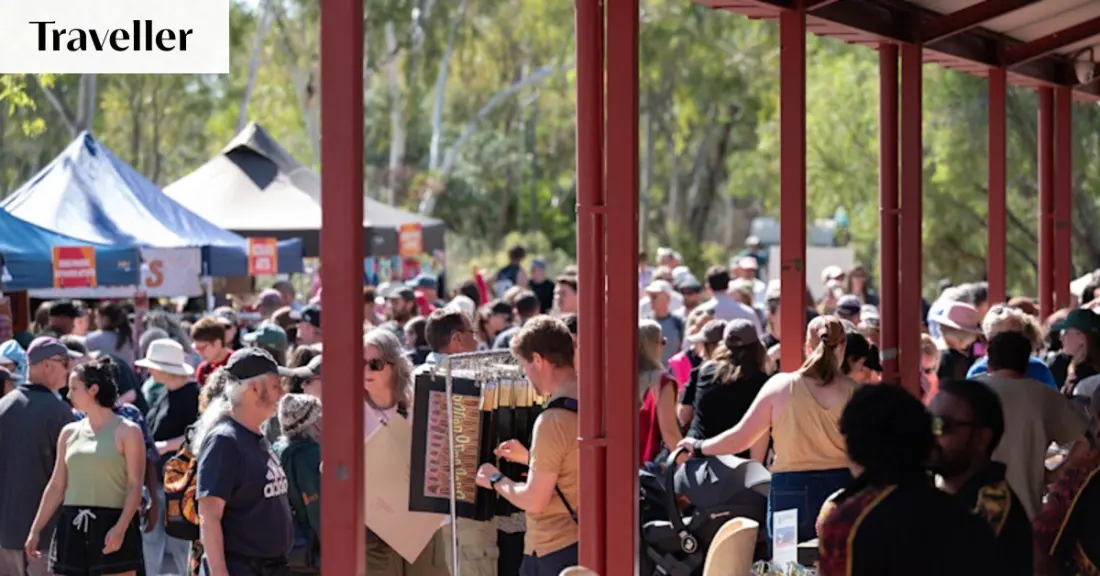
Every September, hundreds of Aboriginal artists make the long trip from remote communities across Central Australia to Alice Springs (Mparntwe) for Desert Mob, a festival that has been running for 35 years and shows no sign of slowing down. Organised by Desart, the peak body for Central Australian Aboriginal art centres, the event packs an exhibition, talks and workshops into one week, ending with an art market so popular the queue wraps around the block.
This year's edition featured 183 artists from 32 art centres, and the work on display is anything but decorative. Arrernte artist Elizabeth Ngwarraye Bonney's sweeping red-and-ochre painting of her grandmother's Country, Titjambera, carries a 40-year land claim behind it. She took out the Vincent Lingiari Art Award, named for the Gurindji leader whose 1966 Wave Hill walk-off helped kickstart Australia's land rights movement — fittingly, she was out on Country saving bilbies when the prize was announced and didn't yet know she'd won.
Land rights thread through the whole programme. Panels marking the movement's 50th anniversary featured professor Marcia Langton urging continued vigilance, and speakers covered mining and water rights, Indigenous fashion and art as protest. One of the most striking sessions tackled buffel grass, an invasive species choking out bush foods and medicines across Central Australia. Artists from Iltja Ntjarra (Many Hands) Art Centre have turned the problem into a medium, making paper from the grass and painting onto it the plants it has displaced. Visitors can even try it themselves — the writer joined a watercolour workshop at Olive Pink Botanic Garden, painting native species while artist Vanessa Inkamala talked about the bush tomato and mustard grass that used to grow everywhere in her childhood.
The festival's crown jewel is the free art market, where tents overflow with paintings, ceramics, weaving and hand-painted textiles. The writer blew her entire budget on art within minutes, guilt lasting roughly half a minute — because buying through Aboriginal-owned art centres means money flows straight back to artists and their communities. Head curator Hetti Perkins puts the stakes plainly: art centres support artists with everything from bush trips to ceremonies, keeping culture moving between generations.
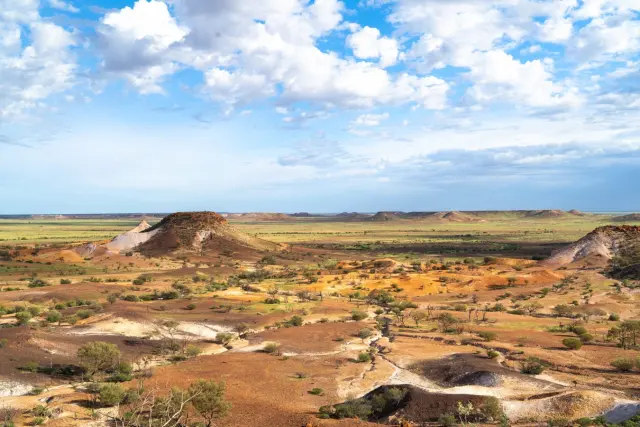
Beyond the festival, Alice Springs rewards time spent on Country. A cultural walk through Angkerle Atwatye (Standley Chasm) with Alywarre/Arrernte guide David McCormack ends at a waterhole, where he demonstrates a welcome ritual — rubbing a rock on the skin and tossing it into the water so the ancestors know you mean no harm.
For travellers, this is one of Australia's longest-running First Nations art events and a rare chance to buy art directly from its makers, hear the stories behind it and see the Red Centre through the people who have painted and fought for it for generations. Opening night, the exhibition and the market are all free; talks and workshops are ticketed. If your trip can line up with September, it's worth building an entire Red Centre holiday around it.