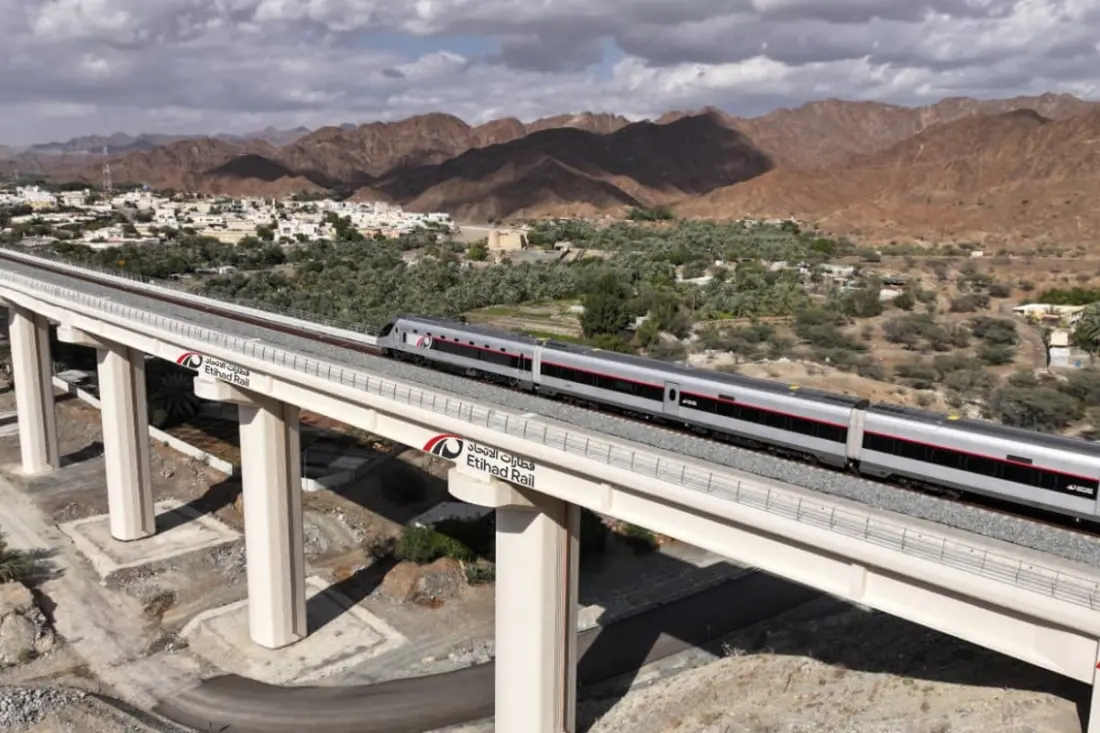
For decades the only realistic ways between Dubai and Abu Dhabi were the car or the coach. That changed on 30 September, when Etihad Rail's first passenger train pulled out of Al Yayalis station in Dubai at 6.14am and reached the capital just 64 minutes later — the fastest the two cities have ever been linked.
The service is the second passenger route on the UAE's national rail network, which has moved freight since 2016 but only began carrying people in June, when the Abu Dhabi to Fujairah line opened. Five trains now run in each direction on the Dubai–Abu Dhabi route: two morning departures and three in the afternoon. The last trains leave Abu Dhabi at 5.43pm and Dubai at 6.14pm, so late-evening travellers are still stuck with the road.
Prices are deliberately low by Gulf standards. Standard class starts at 39 dirhams, roughly £8 — cheaper than most taxis or car hires for the same trip. Premium fares begin at 109 dirhams (about £22) and buy you extra legroom, reclining seats, wifi and snacks thrown in. Each of the 13 new trains carries up to 400 passengers, and Etihad Rail is targeting 36.5 million riders a year by 2030 as the network grows to link 11 cities, with ambitions eventually to extend beyond the UAE's borders.
Demand has caught the operator by surprise. Services are selling out, and travellers are booking up to two weeks in advance — evidence, according to chief operating officer Azza Al Suwaidi, that people are now planning trips around the train rather than trying it as a novelty. Families, commuters and tourists are all in the mix, and driving the route (usually around 90 minutes, traffic permitting) suddenly looks like the slower and more stressful option.
Why it matters for travellers: this is genuinely good news for anyone doing the classic double-hub UAE trip. Many visitors fly into Dubai and want to see Abu Dhabi's Louvre, Grand Mosque or Yas Island without hiring a car, and until now the options were taxis, buses or organised tours. An hour-long rail link for the price of a sandwich removes that friction entirely — just note you'll still need a plan for getting from the stations to the main sights, and book ahead until capacity catches up with demand. (And no, despite the similar name, Etihad Rail has no connection to Etihad Airways.)