Somewhere past the 200-mile mark on the John Muir Trail, a hiker woke up in a $25 hostel at Vermilion Valley Resort, ate a breakfast of two giant slices of French toast, eggs, bacon and home fries, then climbed 3,700 feet over Goodale Pass to camp at a lake that until recently carried an offensive name.
VVR is a popular resupply detour off the JMT near Edison Lake in California's Sierra Nevada, and it comes cheap compared with the alternative. The writer's bill — hostel bed, huge dinner and that breakfast — came to roughly $110 before tip. At Muir Trail Ranch, a similar stop costs about $375. The difference is simple captive-audience economics: MTR sits at the last resupply before a long amenity-free stretch for southbound hikers and the first taste of civilisation for northbound ones.
Getting back to the main trail required the Goodale Pass route — a variant that trades a little extra climbing for slightly fewer total miles than continuing over Silver Pass. It is not a busy trail. The writer met just five people all day, each of whom claimed he was the first human they'd seen. The route climbs in three stages: three miles through a burned forest, three more in green forest along a stream, then a steep, rocky, exposed final 1,500 feet above the tree line. The 2020-ish fire damage is real — fallen trees, shade gone, sun relentless — though a handsome new bridge and strikingly twisted, half-burned snags give the landscape an eerie beauty.
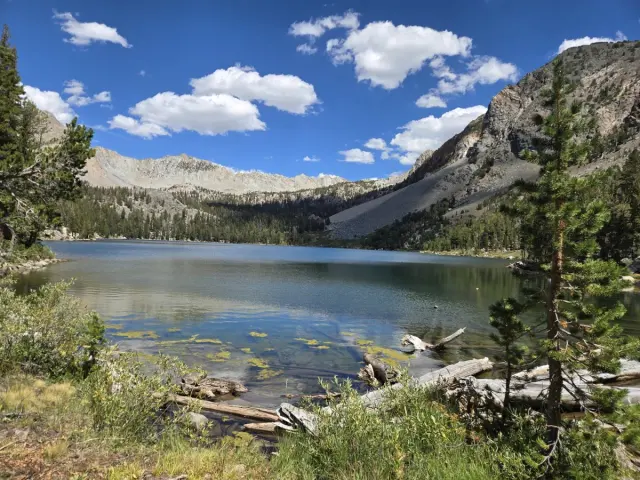
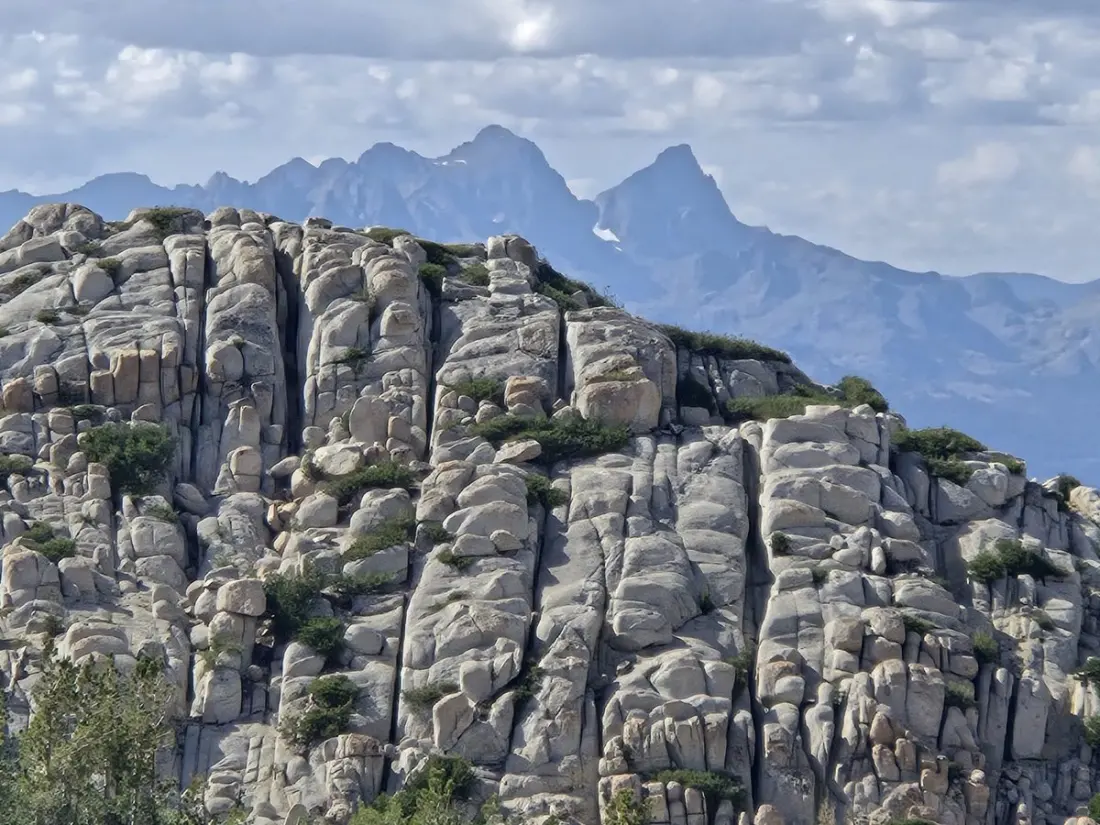
The payoff is Nüümü Hu Hupi, roughly 15 miles from VVR, a lake with a dramatic backdrop and a name worth knowing. Formerly "Squaw Lake," it was renamed in the Paiute language: Nüümü is the people's own word for themselves, and Hu Hupi means women — so the lake now honours Paiute women. Nearby Papoose, Lone Indian and Big Chief lakes still carry their old names.
Plenty of practical trail wisdom comes out of this stretch. Campsites at Nüümü Hu Hupi fill up, but asking a neighbour worked — a fellow camper led the writer to a sandy-floored spot a few hundred yards off trail, and later pointed a tired hiking partner toward a hidden second site. On the steep climb, the writer used a counting technique: 60 steps (left-right counts as one), then a variable number of deep breaths, dropping to 30 steps at high altitude — a trick for both legs and morale. Two gear lessons also stand out: a rechargeable Petzl headlamp drained itself in its pack overnight, and lock-out modes exist for a reason; and VVR's generator shuts down at night, so bathroom trips in the dark are a headlamp-only affair.
For anyone planning a JMT thru-hike or section, this day captures the real texture of the trail: cheap-but-basic resupply options, fire-altered terrain that's now simply part of the route, quiet variant passes, and the small kindnesses between hikers. It also marks a milestone — with under 100 miles to go, the finish at Yosemite's Mount Whitney-end opposite started feeling concrete. Full credit to The Trek for the original trail diary.