A burst of heavy rain in Ecuador's Amazon foothills gave the country's struggling power grid a short-lived boost this week — but energy experts warn the relief may not last long.
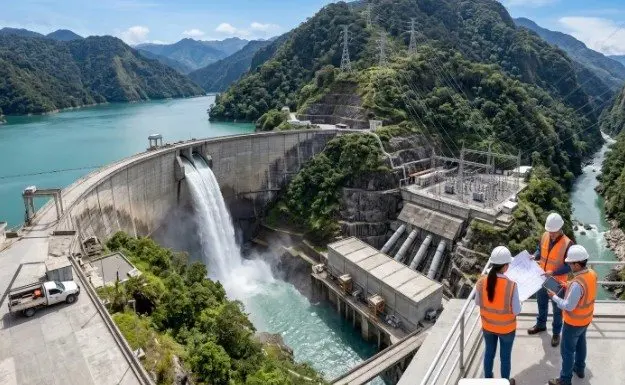
The rain-swollen Río Coca briefly more than quadrupled its flow on Wednesday, surging from 150 to 715 cubic metres per second. That allowed the Coca Codo Sinclair plant, Ecuador's largest hydroelectric facility, to ramp up generation from 700 to 1,257 megawatts. Utility officials called it welcome breathing room for a hydroelectric system under strain.
The picture was far bleaker in the country's south. At the Paute-Mazar complex in Azuay and Cañar provinces, a sluggish Río Paute forced all three plants — Molino, Mazar and Sopladora — to shut down completely. At one point the Mazar reservoir fell into what engineers call the "red zone", the trigger point at which the National Electric Corporation (CNEL) tells local utilities to prepare rolling blackout schedules. Nearby Minas San Francisco and Agoyàn were limping along at just 20 to 40 percent of capacity. By Thursday morning the Río Coca's flow had already fallen back to 654 cubic metres per second, showing how fragile the reprieve was.
There's also a growing controversy over how the government is managing the shortage. Currently, large businesses bear the brunt of power cuts — some facing up to 75 hours of scheduled disconnections a week — while households are largely spared. Fabián Jami, head of the independent Energy Efficiency Commission, argues that approach is both unfair and misleading. He says distributors are quietly adding unscheduled cuts for companies to keep residential blackouts off the table, and that labelling outages as "maintenance" is dishonest. His stark prediction: general blackouts could hit the whole country within five weeks if policy doesn't change — and the El Niño weather pattern is expected to keep pressure on the system through February and possibly beyond.
Why should travellers care? Ecuador has been leaning heavily on hydropower, and drought conditions translate directly into itinerary friction: lights-out dinners, dead elevators, unreliable card payments and patchy mobile signal, especially outside major hotel chains. If you're heading to Quito, Cuenca or Guayaquil in the coming months, pack a power bank, keep cash handy, carry a small torch, and check whether your accommodation has a generator. Travellers to the Amazon and Andean south may notice the dry rivers themselves — the same low water that's idling turbines.
The short version: one good rainstorm isn't a fix. Until sustained rains arrive in the southern catchments, Ecuador's electricity supply remains on a knife-edge, and visitors should plan with that in mind.