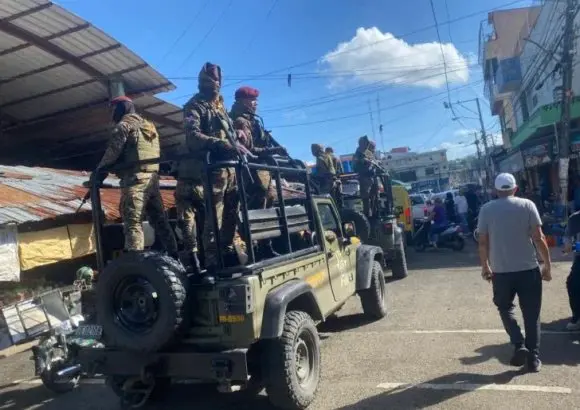
Ecuador has quietly brought in a controversial security contractor, and the clearest guide to how that might play out is the country where he's already been deployed: Haiti. CNN has been reporting from Port-au-Prince on Erik Prince — the American entrepreneur best known for founding Blackwater — whose task force supports Haitian police with helicopters, mercenaries and exploding drones. It has carried out more than 2,000 drone strikes, and a UN assessment credits the operations with halting gang expansion in parts of the capital. But at least 85 civilians have been killed in those strikes according to UN reporting, and Human Rights Watch counted over 1,200 deaths from explosive-drone strikes between March 2025 and January 2026, calling them extrajudicial killings.
Ecuador's connection is direct. President Daniel Noboa announced an alliance with Prince in March 2025, and by June the interior minister confirmed a contract to train police and military personnel — with no terms or cost disclosed. Prince even joined an April 2025 raid of more than 500 officers that ended in 68 arrests.
So what does the Haiti comparison actually tell travellers? Ecuador still functions in ways Haiti currently does not: elected government, operating police and courts, open roads, working utilities in most cities, and — crucially for visitors — incoming international flights. Cuenca and Guayaquil are not interchangeable with gang-run districts of Port-au-Prince, where commercial flights have stopped landing because aircraft risk being fired at; the realistic route in is via Santo Domingo in the Dominican Republic, then overland.
The piece's real warnings are worth noting for anyone planning a trip to Ecuador. Gangs can take effective control of neighbourhoods even while national government stands — watch for extortion checkpoints, businesses closing under threat and police abandoning posts. Ecuador's courts have shown they can convict corrupt insiders: the Metástasis case ended in November 2024 with 20 convictions, including judges, prosecutors and senior police tied to trafficker Leandro Norero, plus $4 million in damages. That's a sign institutions hold, but also that corruption runs deep.
The Haiti evidence supports a modest conclusion: extra firepower wins individual battles but hasn't restored lasting security. Gangs pushed out of one area simply move to the next, the main north–south highway remains blocked by toll booths, and displaced families can't return home. For a visitor, that's a reminder to track neighbourhood-level conditions rather than national headlines — safety in Ecuador varies street by street, and a successful-looking government operation in one district doesn't mean the criminals didn't relocate to somewhere on your itinerary.
The article closes with lessons Ecuador could learn: plan for policing after special operations end, follow the money behind the gangs (drugs, extortion, illegal gold mining), protect civilians from both sides, and stop groups recruiting children, who by UNICEF's estimate make up 30–50% of Haitian gang membership.
For holiday planners, the takeaway is simple: Ecuador remains open for tourism with functioning infrastructure Haiti can't offer, but it's a country to research carefully by region before booking — and Haiti itself, for now, is effectively reachable only overland through the Dominican Republic.