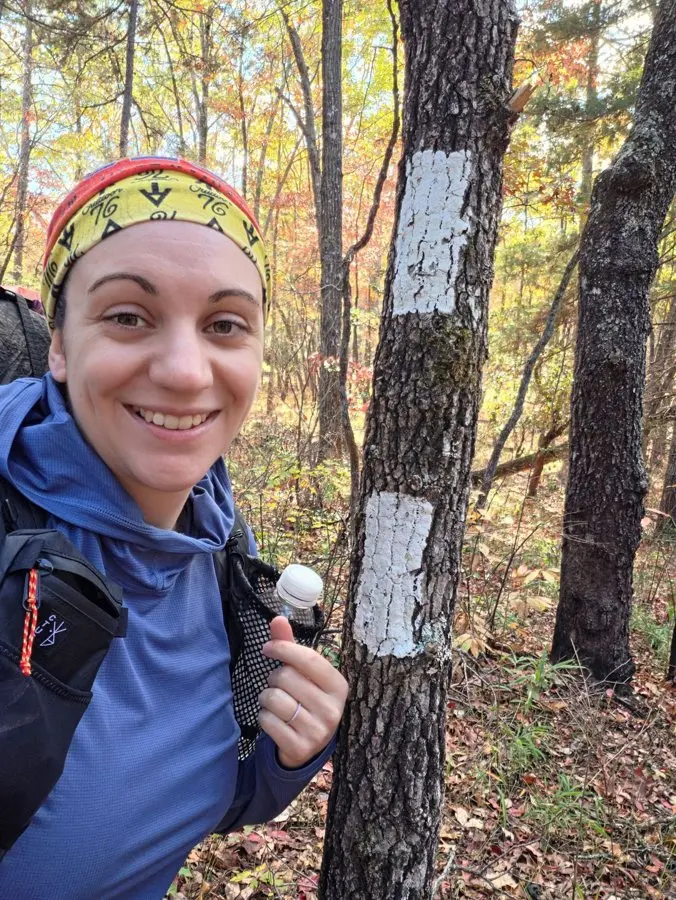
One hiker used the 77-mile Foothills Trail, which runs between North and South Carolina, as a shakedown trip in November before a bigger January hike — and the trail duly delivered. Her watch logged over 16,000 feet of climbing and nearly 16,600 feet of descent, a reminder that this short-ish trail is anything but a gentle stroll. Rugged, steep and roller-coastery, it's a serious test for anyone wanting to trial gear and legs before a longer thru-hike.
The biggest gear lesson came at night. With camp temperatures dipping to 28°F, a 30°F quilt with an open footbox and no pad straps simply didn't cut it. By night two she was texting her husband about the cold and scouting bail-out options for the next day — unaware he'd already ordered a warmer 20°F quilt with a closed footbox and straps that clip under the sleeping pad. The replacement is now a firm favourite, along with her sub-two-pound semi-freestanding tent, which pitches almost anywhere with a handful of stakes.
Beyond kit, the trail hammered home two habits worth stealing. Stretching at the end of each day kept muscles from seizing up after long climbs and drops. And pacing turned out to be less about mileage targets and more about timing: arriving at camp with enough daylight to pitch the tent, cook, and layer up before the temperature plummets. That's a mindset shift that applies to any shoulder-season backpacking trip.
For travellers, the Foothills Trail is a genuinely underrated option — a compact long-distance route with real elevation, waterfalls and gorge country in the Carolinas' Upstate, doable in roughly five to seven days. It works brilliantly as a first long trail or a training ground for bigger objectives like the Appalachian Trail. Just treat late-autumn nights seriously: a quilt rated comfortably below the forecast low, warm layers reachable before dark, and a rough exit plan will make or break the trip.
Story via The Trek.