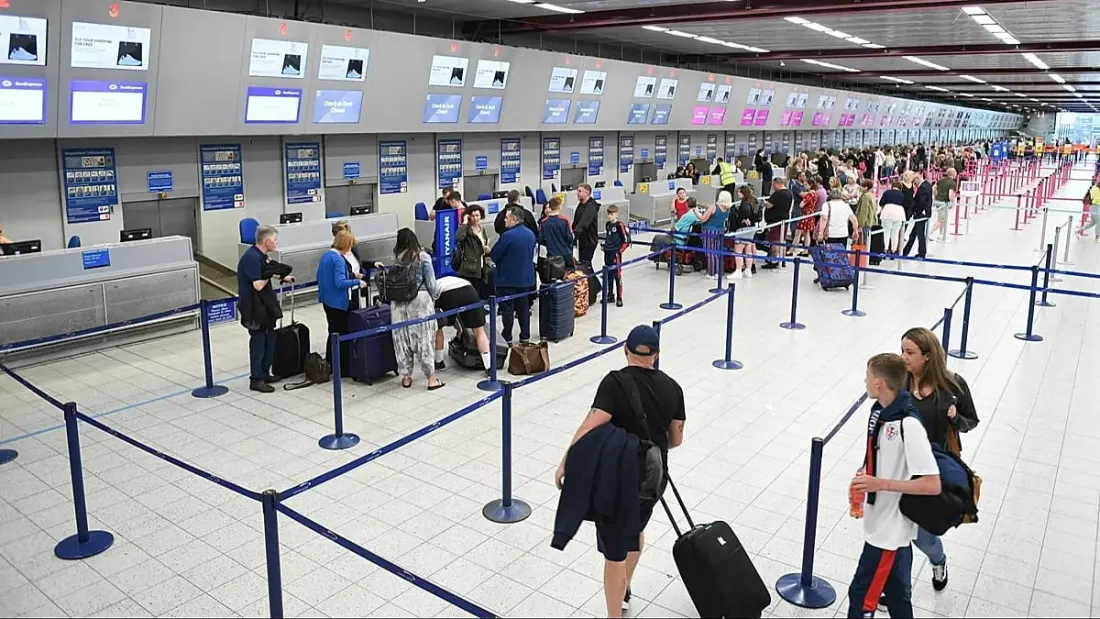
Would you let an airport camera scan your face to board a plane? If you're European, the answer is more likely to be no than almost anywhere else in the world. IATA's 2026 Global Passenger Survey, drawing on more than 10,000 responses from 200 countries, finds European travellers the most cautious region when it comes to digital travel tech.
Only 70% of Europeans are willing to share biometric data for airport processes, below the global average of 78% and well behind travellers in the Middle East (84%) and Africa (82%). Enthusiasm for digital passports is similarly lukewarm: 79% of Europeans would use one for online check-in, against 84% globally. The survey points to data anxiety as the likely culprit. Nearly six in ten passengers worldwide worry about data breaches, 49% are uneasy about their information being shared with other organisations, and 41% say it's unclear how their personal details are handled.
Yet the same passengers keep using the technology anyway. Some 58% of travellers have gone through a biometric process at an airport in the past year — a big jump from 34% in 2022. IATA's Nick Careen says passengers like the experience and want more of it, but argues governments need to agree a common framework for digital passports, known as Digital Travel Credentials, before biometrics can become the norm for international travel.
The appetite is clearly there when the payoff is obvious. A striking 82% of respondents would hand over a digital passport to an airline at booking in exchange for personalised services like visa information, and the same share would happily use a single smartphone app combining a digital wallet, passport and loyalty cards to book, pay and move through the airport. Separately, 86% would submit immigration information digitally before departure.
AI is quietly reshaping trip planning too. Nearly half of travellers (49%) have used AI tools to plan a trip — 21% to search flights to a destination, 19% to hunt for the cheapest fares and 17% purely for inspiration. IATA's message to airlines is blunt: make sure your offers appear in AI results, and build smooth links from an AI chat to an actual booking.
Perhaps the most striking finding isn't about technology at all. Immigration requirements now put off 43% of travellers from visiting a destination, up sharply from 33% in the 2025 survey. For African travellers the figure is 52%, the highest of any region, while 38% of Europeans are deterred. The main complaint is complexity (53%), with cost and privacy each cited by 17%. And the preferred fix is digital: 60% want visas processed online rather than queued for at a consulate. With more than 100 countries issuing e-visas but little consistency in how they're verified, IATA is pressing governments to adopt shared standards.
For holidaymakers, the takeaway is simple: biometric gates and digital documents are becoming routine, but how your data is handled still varies — and that wariness is especially justified. Meanwhile, checking visa and entry rules early remains the single best way to avoid the biggest source of travel friction in 2026.
Via Euronews Travel