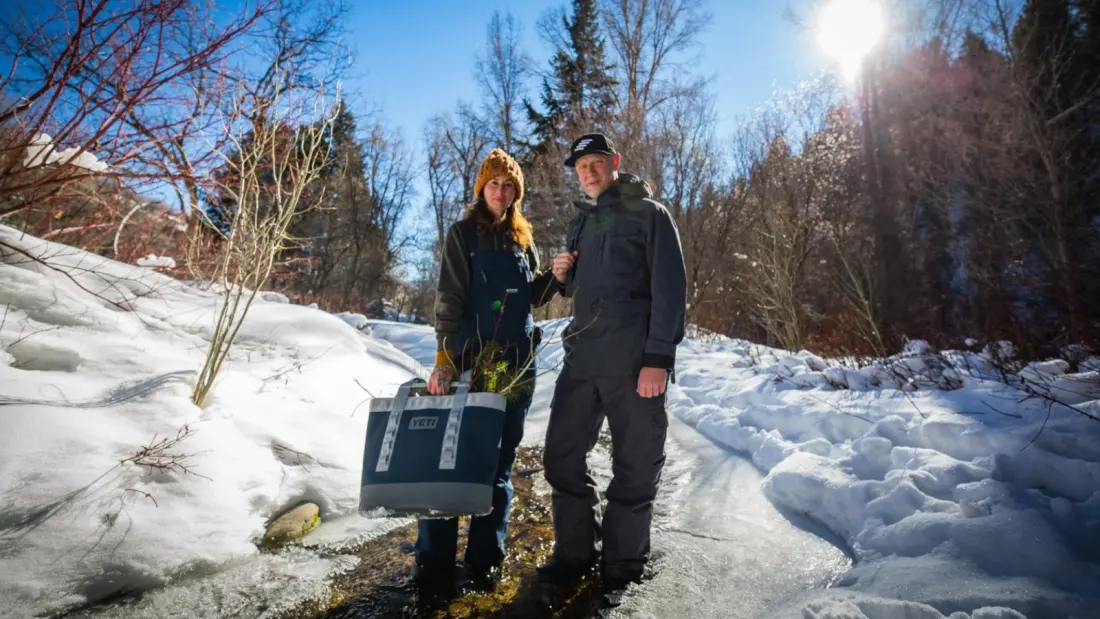
Kyle Connaughton runs SingleThread in Healdsburg, California, a Japanese-inspired restaurant that has held three Michelin Stars every year since 2019, with produce from his wife Katina's 24-acre farm. He's also a keen hiker, backcountry snowboarder and heli-trip regular with stints in the Sierra Nevada, the Wasatch, Silverton in Colorado, British Columbia and Hokkaido. And when he goes into the wild, he refuses to eat sad rehydrated food.
His starting point is a mindset borrowed from Japan: omotenashi, anticipatory hospitality learned during his culinary training there. Work out what your companions will want before they ask for it. After a seven-mile climb, a spread of salami and hard cheese lands better than another handful of trail mix. He's known among his snowboarding circle for stashing a cooler with a dozen warm burritos under a snowcat bench and handing them out at 2pm, just as everyone gets cold and wet.
Next comes honest planning around constraints. How far are you carrying everything? What heat source exists — a grill, a two-burner Coleman, a small Iwatani stove (his pick), or just a fire? That determines your cookware: ultralight titanium for a hiker's pack, or carbon steel and even a fragile Japanese donabe clay pot when you've a vehicle and ambitions. He recently cooked a whole duck over a campfire, donabe and all.
The single biggest trick is doing almost everything at home. Chop, mince, braise, boil — prep the entire main course in your own kitchen, then vacuum-seal and freeze it. Connaughton's food-safety move is clever: freeze the sealed flat meal, then double-bag it with a second vacuum-sealed bag filled with ice cubes and freeze again. Slipped into the back panel of a pack, the inner bag stays food-safe while the outer ice melts into drinking water. Afterwards, the outer bag doubles as trash storage. Everything, he says, should have layers of purpose.
On the trail, keep it to one pan. Sear the meat, set it aside, cook the veg in the same vessel, then make the sauce last — the liquid deglazes the pan, builds flavour and leaves you far less scrubbing. A few lightweight garnishes like toasted sesame seeds or yuzu koshō cost almost nothing to carry but read as luxury miles from anywhere. And think hospitality, not efficiency: fewer dishes, more time with the people you actually went out there with.
None of this needs a Michelin kitchen. It just needs a few hours of prep, a bit of thought about your gear and heat source, and a willingness to treat your trail companions like guests rather than fellow calorie-consumers. If you've ever ended a long day outdoors with a lukewarm pouch of noodles, this is the fix. Source: Backpacker.