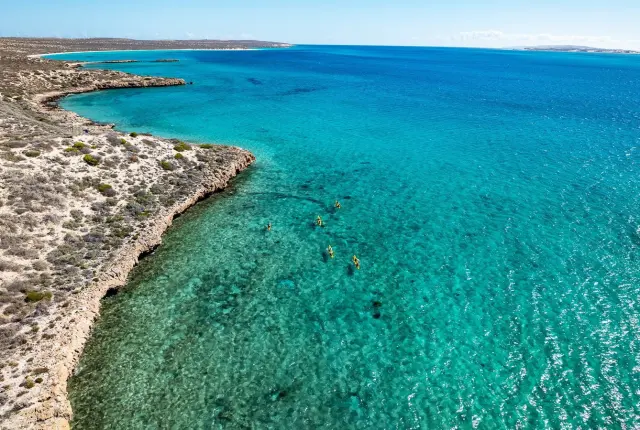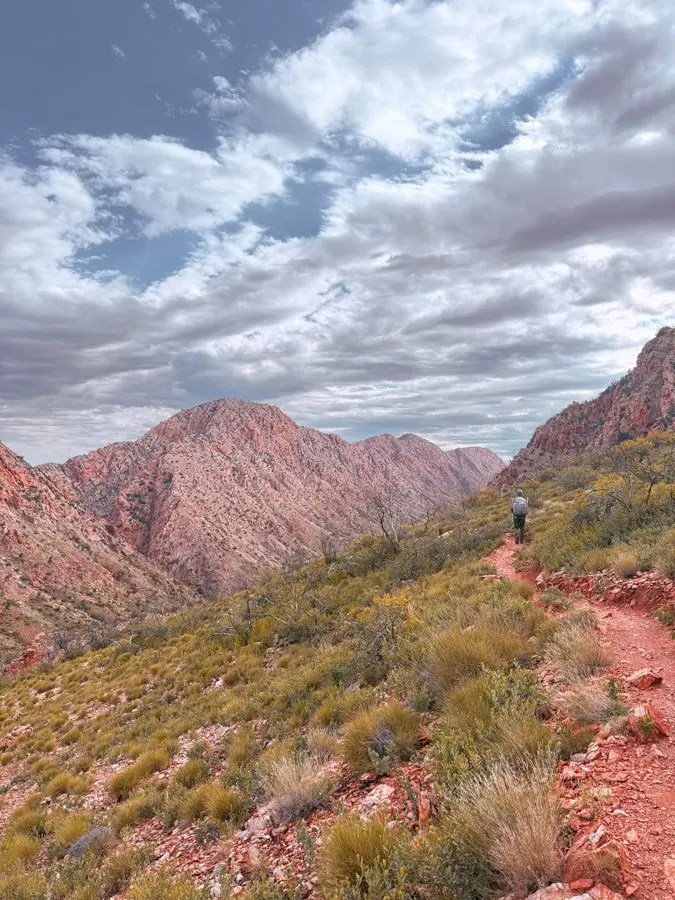
Two hikers wrapped up a year-long quest to hit all seven continents with a nine-day trek along the Larapinta Trail — a 150-mile route through the West MacDonnell Ranges that starts and ends near Alice Springs in Australia's Northern Territory. After driving south from Darwin along the Stuart Highway, they signed the trail register and, for the first time in months, followed a well-marked path instead of navigating off-trail.
The Larapinta is remote: no towns or shops along the way, so resupply takes planning. Food-drop lockers sit at points along the route, typically arranged by shuttle companies for around $50 AUD per drop. This pair chose to carry all nine days of food instead. The unavoidable costs are a $125 AUD multi-day walking trail fee plus $10 AUD per person per night in camping fees, and a shuttle back to Alice Springs can run up to $420 AUD — hitchhiking is the budget workaround.
What those fees buy is surprisingly comfortable camping. Designated sites are reserved for Larapinta hikers and come with pit toilets, water tanks, sun shelters, benches, solar charging stations and flat tent pads — a big deal in a landscape where tanks are the main water source. The hikers mixed these with informal camps, pitching wherever looked good before dark.
The rhythm of the trail is dictated by heat. Days started by headlamp before 6 a.m., walking as the desert woke up, then long shaded breaks at midday when temperatures became brutal — some hikers carry sun umbrellas. The payoff is a spectacular Outback mix: deep gorges, canyon walks, long ridgelines and wildflower fields, with red and orange rock that glows at sunset and a Milky Way bright enough to make even a 2 a.m. bathroom trip memorable. A standout section is the six-mile ridge from Standley Chasm to Brinkley Bluff, where wind strong enough to knock hikers over comes with sweeping views. The trail's high point and western terminus is Mount Sonder, 4,528 feet, usually busy with sunrise hikers — summiting in the evening meant having it entirely to themselves.
For anyone considering this hike, the main lesson from this account is flexibility. The writers planned nine days but felt strong enough to finish in seven, partly because cooler, cloudier weather after the first few days made bigger mile days possible. Recovery matters too: one hiker started the trail still shaking off flu, so a few rest nights in Alice Springs before setting out were essential. The trail is genuinely doable on a mid-range budget if you carry your own food and sort your own transport, though paying for food drops and shuttles takes the logistics weight off.
It's also a good pick for experienced hikers who want a long-distance route with real wilderness feel but without constant navigation stress — the marking is excellent, and the infrastructure makes it more approachable than a fully self-found route. Just time it for the cooler months, respect the heat, and remember the crocodile rules up in Darwin before you head south.