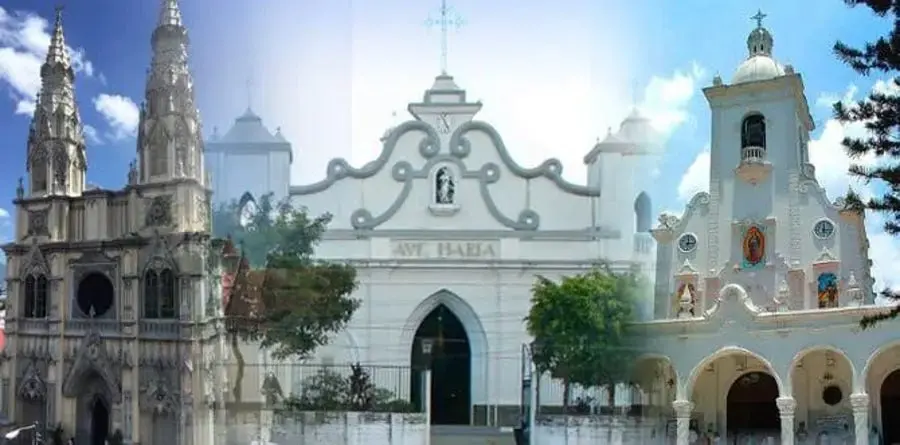
A 17th-century church in a sleepy eastern town, a curved concrete shell glowing with rainbow light, and a cathedral that holds the tomb of an assassinated archbishop — El Salvador's religious buildings pack in more variety than most visitors expect.
The story starts with Spanish colonialism, when missionaries built churches at the centre of every new town, usually facing a central plaza. Earthquakes have repeatedly knocked many of them down over the centuries, which is why the country now has such a mix of styles: rebuilt colonial structures, neo-Gothic showpieces, and bold modernist designs. A recent roundup from El Salvador Info highlights ten worth planning a trip around.
In the capital, two buildings make an odd but fascinating pair. The Metropolitan Cathedral of San Salvador, overlooking Plaza Gerardo Barrios, is the country's most important Catholic church and the resting place of Saint Óscar Romero, the archbishop assassinated in 1980. A short walk away, El Rosario Church looks nothing like a church from outside — a curved concrete structure completed in the 1970s by architect Ruben Martinez. Inside, its sweeping stained-glass windows flood the space with colour that shifts as the day progresses. Architecture fans rate it among the most interesting churches in Central America.
Beyond the capital, Santa Ana's cathedral brings neo-Gothic drama to the country's second city, with pointed arches and twin towers above the central plaza, conveniently close to the National Theatre. East in San Miguel, the Basilica of Our Lady of Peace serves as the focal point for the city's Marian festivals.
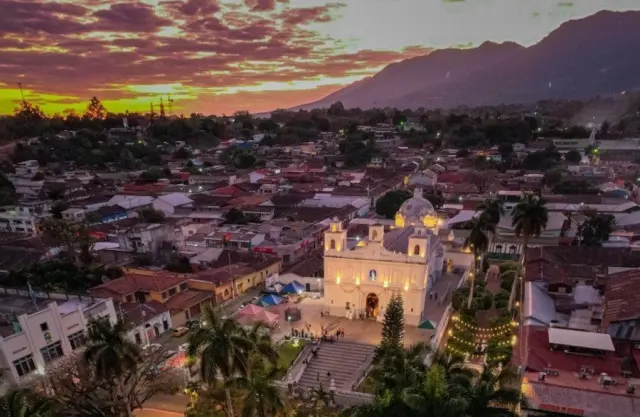
For colonial atmosphere, head to the smaller towns. Suchitoto's Santa Lucía church, built in the 19th century, anchors a cobblestoned plaza in one of the country's best-preserved historic towns. In Panchimalco, just south of San Salvador, the Santa Cruz de Roma church has rare adobe and masonry walls, and the town's Festival of Flowers and Palms shows how Catholic and Indigenous traditions blend. Metapán's San Pedro Apóstol church, built between 1736 and 1743, is a Baroque National Monument. Conchagua's Santiago Apóstol church, completed in 1693, is among the oldest still standing in the country. Chalchuapa's colonial church pairs neatly with the nearby Tazumal Maya archaeological site — two eras of Salvadoran history in one afternoon. San Vicente's Nuestra Señora del Pilar rounds out the list with ornate Baroque detail.
Why it matters: churches here are civic centres as much as places of worship, and visiting them is one of the easiest ways to understand how Salvadoran towns are built and how their communities celebrate. The routes between them also pull you through parts of the country most itineraries skip — Panchimalco, Suchitoto, the east — rather than just the beaches and volcanoes. If you only have time for two, make it the Romero tomb at the capital's cathedral and El Rosario's stained glass, then save Suchitoto for a slow weekend.