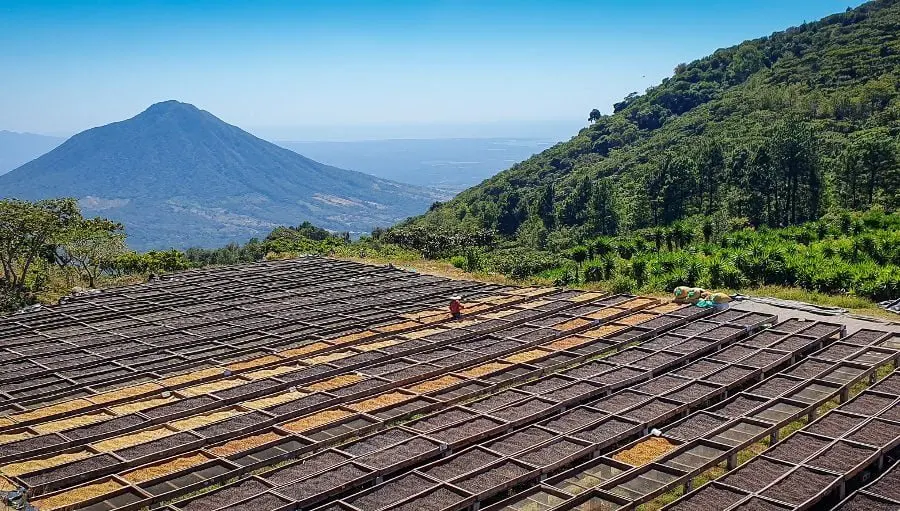
El Salvador's Ruta del Café isn't a single highway with fixed stops. It's a loose network of coffee-growing regions — mostly in the western and central highlands — where volcanic soil and high elevation produce some of Central America's most interesting Arabica. For travellers, it means a trip built around working plantations, cool mountain towns and scenery that has little to do with the country's beaches.
The heart of coffee tourism is the west, around Apaneca and Ahuachapán, an area that overlaps with the better-known Ruta de las Flores. Apaneca sits surrounded by farms, with the Laguna Verde and its hills nearby. Concepción de Ataco mixes coffee heritage with colourful murals, artisan shops and enough restaurants and guesthouses to make it a solid overnight base. Juayúa, another highland favourite, is a popular jumping-off point for plantations, waterfalls and viewpoints — and a stop on the Ruta de las Flores in its own right.
Coffee country stretches east too. Berlín and Alegría, in the department of Usulután, offer cooler weather, quiet mountain settings and their own farming traditions. Alegría pairs its coffee culture with the Laguna de Alegría, a crater lake that makes a rewarding side trip. Elsewhere, the Santa Ana region, the slopes of the San Salvador volcano and the Tecapa-Chinameca mountains all grow coffee, though farm access varies and visits usually need arranging ahead.
The experience goes well beyond tasting. Guided plantation walks show how coffee grows under shade trees and what a year of farming actually involves. Processing tours walk you from cherry to dried bean, with demonstrations of both traditional and modern methods. Tastings at farms and specialty cafés let you compare cups shaped by altitude, variety and roast — El Salvador grows Bourbon, Pacas and the celebrated Pacamara, a cross of Pacas and Maragogipe. Coffee has shaped the country since the 19th century, influencing land ownership and rural life, which gives the towns and farms you visit a real historical weight.
Practically, the dry season from November to April is the best window: mountain tracks get muddy when the rains arrive, and highland mornings and evenings are cool enough to warrant a jacket year-round. Harvest timing varies with altitude, so check with individual farms if you want to see picking in action. Most travellers start from San Salvador or Santa Ana, and a car is by far the easiest way to reach farms off the main roads — winding mountain routes also mean journeys take longer than the map suggests.
Who is this for? Anyone who likes their trips with a bit of substance: coffee enthusiasts who want to see production first-hand, hikers who'd rather earn their viewpoints on forested volcanic slopes, and slow travellers happy to base themselves in a small town like Ataco for a few days. Book plantation visits in advance — many farms don't take walk-ins — wear shoes you don't mind muddying, and respect that these are working properties. It's a genuinely different way into a country most people only skim.