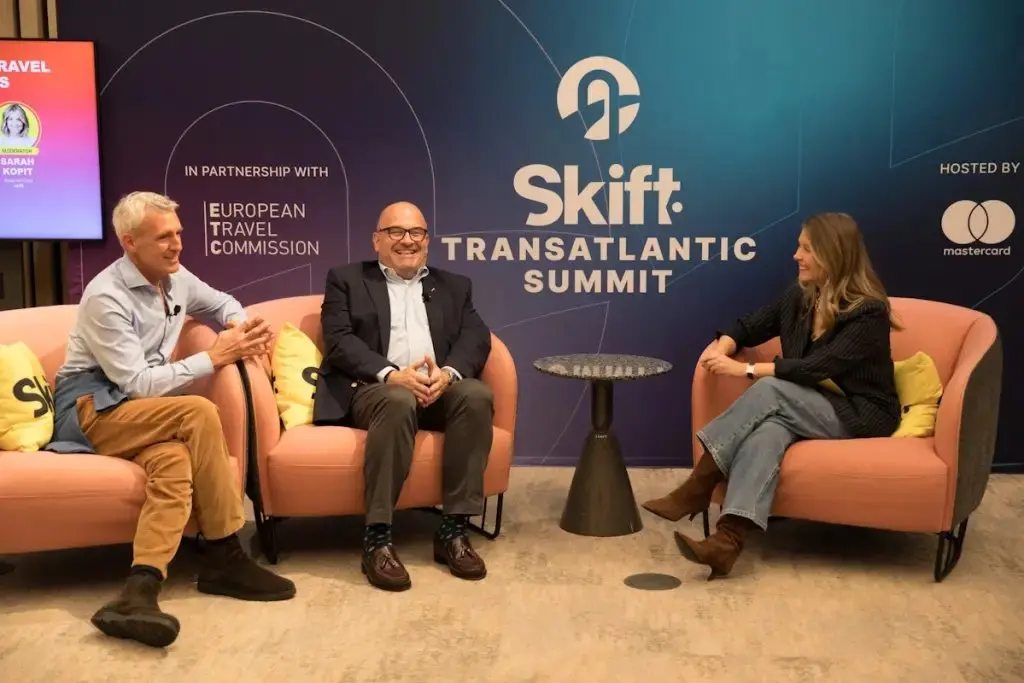
Europe's international arrivals are up 5% so far in 2026, but the headline hides a patchy picture. Northern Europe is the standout, with arrivals up 10% and overnight stays up 8.4%, while other subregions lag. That's the backdrop for the Skift Transatlantic Summit, taking place at Portmarnock Resort & Jameson Golf Links in Dublin on October 15, 2026, under the theme 'Travel in a Fractured World.'
The summit boils down to five decisions that will shape how - and where - Europeans and transatlantic visitors travel in 2027. First, demand: cross-border trips are holding up, but rising costs, safety perceptions and shifting confidence are pushing travellers between destinations and seasons. Notably, about 80% of European travel demand is intra-regional, a huge pool that destinations want to redirect.
Second, politics. Conflict and policy shifts can change routes, prices and sentiment overnight, and the European Travel Commission already sees travellers choosing destinations they perceive as safe and good value, travelling closer to home, and spreading trips more evenly across the year. Third, overtourism versus dispersal: marketing alone won't move crowds to secondary destinations - they need flights, trains and real capacity. The shoulder season may be quietly becoming the new high season as summer hotspots saturate. Speakers include Iceland's tourism chief on this year's eclipse tourism and Boston's event strategy for year-round demand.
Fourth, artificial intelligence. The gap between browsing and booking is stark: 71% of travellers are happy to let AI inspire trip ideas, but only around half would let it actually book a flight or hotel. AI accounts for 21% of touchpoints during inspiration but just 6% at booking, with 49% of travellers citing trust in a supplier's own website as their reason for booking direct. For holidaymakers, that means comparison tools will keep improving even as the checkout stays stubbornly human.
Finally, mobility. Europe has roughly 30,000 rail stations, yet travellers touch only an estimated 15% of them. Airlines, rail operators and platforms are pushing to stitch air and ground travel together before any fully integrated network arrives - with Dublin pitched as both a destination and a springboard into Europe.
Why should a traveller care? Because these decisions set your options: shoulder-season value, secondary cities getting better connected, and safer, cheaper alternatives gaining ground as politics reshapes demand. If you've been waiting for Europe beyond the summer crush, the industry is finally planning for you.
Reporting via Skift.