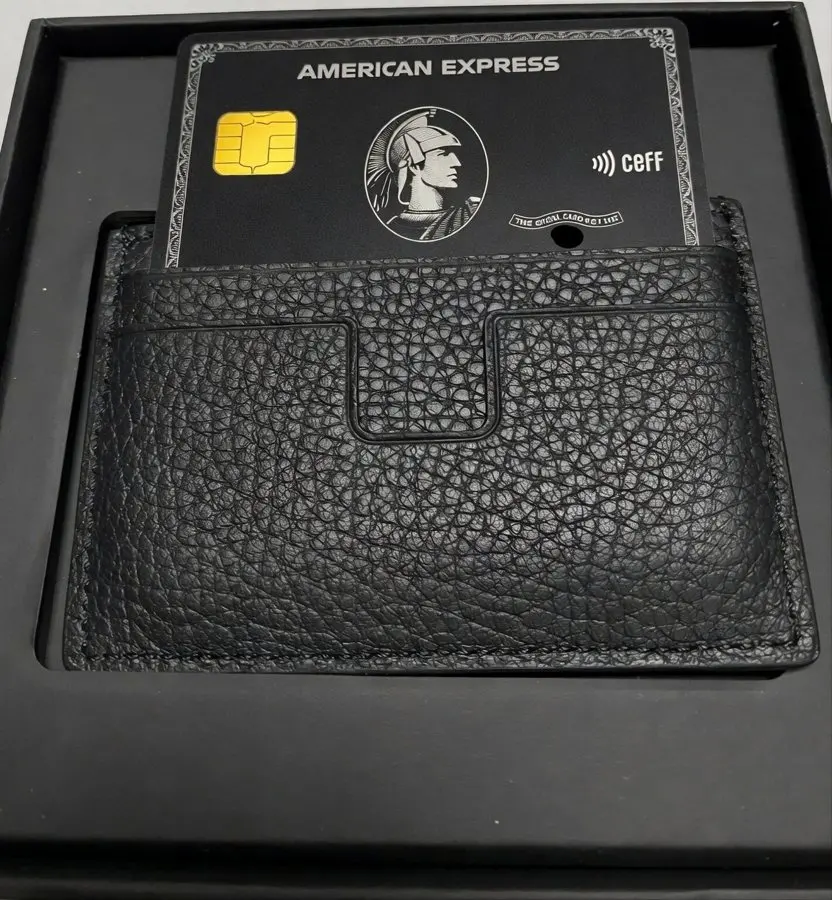
A viral crime podcast clip has revived an odd corner of the travel status economy: a man who apparently made a fortune selling counterfeit American Express 'Black Cards' for roughly $1,000 each. The twist, as reported by View from the Wing, is that the fakes carried the buyer's real Amex account number — so purchases went on their own bills. What buyers were really paying for was the look of a Centurion card, Amex's invite-only status symbol.
The seller claimed customers could flash the card to get into airport lounges and impress their way past velvet ropes. Frequent flyers in the comments were quick to pour cold water on that. Centurion Lounge access is tied to cardmember eligibility, not the colour of the plastic. Staff scan or check the account against their systems, so a dressed-up Gold card is still a Gold card when the check happens. No lounge entry, no Centurion perks, no upgraded spending power — the account behind the card is unchanged.
There's precedent for card cosplay, in fairness. A decade ago, third-party companies offered to convert existing credit cards into custom metal versions, with plain steel from about $99, custom designs at $149, and gold plating at $249. Amex itself has played with form factors — artist-designed Centurion cards and even a Prada wearable in 2021 — but only for genuine Centurion members.
So is it actually a crime? View from the Wing breaks it into three layers. Selling a card decked out in Amex branding raises trademark infringement — potentially criminal counterfeiting, depending on how it's marketed. For buyers, paying your own restaurant bill on an altered card isn't automatically federal fraud, since the access-device statute requires intent to defraud; wanting a date to think you're rich probably doesn't clear that bar. But claiming benefits you don't have — waving a fake Centurion at a lounge door, or using the card to support a false claim in a credit transaction — is a different matter. State laws add further exposure, and Amex's October 2023 US merchant rules explicitly tell merchants to refuse cards that look physically altered. An approved transaction doesn't prove the card was authorised.
For travellers, the practical takeaway is simple: there are cheaper, legal ways into a lounge. A real Platinum Card costs $895 in its first year and comes with genuine Centurion Lounge access — less than the $1,000 people paid for a fake that does nothing extra. Lounges verify eligibility digitally, and getting caught waving a counterfeit card at the door is a costly way to save face. If status is the goal, buy the real thing; if the goal is looking wealthy while paying your own bar tab, that's an expensive prop.