Most travellers treat Faro as an airport with a city attached — land, grab a transfer, and speed off to the resorts down the coast. That's a mistake, say the people who've actually stuck around. The Algarve's capital has an Old Town worth dawdling in, a bone chapel, a lagoon full of islands, and some of the best-value food in southern Portugal.
The standout experience is a catamaran cruise through Ria Formosa Natural Park, a protected lagoon system right on Faro's doorstep. A full day on the water takes in three very different islands: Deserta (Barreta), remote and undeveloped apart from one restaurant; Farol, with its cottages and lighthouse; and Culatra, a working fishing village where you can have lunch — bring cash, as not every beach-bar till takes cards. Swimming, snorkelling and shell-collecting come included. One practical note: tides genuinely change what you'll see and where boats can go, so check them before booking.
Back in the city, the Chapel of Bones at Igreja do Carmo is Faro's strangest sight. Built in 1816, its walls are lined with the skulls and bones of more than 1,200 Carmelite monks — partly as a memento mori, partly to solve a cemetery overflow problem. Entry runs about €2 and you'll only need half an hour, ideally early or late in the day to dodge the crowds. It's a five-minute walk from the marina.
Other easy wins: climb Faro Cathedral for views over the lagoon, join an electric tuk-tuk tour to get your bearings on day one (expect a bumpy ride on the cobbles), and browse the municipal market's fish stalls. For beach time, Praia de Faro sits on a five-kilometre sandbar about 7km from town — a 15-minute bus ride — with surf on the Atlantic side and calm, kayak-friendly lagoon water on the other.
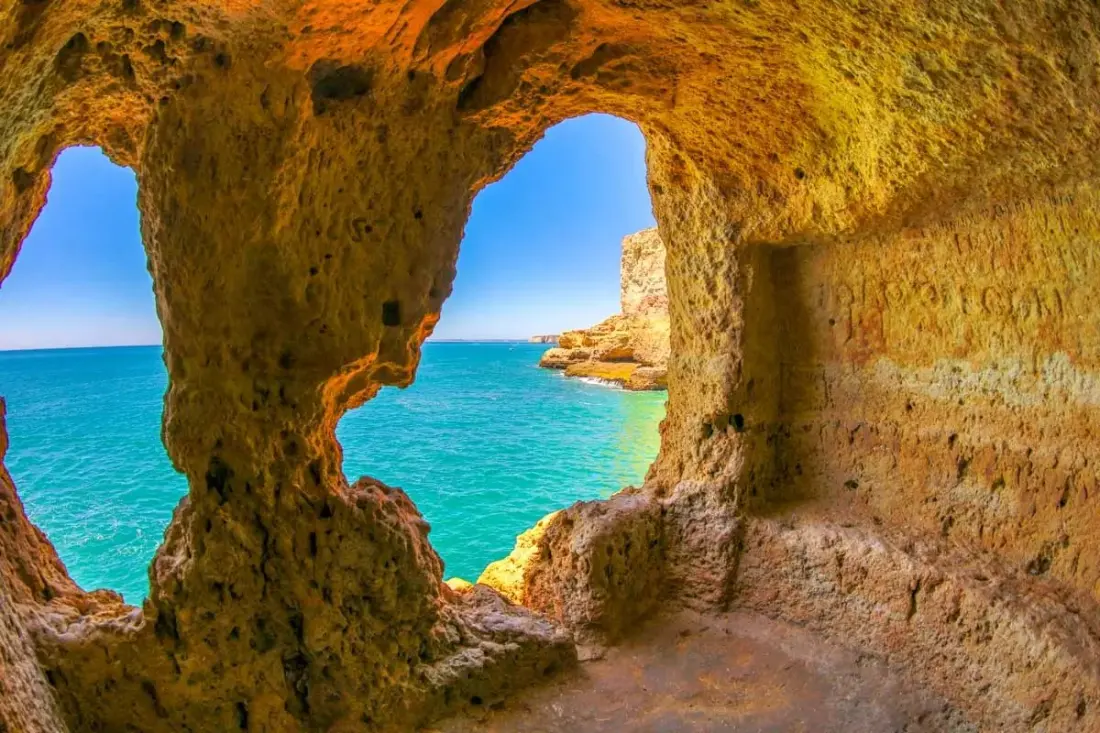
Faro also works as a base for the wider Algarve. Small-group day trips run to Praia da Marinha, the clifftop viewpoint above the famous Benagil Cave, and the boardwalk at Algar Seco, with time in Carvoeiro for lunch. And from the marina, marine biologist-led boat trips head into open Atlantic water in search of bottlenose and common dolphins — with chances of tuna, turtles, and even orcas or whales if luck holds. Boats carry small groups, so nobody fights for a railing spot.
Who is this for? Independent travellers who like cities with real local life, birders (the lagoon is a migration hotspot), and anyone flying into Faro who assumed there was nothing to do but leave. A sensible pace is three days: one for the Old Town and food, one for the coast or islands, one for dolphins and tapas. It's affordable, walkable, and busy enough to feel alive without being swamped — especially outside peak summer. The one universal rule from those who've done it: don't rush through Faro. Order a bica, find a quiet square, and give the place a proper chance.