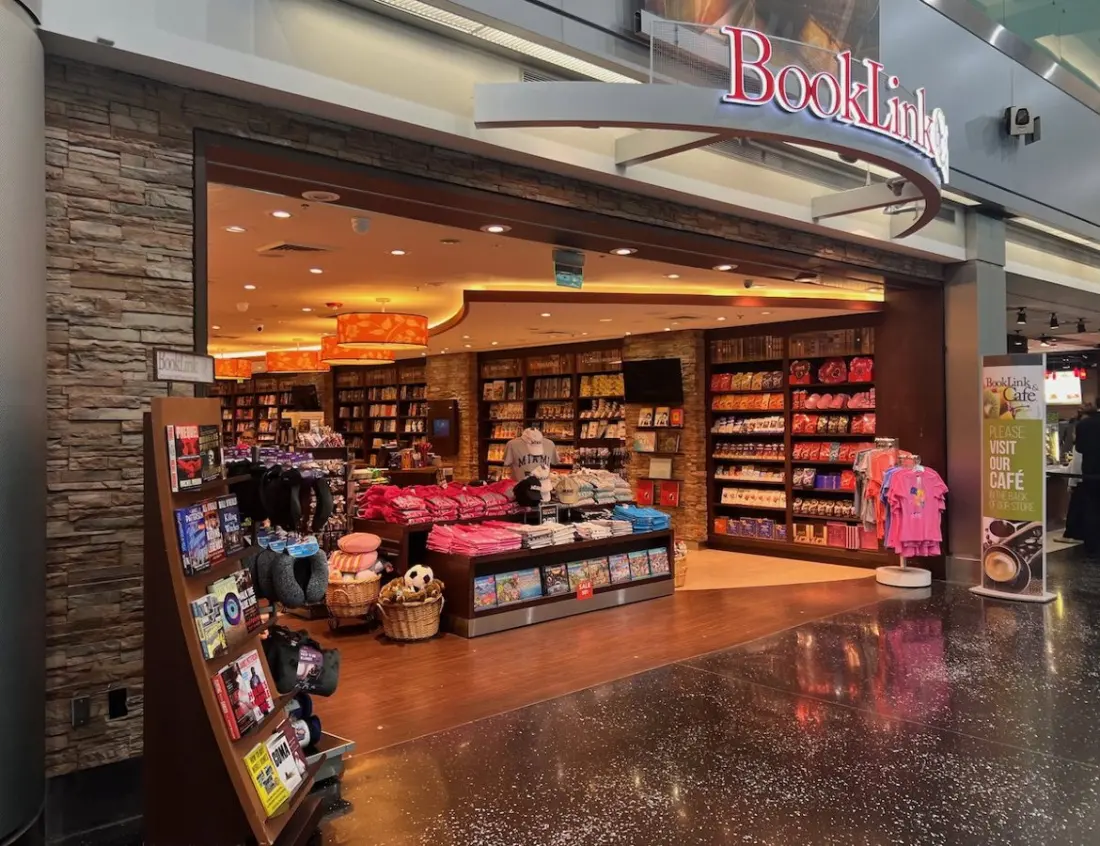
If you've ever winced at the price of a bottle of water past security, here's something that might sting: the majority of US airports already have rules meant to prevent exactly that. Over 80% of American airports write price caps into their retail and restaurant contracts, and yet paying $6.89 for a litre of Smart Water — roughly double what a corner shop charges — is entirely normal. The gap between the rule and reality comes down to how the rules are policed.
There are two broad models. Most airports operate a "street pricing plus" policy, allowing vendors to charge 10-15% above normal off-airport prices to cover their steep rent and operating costs. A handful, including Chicago O'Hare, Portland and Salt Lake City, require strict street pricing with no markup at all.
So where does it fall apart? Retailers do have to submit price comparisons to prove compliance. The problem is they get to choose what counts as comparable. Investigative reporting has caught McDonald's benchmarking its airport coffee against Caribou Coffee rather than other McDonald's, and airport shops comparing soda prices to high-end grocery stores instead of convenience stores. Starbucks gets a free pass because its pricing is standardised nationwide — even though that standard price is well above what nearby competitors charge.
Denver International offers a case study. A reporter there found a basic Starbucks coffee running $4.55 versus $2.95 outside the airport, and a bag of cashews at $9.99 against $4.74 nearby — markups of 54% and 110%. Yet the airport's concessions chief called the results great news, declaring 93% of prices compliant and "pretty darn good." In New York, the Port Authority defended Hudson's water pricing by arguing the shop is a "specialty market," approving a comparison based on water sold at a wellness pharmacy in an upscale mall rather than a bodega down the street.
There's also a structural issue: a large share of airport food and retail is run by a few big operators like HMSHost, owned by Avolta, which brings a well-practised approach to these benchmark submissions. Meanwhile, the independent businesses at some airports turned out to have the most honest pricing.
Why does nobody fix it? Follow the money. Airports collect hefty rent from concessionaires, and the higher retailers' profits, the higher that rent can go. Since no traveller picks a flight based on water prices, airports have zero incentive to enforce caps strictly — the current system lets them look consumer-friendly on paper while doing little in practice.
For travellers, the practical takeaway is simple: assume prices past security bear little relation to reality, and buy snacks and drinks before you arrive at the airport. Where you do have flexibility — long layovers, lounge access, or terminals near walkable exit areas — stepping outside the security bubble can save real money. It also explains why independently run cafés inside terminals are often a better bet than the big chains.