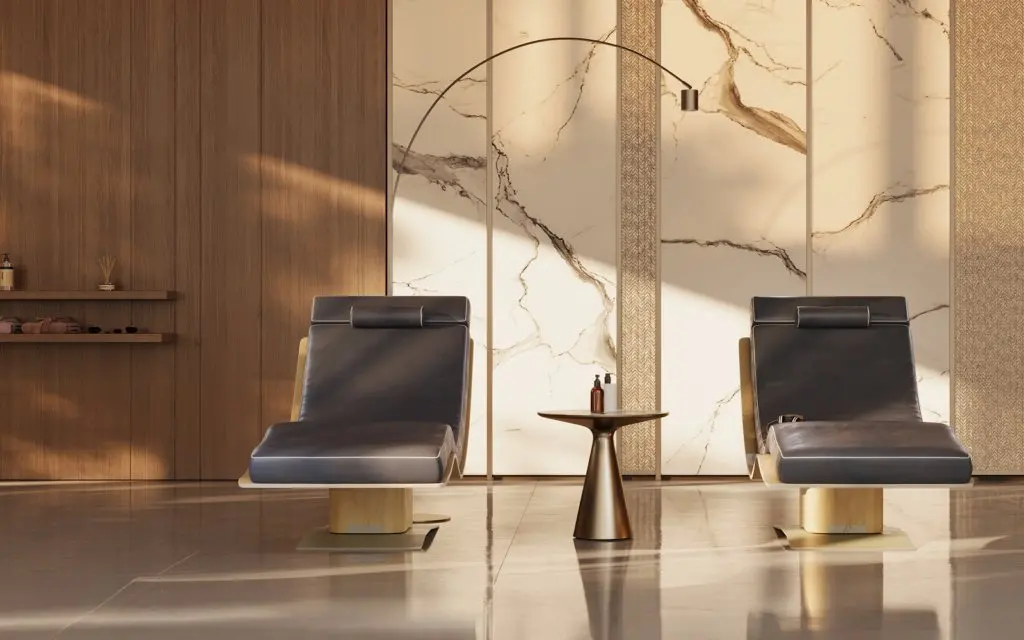
Spa treatments are quietly getting a soundtrack — one you feel rather than just hear. Italian wellness equipment maker LEMI has been pushing vibro-acoustic technology, which turns music into low-frequency vibrations that travel through the surface of a treatment bed and into the body. The idea is simple but appealing: instead of a mechanical massage or a standard relaxing playlist, sound itself becomes the therapy, with frequencies you physically sense as well as listen to.
The system, branded Vibro-Music, offers five vibration programs spanning frequencies from 40 to 86 Hz, each tuned to a different kind of relaxation. Guests (or therapists) control everything through a companion app on iOS or Android, picking a program and adjusting intensity to suit the moment. Because the sensation is driven by sound rather than rollers or kneading, the experience is continuous and immersive — more like being bathed in music than worked on.
Two flagship pieces of equipment bring this to life. The Milano EVO pairs a Memory Foam mattress that moulds to the body with the vibro-acoustic system, and in certain configurations adds chromotherapy and integrated heating, so light, warmth and vibration work together during a treatment. Finished to order with a minimalist Italian design aesthetic, it is aimed at high-end hotel and destination spas that want a statement centrepiece. The Harmony Lounge takes a different angle: a reclining lounge chair with electric tilting that eases you into a deep-relaxation posture, with the Premium version layering in vibration and heating for a longer, more meditative session — the kind of thing you might find in a hotel relaxation lounge rather than a treatment room.
Why should a traveller care? Because this kit is increasingly showing up in the spas of upscale hotels and resorts, and it changes what you can book. If your idea of a holiday includes serious wellness time, treatments built on vibro-acoustic beds promise something genuinely different from the standard hot-stone or Swedish menu — a session where the bed itself does part of the relaxing. It also reflects a broader shift in spa design: from single-therapy rooms to multisensory experiences that blend sound, heat, light and touch into one personalised ritual.
For hoteliers and spa operators, LEMI's pitch is that this kind of technology turns a routine treatment into something guests remember and rebook — a differentiator in a crowded luxury wellness market. For the rest of us, it is a useful signal of where hotel spa menus are heading: expect more therapists asking not just about pressure preferences, but about your preferred vibration frequency.
Whether it replaces a good human massage is debatable, but as a pre-treatment wind-down or a standalone deep-relaxation session, feeling the music is an intriguing addition to the wellness travel toolkit.