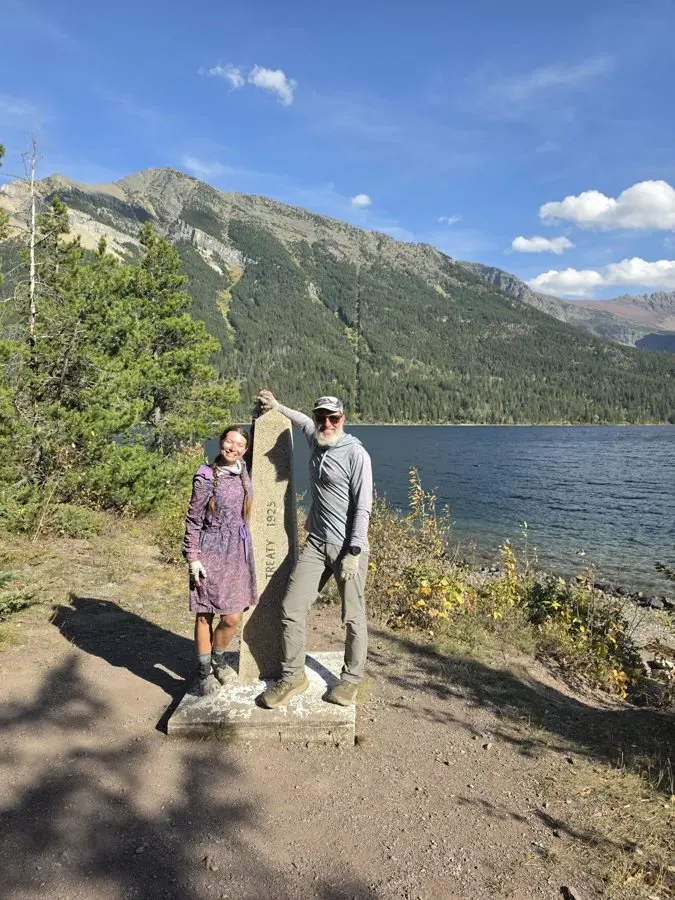
A Continental Divide Trail thru-hike ends at a 12-foot stone obelisk straddling the US-Canada border above Waterton Lake. One hiking group recently covered the final stretch from East Glacier Park, Montana, in eight days, and their account offers a useful picture of what the last push through Glacier National Park actually looks like.
Day one set the tone: 22 miles and 5,400 feet of climbing from town into Glacier, under sunny skies and 70-degree temperatures. The group hiked with friends, taking turns leading and calling out for bears, and spotted a bull elk along the way. Day two brought the trail's most famous geographical moment: Triple Divide Pass, where snowmelt drains to three oceans at once — the Pacific, the Atlantic and the Arctic.
There was also plenty of trail magic. At St Mary's, a stranger bought the hikers a bottle of whiskey for their border celebration. Later, a couple from Kalispell handed over fresh garden plums. The group even managed a first-of-the-trip campfire with sausages and marshmallows instead of dehydrated meals.
The route itself delivers Glacier's greatest hits from a hiker's-eye view: the St Mary Lake shoreline and Virginia Falls, the sprawling views from Piegan Pass with five bighorn sheep below, the CCC-built Ptarmigan Tunnel cut through rock with loose red slate and real exposure, and campsites at Elizabeth Lake and Reynolds Creek. Each day brought fresh-tasting spring water, waterfalls and dense, sometimes overgrown forest. On the final morning they climbed Stony Indian Pass before the obelisk appeared — almost anticlimactically, after a nondescript turn in the trail. After photos and the gifted whiskey, they walked five more miles into Waterton, the compact lakeside Canadian town where the trip ended with celebration dinners.
For anyone considering this section — as a thru-hike finale or a standalone trek — the logistics are worth noting. The group's days ranged from 15 to 23 miles, with realistic elevation gains, and they built in a 20-mile round-trip resupply run to St Mary's Village for groceries and hot food (bison burgers and steak sandwiches, in this case). Many Glacier campground is reserved years ahead for RVs and car campers, but thru-hikers and cyclists get designated walk-up sites. Rangers check permits on trail, so paperwork matters.
The most interesting takeaway is the emotional one. After months of 10-12 hour days with clear daily goals, the hiker describes feeling oddly lost arriving at camp with energy to spare — anxious about tasks waiting at home, reluctant to leave the structure and struggle the trail provides. Even a slow final stretch, walking among day hikers near Virginia Falls, felt jarring after weeks of solitude.
Why care? This stretch of the Continental Divide Trail doubles as some of the finest long-distance hiking in Glacier National Park and Waterton Lakes, stitched together by switchbacks, tunnels and alpine passes. It's a serious undertaking — bear country, remote, and weather-dependent — but the window of crisp, sunny autumn days described here shows the payoff. Finish at the obelisk, then celebrate lakeside in Waterton, the way generations of long-distance hikers have.