In Cần Thơ, on a bend of the Hậu River, sheets of rice paper dry on every available surface — courtyards, footpaths, pond banks — in the ward of Thuận Hưng, a village that has been perfecting the craft for more than two centuries. In 2023 it became the first place in Cần Thơ to have its traditional craft recognised as National Intangible Cultural Heritage, and today more than 500 family-run workshops supply rice paper across the region, most still made entirely by hand.
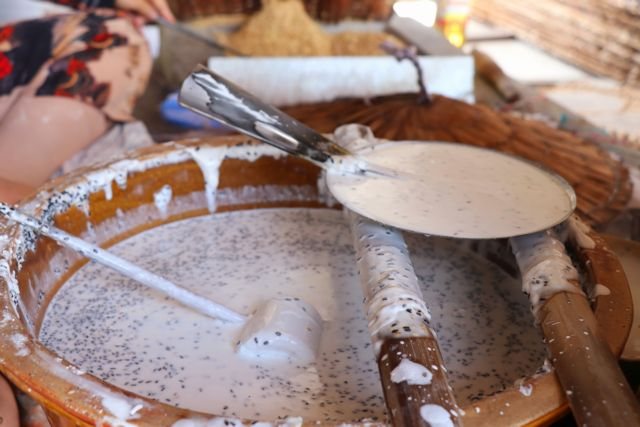
The process looks simple and isn't. Rice is soaked for hours or overnight, ground into a milky batter, then seasoned with salt and, depending on the household, coconut milk or sesame seeds. A thin layer is ladled onto cloth stretched over boiling water and steamed for roughly 15 seconds until translucent, then lifted off — one hand peeling, the other catching — and laid on bamboo mats to dry in the sun. The bamboo leaves its own imprint on the finished sheet. Every family guards its own ratio of rice to coconut milk, which is why no two producers' papers taste quite the same, though all share a supple texture and the scent of fresh Mekong Delta rice.
Three main varieties come out of the village: plain sheets, coconut-and-sesame paper meant for grilling, and a ready-to-eat coconut-and-sesame version. Cooks prize the plain ones for wraps and rolls because they stretch without tearing when wet and stay neutral enough to let the filling lead — think fresh spring rolls packed with vermicelli, herbs and shrimp or tofu, dipped in sweet-sour fish sauce.
The same sheets turn into plenty of street snacks. Fry cut shards for a few seconds and they puff into crisp chips (a dry sheet microwaved for 20–30 seconds does a decent job too). Or make the Huế-style rice paper pizza: crisp a sheet in a pan, crack an egg over it, and finish with scallions, cheese and minced meat or dried shrimp. Fried spring rolls also depend on a good wrapper — the thin Thuận Hưng kind gives that shattering exterior.
For travellers heading to the Mekong Delta, this is a genuine day-trip stop rather than a staged attraction. Wander the Tân An and Tân Phú areas, watch the steaming and sun-drying up close, and buy sheets straight from the makers — fresher and cheaper than anything exported. It pairs naturally with Cần Thơ's famous floating markets and riverside food scene, and it's the kind of craft you can taste the difference in once you've seen the work behind it.