Slovenia is barely 20,000 square kilometres with two million people, yet it packs Alpine lakes, emerald rivers, deep forest and one of the planet's great cave systems into a space you can cross in a few hours. Around 60% of the country is forested and more than a third sits under environmental protection or the Natura 2000 network. For anyone who'd rather hike, paddle or pedal than lie on a beach, it's hard to argue with the pitch: one road trip here can take in a capital city, a postcard lake, a whitewater valley and an underground canyon.
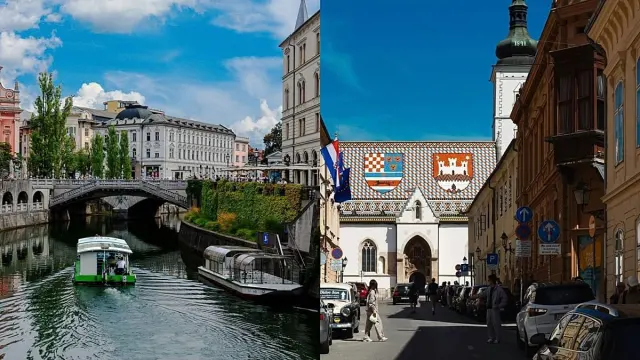
The logical starting point is Ljubljana, a walkable capital of under 300,000 people built around the Ljubljanica river. Its banks double as an impromptu summer sports ground — volleyball included — and the Dragon Bridge, guarded by four dragon sculptures tied to a legend about Jason and the Argonauts, is the city's symbol. The 900-year-old castle above the old town is reachable on foot or by funicular and hands you your first look at the mountains ahead.
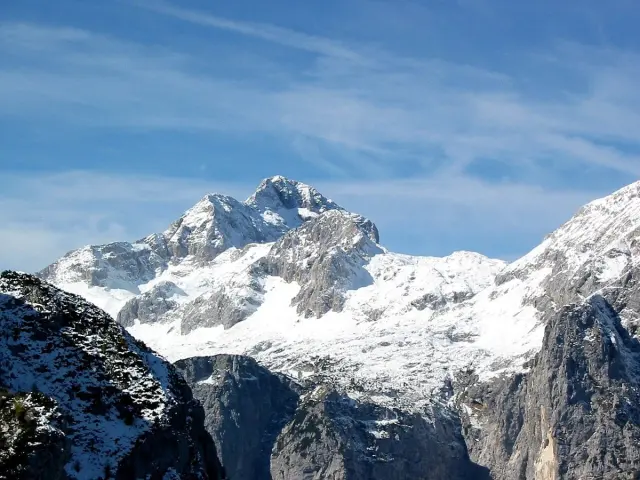
From there, the Julian Alps. Lake Bled is the famous one: island church, clifftop castle, and an easy six-kilometre loop you can cycle before a swim in designated areas. It's also the country's busiest spot, which is exactly why nearby Lake Bohinj appeals. Slovenia's largest permanent natural lake sits inside Triglav National Park, its mirror-still water best explored by kayak, with hundreds of kilometres of trails and climbing routes spreading up towards Triglav, the 2,864-metre national peak.
West of the lakes lies Bovec, the adventure hub of the Soča valley. The river's turquoise-and-emerald water looks almost artificial between the white rocks, and it's the place for rafting, kayaking and canyoning. Non-paddlers get the Boka and Virje waterfalls, the Alpine lake Krnsko Jezero at around 1,400 metres, and the Vršič Pass — at 1,611 metres, Slovenia's highest road crossing, linking the Soča valley to Kranjska Gora via a serpentine worth the drive alone.
The finale goes underground at the Škocjan Caves, a UNESCO World Heritage Site since 1986. The Reka river has carved more than six kilometres of galleries, in places over 200 metres deep, including one of the largest known underground river canyons on Earth. The guided tour runs about two hours over roughly three kilometres, dropping to 144 metres below the surface, with the crossing of the Cerkvenik Bridge — suspended 45 metres above the river in near-darkness — as the standout moment. It stays around 12°C inside year-round, so bring warm layers and grippy shoes, and book ahead in summer. If you prefer your caves with a small train and easier walking, the busier Postojna Caves are nearby; Škocjan is the wilder, more expedition-like choice.
The upshot: Slovenia rewards travellers who move. A camper van or hire car makes the short distances part of the fun, and five days is enough to string together city, lakes, mountains and caves without ever feeling rushed.