
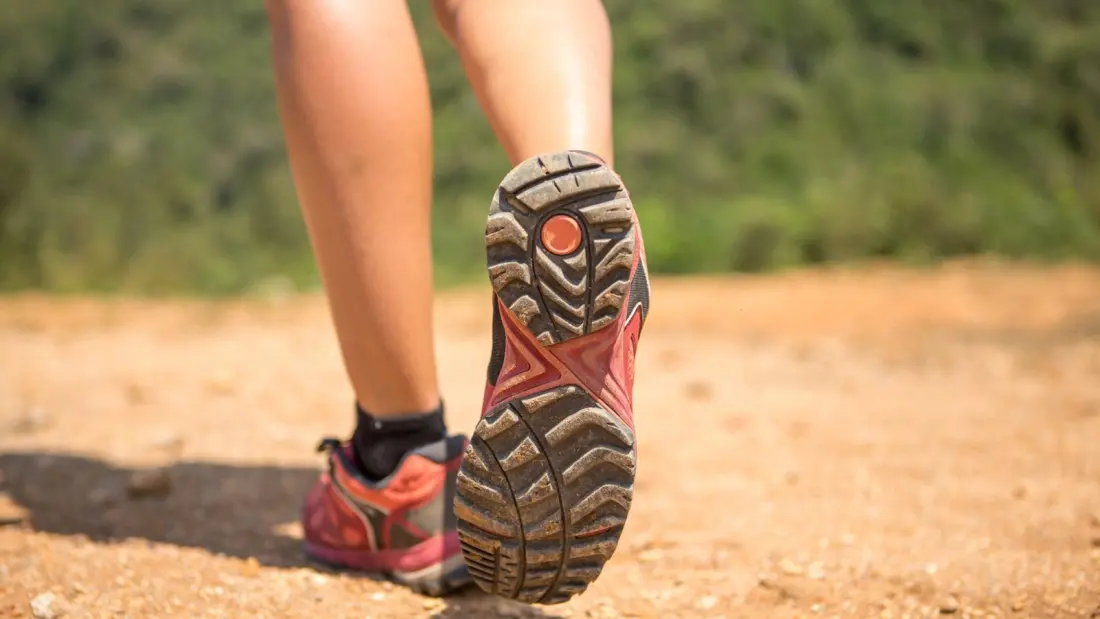
Your feet take a beating on the trail, yet they're probably the most neglected part of your training routine. Yoga teacher Devon Crahan, who owns Intentional Yoga in Michigan, argues that hikers and runners should treat foot strength as foundational — because it is. The foot is the body's main contact point with the ground, and when the small muscles, tendons and ligaments there weaken over time, arches flatten, ankles roll inward, and knees and hips absorb extra strain with every step.
The good news: reversing this doesn't require equipment or a gym. Crahan shared a five-move, yoga-inspired routine that takes about five minutes a day and targets exactly the stability hikers need on uneven ground.
First up is a heel-lifted squat. Stand with feet slightly wider than hip-width, toes angled out, lower into a squat, then rise onto the balls of your feet as high as you can. Holding for five to eight breaths loads your arches and toes with your full body weight — a direct strength builder for trail descents.
Next, the toe squat stretches the plantar fascia, the band of tissue running along the sole that's a common source of hiker foot pain. Kneel, tuck all ten toes under, and sit your hips back toward your heels. Ease the pressure by leaning on your hands if it's too intense.
Third is a slow heel-raise flow: from standing, lift your heels high on an inhale (arms overhead for extra balance work) and lower with control on the exhale. This trains your calves and, crucially, teaches your ankles to stay centred instead of spilling outward — the inward roll that wrecks knee alignment on rocky paths.
The fourth drill, pada bandha or "foot lock," is about awareness rather than effort. Lift and spread your toes, then set them back down one at a time while pressing into the four corners of each foot — big toe ball, little toe ball, inner heel, outer heel — and lifting your inner arches like a dome. Repeat three times.
Finally, slow heel-to-toe walking for a minute rewires sloppy walking habits. Plant heel first, roll along the outer edge, push off through the toes, and resist the urge to rush.
Crahan also flags a balance habit worth fixing: most people dump too much weight into their front toes, which causes cramping. Toes should fine-tune your balance, not carry it.
Why should a traveller care? Because strong, stable feet are the cheapest trail insurance there is. Five minutes a day of these moves can mean surer footing on scree, kinder landings on long descents, and fewer aches after a big walking day — whether that's a mountain trek or simply logging 20,000 steps around a new city. No gear, no app, no excuses.