
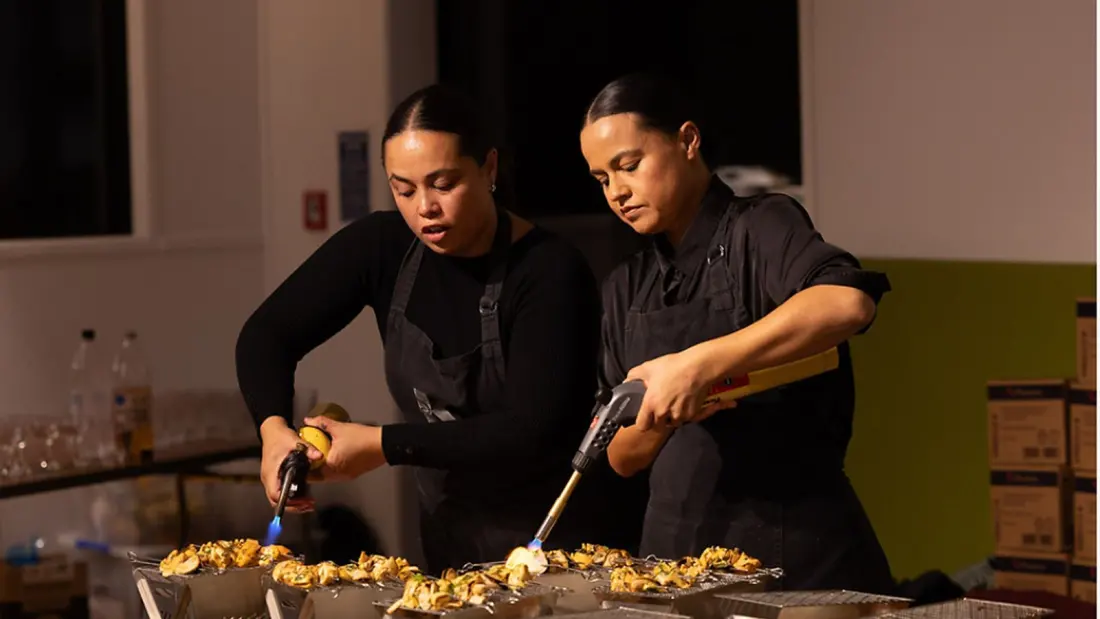
Karena and Kasey Bird won MasterChef New Zealand in 2014, wrote cookbooks and filmed a travel-cooking show — but their most transformative meal wasn't in a fancy restaurant. It was a potato cooked over burning donkey dung on a Peruvian hillside, eaten with fresh goat cheese and foraged herb sauce alongside local farmers. 'When you eat stuff close to the source, it tastes better,' Kasey told Intrepid Travel's blog.
That trip, and others like it, reshaped how the sisters see their own roots. A visit to South Korea — where an 80-year-old woman taught them kimchi-making — sparked an awkward realisation: they'd flown across the world to learn about fermentation while knowing little about the practices in their own culture. So they paused their travels to study te reo Maori full time, and their third cookbook is written entirely in the language.
Home for the sisters is Maketu, a predominantly Maori village on the Bay of Plenty. Growing up there meant neighbours leaving bags of mussels on the doorstep, smoking kahawai, and communal feasts. At the centre of it all: the hangi, the traditional Maori method of cooking in an earth pit over heated stones, with meat and root vegetables wrapped in damp cloths or flax leaves and buried for hours. The result is tender food laced with smoky, earthy flavours — and, as Karena points out, it's everyday cooking for them, not a special-occasion novelty.
Filming their show Kitchen Diplomacy took them to countries with similar underground traditions — Chile's version involves seafood and chorizo, New Caledonia adds coconut milk — and they started experimenting, tossing green-lip mussels and chorizo into their own hangi. That led to immersive dining events. 'The Creation Dinner' celebrated Maori deities, while their latest, 'Maumahara' ('to remember'), explored nostalgia and growing up in Aotearoa. One palate cleanser, shaped like a bar of soap, referenced their mother's memories of being punished for speaking te reo at school — deliberately confronting, and a sign the sisters have moved from palatable to political.
Their advice for travellers is simple: food is one of the most honest ways to connect with an Indigenous culture, your own or someone else's. Seek out local cooking classes that give back to the community, learn what's culturally appropriate, and eat close to the source. In New Zealand, visitors can experience a hangi themselves on small-group trips, and the sisters' story is a reminder that the most memorable meals often aren't the ones with the longest reservation lists — they're the ones with a story buried in them.