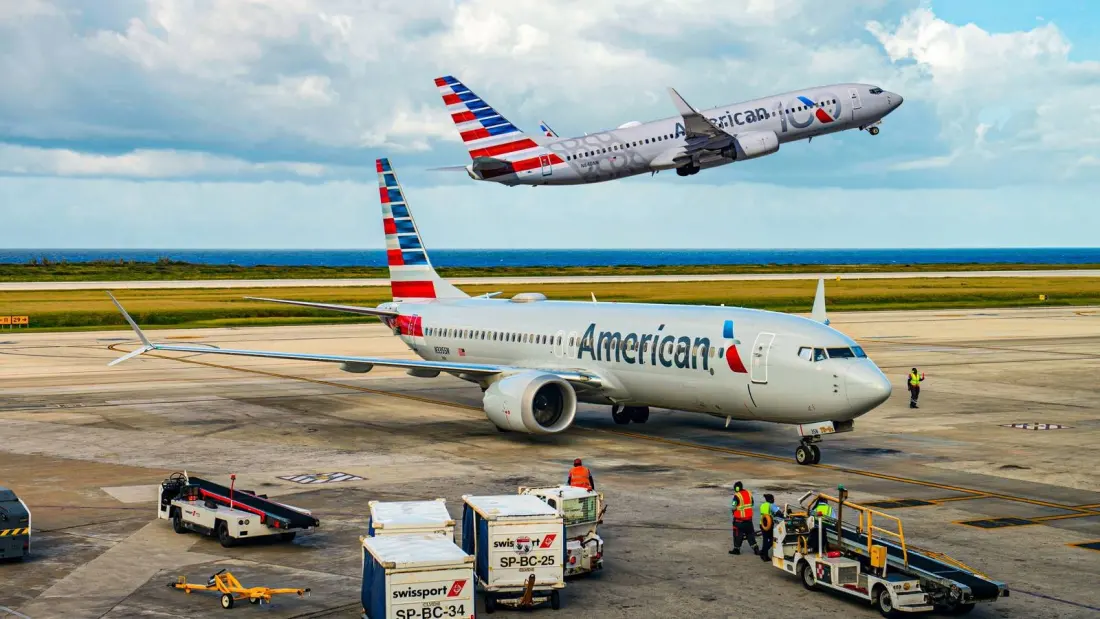
Next time you board a Boeing 737, there's a decent chance you won't know whether you're on the newer MAX 8 or the older 737-800 — and that's exactly the point. Airlines have spent years retrofitting their older jets with the same cabin tricks Boeing built into the MAX from the factory, so the two types often feel nearly identical. But there are a few reliable ways to tell them apart, and one of them you'll notice before the wheels even leave the ground.
The biggest giveaway is sound. The MAX 8 runs on CFM LEAP-1B engines with a 9:1 bypass ratio, versus 5.1:1 on the 737-800's older CFM56s. During takeoff and climb, the MAX is noticeably quieter and higher-pitched, replacing the low rumble many frequent flyers know well. Boeing says the new engines cut the external noise footprint by 40-50% for communities near airports, and cabin measurements back up the quieter interior during high-thrust phases. Conversation at takeoff without shouting is a genuine MAX perk.
Inside, every MAX 8 comes with Boeing's Sky Interior as standard — sculpted sidewalls, LED mood lighting that shifts through the flight, and pivoting overhead bins that let roller bags stow on their side, which means fewer gate-checked bags. The 737-800 is a mixed bag: late-production examples got the Sky Interior, but plenty still have flat walls and basic lighting, with bigger bins only where airlines have paid to retrofit them.
Tech is another tell. Because the MAX arrived when in-seat USB power became an expectation, airlines have used MAX deliveries to standardize USB-A, USB-C and sometimes AC outlets at every seat. Southwest is a good example — its early MAX 8s had in-seat power while its huge 737-800 fleet originally had none, only catching up through overnight retrofit programs. So on an older jet, whether you get power depends entirely on that individual aircraft's retrofit status.
If you're in a window seat or boarding via airstairs, look outside. The MAX 8 has angular split-tip winglets with feathers pointing both up and down, while the 737-800 has smooth upward-swept blended winglets (or aftermarket split scimitars). Even more distinctive: the MAX's engine cowlings have serrated sawtooth edges — chevrons — that mix exhaust air to cut noise. Its engines are also larger and mounted higher, which is why the MAX has a longer nose gear.
Here's the catch, though: at cruise, much of the MAX's advantage fades. Slipstream noise against the fuselage becomes the dominant sound, and seat comfort — legroom, cushion, recline — comes down to each airline's choices, not the airframe. A cramped 30-inch-pitch MAX can feel worse than a retrofitted 737-800 with 32 inches. So while the MAX guarantees a modern baseline, a well-updated older 737 can match it.
With thousands of 737-800s still flying and huge MAX order books, the two will share routes for decades. Engine sound on takeoff and those winglets are your best clues for settling the debate at the gate.
Original reporting: Simple Flying