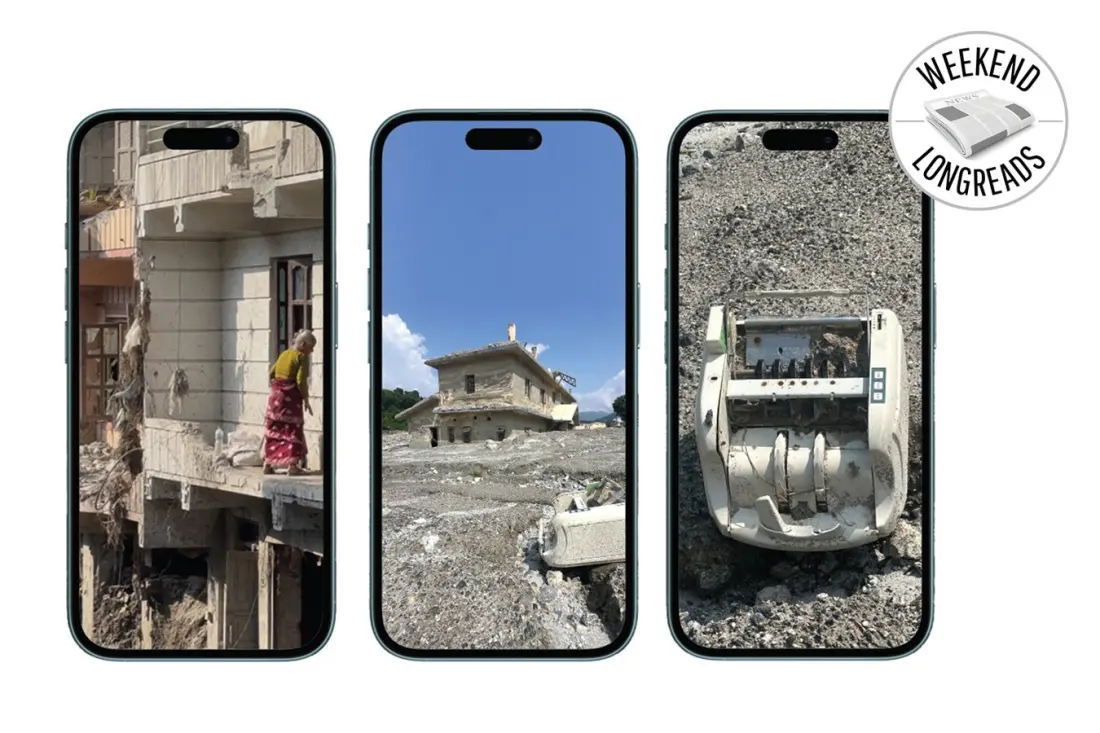
The floods that tore through central Nepal — washing away the Trisuli bridge and entire streets in towns like Devighat, Nuwakot — reached most of the world, and most Nepalis, as short vertical videos. A writer for the Nepali Times returned to his ancestral village after the disaster and found a reality the clips had flattened: mud thick enough to swallow a street, laundry drying on exposed rebar, families eating lunch beneath a tree lodged in a half-collapsed building. He learned his late grandfather's metal workshop beside the Trisuli bridge was gone from a reel, not a phone call.
His essay, about what he calls the 'content-ification of disaster', argues that platforms turn catastrophe into engagement fuel. TikTok's own ranking system rewards watch time and completion — so someone repeatedly replaying a flood clip to check whether their street survived registers to the algorithm the same as idle entertainment. The bridge falls, the video ends, the bridge falls again. What disappears is the slower story: clearing debris, finding new premises, reopening shops months later.
The piece also calls out a strange newer phenomenon: relief campaigns using AI-generated images of a generic Himalayan village — complete with a distorted Nepal flag — to raise funds, rather than photographs of the actual, messier destruction in Nuwakot or Rasuwa. Those synthetic images come from data centres that, per International Energy Agency estimates, generated roughly 180 million tonnes of indirect CO2 in 2024. Machine-made grief about climate destruction, produced by machines that contribute to it.
The writer borrows the environmental philosopher Glenn Albrecht's term 'solastalgia' — the homesickness you can feel while still standing at home — to describe returning to a hometown where childhood landmarks like the pipal tree and chautara have vanished, and where the phone has made a place unfamiliar even before you arrive. The essay also touches on 'doomscrolling' research, the fatalistic meme-speak of 'we're so cooked', and how Nepal's disaster coverage gets absorbed into political theatre: the hunt for a defining 'hero image' of ministers and branded relief volunteers, which mistakes visibility for competence.
For travellers, the takeaway is more than academic. Nepal's monsoon floods are real, recurring and increasingly concentrated along river corridors like the Trisuli — the same valleys popular for rafting, treks to Langtang and overland routes towards Kathmandu. Understanding a place through viral clips is a poor substitute for being there, asking locals what they need, and supporting recovery that outlasts a news cycle. The essay ends on a simple point: physical presence mattered. Once in Nuwakot, the disaster was bigger, messier and more human than any reel could show — and witnessing it in person created an obligation that outlasted the recording.
Nepali Times