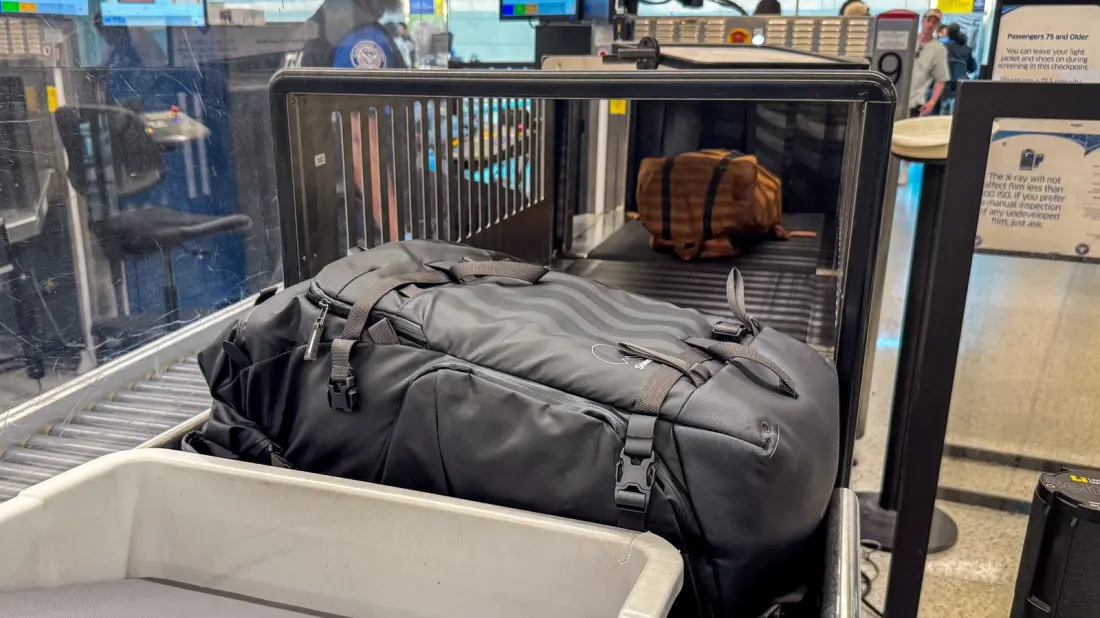
If you're flying to your next trailhead, stuffing every piece of hiking kit into your carry-on can backfire. The TSA has clear rules on outdoor gear, and some items will simply be taken off you at the checkpoint — while a few are banned from aircraft entirely, even in the hold.
The sharp stuff is the biggest trap. Trekking poles with pointed tips, snow spikes, pocket knives, and multi-tools with blades or long scissors are all considered potential weapons and can't go in the cabin. Self-inflating sleeping pads, crampons, and tent poles sit in a grey zone — sometimes allowed, sometimes not, depending on the agent's judgement — so checked luggage is the safer bet for those too.
Then there's the gear you can't fly with at all. Bear spray and propane canisters for stoves and lanterns are classified as hazardous materials; pressurised containers risk rupturing mid-flight, so they're prohibited in both carry-on and checked bags no matter what.
Camp stoves are the trickiest item of all. A stove can fly, but only if it's spotless — no fuel residue, no vapour, no fuel sources attached. If yours runs on a refillable tank rather than a screw-on canister, assume it won't make the trip.
The practical fixes are straightforward. Blunt or soft-tipped trekking poles are generally accepted by the TSA, though individual airlines may still refuse them, so check your carrier's rules too. For everything sharp — pointed poles, tent spikes, knives, multi-tools, snow spikes — packed luggage is the only option. And for the banned items like bear spray and fuel canisters, just buy them locally once you land; outdoor shops near popular trailheads usually stock both.
Why should holidaymakers care? Losing a favourite knife or a set of poles at security is annoying; losing an expensive stove or a full fuel setup is worse. A few minutes of checking the TSA's guidelines before you pack can save you gear, time at the checkpoint, and the stress of improvising kit at your destination. This applies to anyone flying with outdoor equipment — whether that's a domestic trip or a long-haul hiking holiday — and the same logic often applies to airport security authorities outside the US as well.