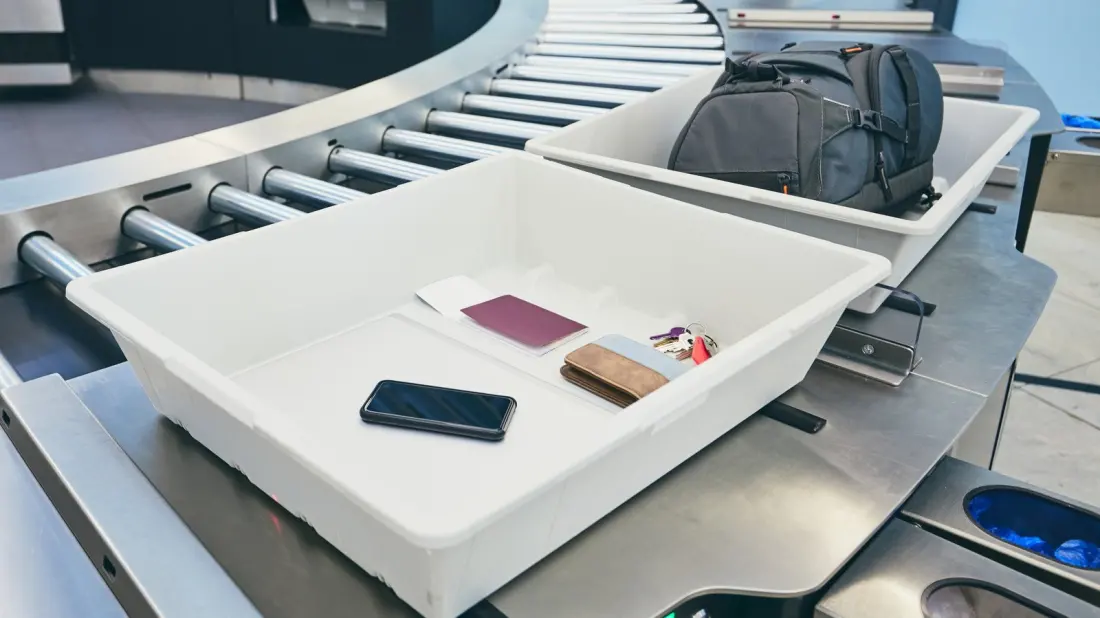
Airport security bins take a beating. They trundle along a conveyor all day, get touched by hundreds of thousands of hands, and almost never get disinfected because stopping the line to wipe them down simply isn't an option. Former Transportation Security Officer Michael Delgado put it bluntly in an Apartment Therapy interview: he's seen food containers, spilled soda, baby food, and wet, muddy shoes go straight into those trays. Anything that's on those items — dirt, viruses, assorted germs — can end up on your phone.
The obvious fix is to stop putting your phone in the bin at all. According to the TSA's own guidance, phones can stay in your carry-on or personal item during screening. The general rule is that electronics bigger than a cell phone — laptops, tablets, cameras — need to go directly into a tray, but a phone can stay safely tucked in your bag. That alone removes most of the contact with whatever the last passenger left behind.
If your airport or the officer on duty asks you to place your phone through the X-ray separately, there's a cheap workaround: pack a plastic zip-top bag and slip your phone inside just before you hit the security line. It creates a barrier between the screen and the tray, and it costs basically nothing. Once you're through, wash your hands before handling your phone again — still one of the most reliable ways to avoid picking up a cold mid-trip.
For an extra layer of reassurance, carry a small pack of electronics-safe isopropyl alcohol wipes (the article mentions iCloth 70% wipes, sold on Amazon) and give your screen a quick clean after you've cleared security. It might sound fussy, but the numbers are worth considering: a 2021 study in Computers in Human Behavior found we touch our phone screens roughly every five minutes. Whatever's on that screen eventually finds its way to your face.
None of this requires restructuring your packing list. It's really three habits: leave the phone in your bag when allowed, keep a zip bag handy as a backup, and sanitise your hands and screen afterwards. For anyone flying during cold and flu season, or heading off on a long-awaited holiday they'd rather not spend sneezing through, it's a small amount of prep with a genuinely useful payoff.
A quick note on scope: this is about airport hygiene everywhere, not one particular country. TSA guidance applies at US airports, but the same logic holds at any security checkpoint worldwide — the bins are equally well-travelled everywhere.
Original reporting: Islands.