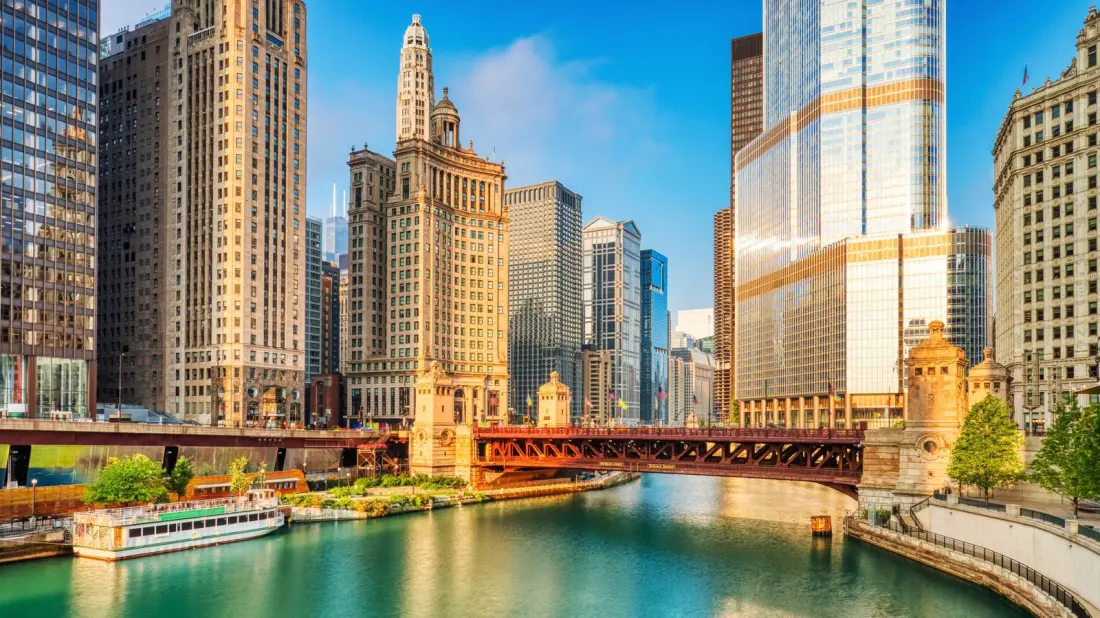
Chicago is the Midwest's biggest draw, but the latest migration data says people keep leaving it — and the city catching them is just 90 minutes up the road. U-Haul's 2026 Midyear Migration Trends study, which tracked one-way moves across every US metro with at least a million residents between July 2025 and June 2026, found Milwaukee was the number one destination for both millennials and Gen Xers leaving Chicago.
The reasons come down to money. A separate poll of 1,000 registered Illinois voters by the Paul Simon Public Policy Institute at Southern Illinois University found that 47% of respondents want to leave the state, with high taxes cited as the top reason (27%). Among Gen Xers and millennials, more than half said they'd like to move.
What they get in Milwaukee is a lot of what they're leaving behind. Redfin's cost comparison puts housing 28% cheaper than Chicago, with overall lifestyle costs 14% lower and dining out 13% less. The city itself packs in over 100 festivals, 50-plus parks and close to 40 breweries, and has been quietly building a reputation as a serious food city.
The Lake Michigan lifestyle carries over too. Lakeshore State Park is Wisconsin's only urban state park, while Lake Park — a landmark since the late 1800s — has sweeping lake views and the historic North Point Lighthouse. Getting on the water is cheaper here: kayak rentals start around $18 an hour versus $25 in Chicago, and bikes $14 versus $20.
Music fans arguably trade up. Milwaukee's Summerfest draws 600 performers across nine days and bills itself as America's largest music festival — with one-day general admission starting at $30 for summer 2026, against Lollapalooza's $185 entry point the same year.
For travellers, the takeaway is simple: if you like Chicago's lakefront energy, festivals and food scene but not the prices, Milwaukee delivers a similar experience at a discount. It works well as a budget-friendly Great Lakes city break, or paired with Chicago on a two-city road trip along the lake.