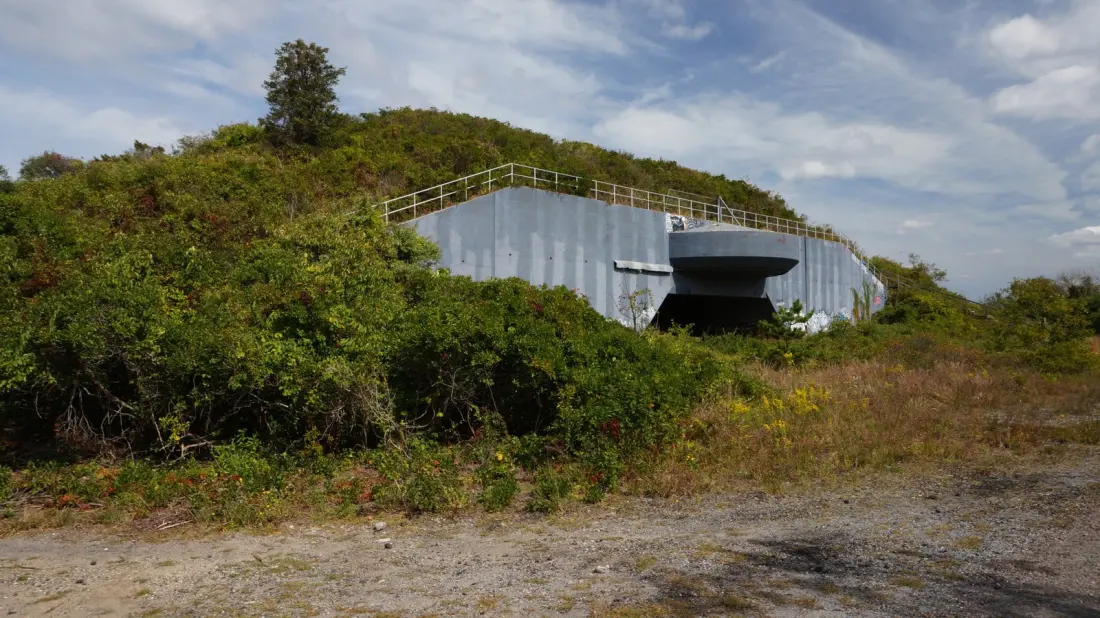
While most New Yorkers swarm Coney Island or Orchard Beach when the temperature climbs, there's a far quieter stretch of sand hiding at the end of the Rockaway Peninsula in Queens. Fort Tilden, part of Gateway National Recreation Area, was once a working Army base armed with Nike surface-to-air missiles during the Cold War. These days its batteries are crumbling into the dunes, and the whole site doubles as an easy escape for hikers, cyclists, birdwatchers and beachgoers.
The fort's story stretches back further than you might expect. A first fortification went up during the War of 1812, but the modern fort dates to 1917, when the US entered World War I and needed emergency defences for New York Harbor. Named after former New York governor Samuel J. Tilden, it kept expanding long after that war ended, with construction running into the 1930s. Between 1921 and 1923, Battery Harris was built to house two enormous guns aimed out at the Atlantic. By 1941 the base was fully operational with roughly 1,000 soldiers, and after World War II some barracks were even converted into apartments for returning veterans. The military era closed in 1974, when the fort was decommissioned and handed over to the National Park Service.
You don't need to be a history buff to enjoy what's there now. The easy 1.5-mile Fort Tilden Loop passes the vast concrete remains of Battery Harris, now splashed with graffiti and swallowed by vegetation. An observation deck above Battery Harris East would normally give you views over Jamaica Bay, though it's been closed since a fire damaged it. Biking paths crisscross the site, the National Park Service runs occasional ranger-led walks along the shoreline and dunes, and anglers can fish in the surf as long as they register with the New York Recreational Marine Fishing Agency.
Some of the old military buildings have taken on a second life too. The Rockaway Artists Alliance runs exhibitions and adult art classes on site, while the Rockaway Theater Company stages musicals and plays there several times a year, plus acting workshops for local kids.
The beach is the real draw for a hot summer day: quieter than the rest of the Rockaway coastline, even though swimming is banned and there are no lifeguards or concession stands. Bring everything you need, and note that many parking lots require seasonal permits. Getting there from Lower Manhattan takes about 90 minutes — take the 2 or 5 train to Flatbush Avenue in Brooklyn, hop on the Q35 bus to Rockaway Point Boulevard, then walk roughly 20 minutes.
For anyone who wants a bit of fresh air, oddball history and an uncrowded shoreline without leaving the city, Fort Tilden ticks all three boxes in one afternoon.