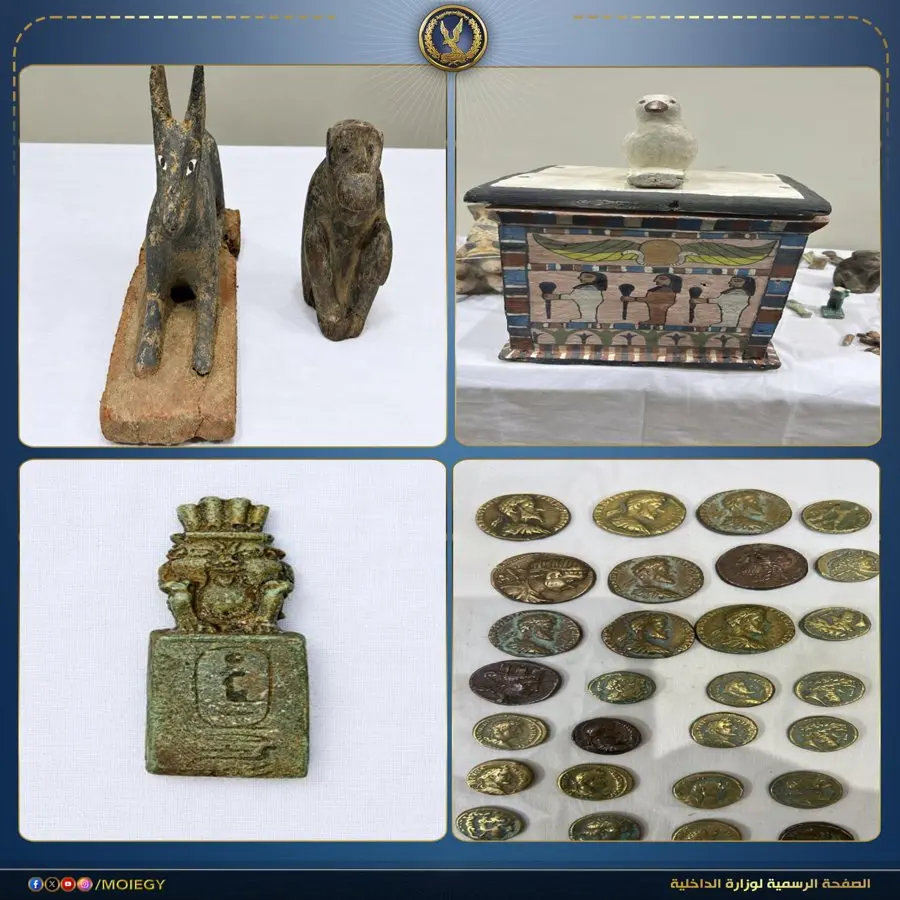
Egyptian police have seized 521 authentic antiquities in Minya Governorate, arresting two local residents accused of digging them up and storing them for illegal sale. The haul, confirmed by experts to span the Pharaonic, Greek and Roman eras, was recovered in a raid on 22 October after a joint investigation by the Tourism and Antiquities Police, Public Security and the Minya Security Directorate.
According to the Ministry of Interior, the two suspects — both from Samalut district — admitted the objects came from unlicensed excavations in a mountainous area of Samalut that falls under the jurisdiction of the Ministry of Tourism and Antiquities. With legal authorisations in hand, officers raided the property where the artefacts were being kept and launched proceedings against the pair.
The case highlights the stakes. Under Egypt's Antiquities Protection Law No. 117 of 1983, unlicensed digging and trading in antiquities are criminal offences. Illegal excavation alone can bring three to seven years in prison plus fines between EGP 500,000 (roughly USD 9,000) and EGP 1 million (USD 18,000). Smuggling carries even harsher penalties.
For travellers, the story is a reminder of what makes Middle Egypt compelling in the first place. Minya, a few hours south of Cairo along the Nile, is one of the country's quieter archaeological frontiers — home to the rock-cut tombs of Beni Hasan, the ruins of Tell el-Amarna built for Akhenaten's short-lived capital, and the necropolis of Tuna el-Gebel. It sees a fraction of the visitor numbers of Luxor or Giza, which is precisely its appeal for travellers who want major ancient sites without the crowds. Ongoing enforcement like this matters for tourism too: protecting sites from looting keeps them intact and legitimately accessible for the visitors Egypt is working hard to attract.
If you're drawn to ancient Egypt beyond the headline sites, Minya rewards a couple of days, ideally reached as part of a guided itinerary since independent travel in the governorate is more restricted than in the big tourist hubs.