Skip the Edinburgh crowds for an afternoon and you'll find Prestonpans, a small ex-mining town on the south shore of the Firth of Forth, about 10 miles from the Scottish capital. It's long carried an industrial, working-town reputation — not entirely fairly — and it rewards anyone who gives it a half-day: a rocky beach, 400 years of visible history, and more public art per square mile than anywhere else in Scotland.
History runs deep here. Prestonpans was the site of Britain's first recorded coal mine in the 13th century, and by the 15th it was mass-producing salt using Forth seawater. Later came soap, glass, pottery, bricks, and the world's first sulphuric acid factory in 1749. It also entered the history books in war: the Jacobite victory over the Hanoverians in 1745 happened on ground just outside town. You can walk the battlefield, visit a monument, and explore the Battle of Prestonpans Museum inside the 19th-century town hall — and if you time it right, catch the full reenactment, held every three years with the next one in 2027.
The town wears its past on its walls, literally. A mural project launched in the early 2000s has left Prestonpans with more than 55 painted scenes covering everything from the 1745 battle to coal mining, naturalist John Muir, and the witch hunts that killed 81 townspeople (pardon finally issued in 2004). It's earned the nickname "Scotland's mural town," and the heritage trust's Murals Trail is the best way to see them.
Architecture buffs get their fill too. Prestongrange Church dates from 1596, one of the first built after the Reformation; the Preston Cross of 1617 is among Scotland's best-preserved market crosses; and the ruined 15th-century Preston Tower sits behind gardens and a dovecote. Prestongrange Museum, a free open-air site at the old colliery (April to September, Wednesdays to Sundays), showcases an 1874 water pump that once moved 4.5 million litres a day and a vast Hoffman Kiln chimney that turned out five million bricks a year until the 1970s.
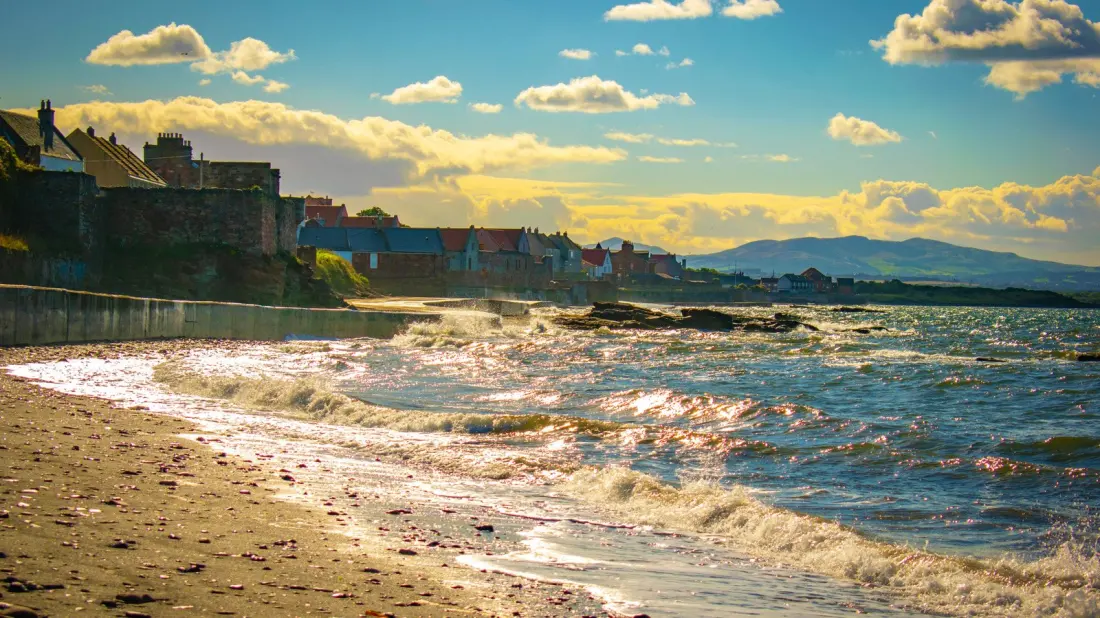
For a slower moment, Prestonpans Beach is a rugged gravel shore with rock pools for kids, sweeping Forth views, and — fittingly — good sea-glass hunting, possibly a legacy of the town's 17th-century glass industry. There are no facilities, so come for a walk rather than a beach day. Keen walkers can join the John Muir Way, the 134-mile coast-to-coast route from Helensburgh to Dunbar, which passes through en route to neighbouring Musselburgh.
Getting there is easy: trains run roughly hourly from Edinburgh Waverley, take about 15 minutes and cost around $7.50 each way, or it's a 30-minute drive. If you've done Edinburgh's main sights and want somewhere that packs industrial history, street art and a quiet shoreline into one walkable visit, Prestonpans is an easy win.
Story via Islands.