Most visitors to Oregon fixate on the coast: sea stacks, fog, rugged beaches. But head east out of Portland instead and the state changes character completely — green forests thin into golden sagebrush, and the vibe shifts from Pacific Northwest to genuine American West.
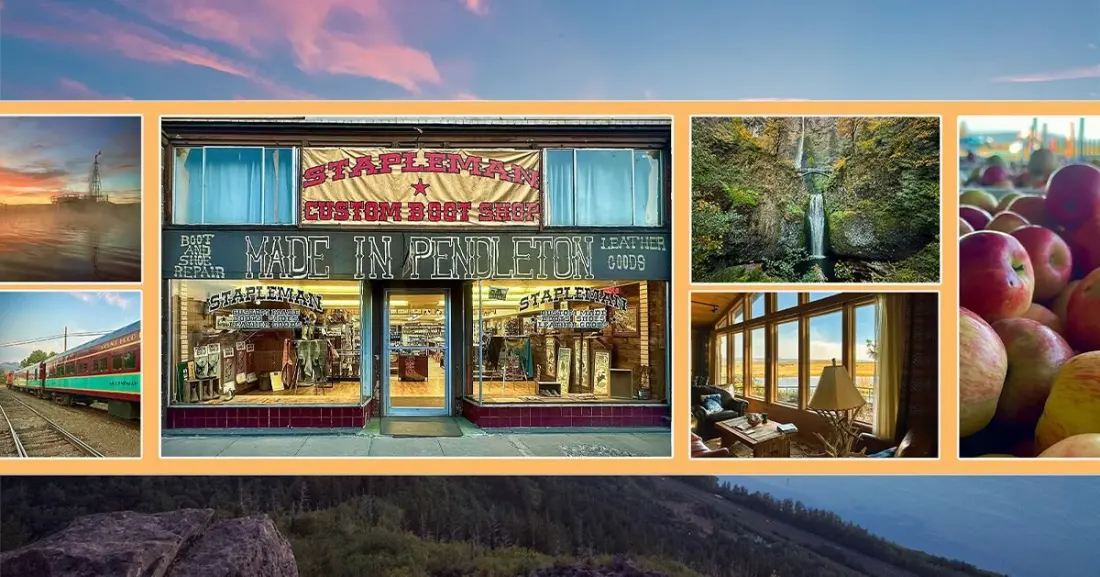
The route follows the Columbia River Gorge first, where waterfall after waterfall drops through the gorge walls, then climbs into the Hood River Valley, a fruit-growing region stacked with orchards that are especially atmospheric in autumn. Hood River itself has become a base for windsurfers and craft-cider fans, and it makes a natural first overnight stop.
Continue east and you hit Pendleton, a cowboy town with a serious cultural backbone. It's famous for the Pendleton Round-Up rodeo each September and for the Pendleton Woolen Mills, whose blankets and fabrics have become synonymous with Native American-inspired design — produced in collaboration with the region's Indigenous communities for over a century. The town is a good place to eat well, learn about local tribal history, and stock up on woollens before the landscape flattens out.
Beyond Pendleton, the high desert takes over, and this is where the trip gets quietly surreal. Near the small town of Burns, Crane Hot Springs offers 100-degree geothermal soaking under skies dark enough for full Milky Way views — no light pollution, no crowds, just steam rising off the water at sunrise. Travellers who make it this far describe a sense of open-space freedom that's hard to find anywhere on the populated western side of the state.
What makes this drive stand out is the layering: working farms, Indigenous culture, contemporary maker studios, and Wild West history all coexist along one route. It's less a checklist of attractions and more a slow shift in scenery and mood — waterfalls to orchards to rodeo country to desert hot springs, ideally spread over four to six days in fall, when the orchard valley turns gold and the desert heat softens.
For anyone who's already done Portland and the coast, this is the Oregon most people skip — and the part locals are often most protective of.