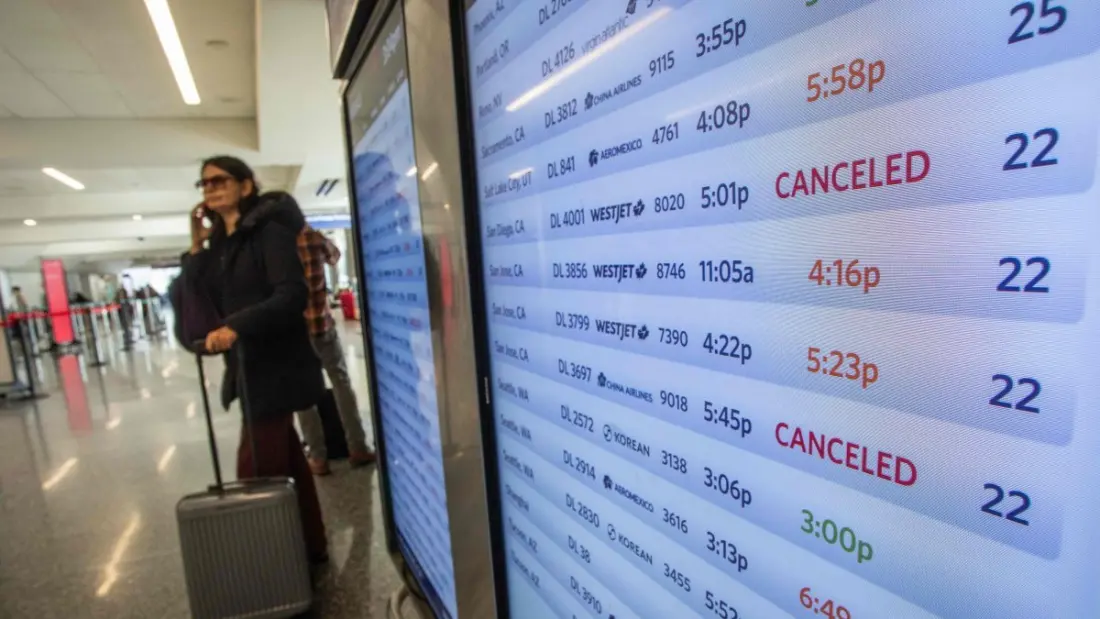
Travellers across the United States faced the biggest air travel meltdown since 2001 this week, after the Federal Aviation Administration ordered every plane in the country to stay on the ground. The nationwide ground stop lasted four hours, but the ripple effects were far larger: more than 6,600 cancellations and roughly 8,600 delays, according to FlightRadar24. It was only the third nationwide ground stop the FAA has issued this century.
The cause, according to Transportation Secretary Sean Duffy, was not an attack or malicious act but a failure in aging network technology underpinning the radar and communications systems that manage US air traffic. Officials moved quickly to reassure the public, though for many passengers the scale of the shutdown stirred uncomfortable echoes of the September 11 hijackings, when US airspace was last fully closed.
The human fallout was immediate. At Reagan Washington National Airport, departure boards were almost entirely red with delays and cancellations. A passenger bound for San Francisco said he could have rebooked around the problem if anyone had told him how long it would last. An accountant flying Newark to Toronto missed her connection and pushed a high school reunion to the next day. A Dallas-to-New York flight learned mid-air that it would be among the last planes in the country allowed to land, then sat on a jammed tarmac at LaGuardia for about an hour waiting for a gate.
Even after the FAA lifted the stop, tens of thousands of people were left stranded, some facing overnight stays. One traveller bound for Togo on Ethiopian Airlines watched his departure slip nine hours, resigning himself to sleeping at Newark Liberty. Not everyone was angry: a 71-year-old retired Air Force veteran waiting at San Jose for a flight to Palm Springs said she would rather be inconvenienced than fly with compromised safety.
For holiday planners, the takeaway is less about panic and more about resilience. US air traffic control infrastructure is clearly creaking, and a single technical fault can freeze the entire national airspace. If you are flying domestically in the US, or connecting through hubs like Newark, LaGuardia or Washington National, build buffer time into your itinerary, especially around tightly timed events like weddings, tours or cruise departures. Book morning flights when possible — they are less likely to inherit delays. Know your rebooking options before you fly, keep essentials in your carry-on in case of an overnight airport stay, and monitor airline apps rather than relying on airport screens. Travel insurance that covers extended delays is worth considering on longer or multi-leg trips.
It is also a reminder that when authorities ground flights, it is usually a safety decision rather than an inconvenience for its own sake — patience, flexible tickets and a spare plan beat frustration.