Friday's four-hour nationwide ground stop in the United States stranded thousands of passengers, but the press conference afterwards may have raised more questions than it answered. The core issue: America's air traffic control communications system failed, and the two officials explaining it told noticeably different stories about why.
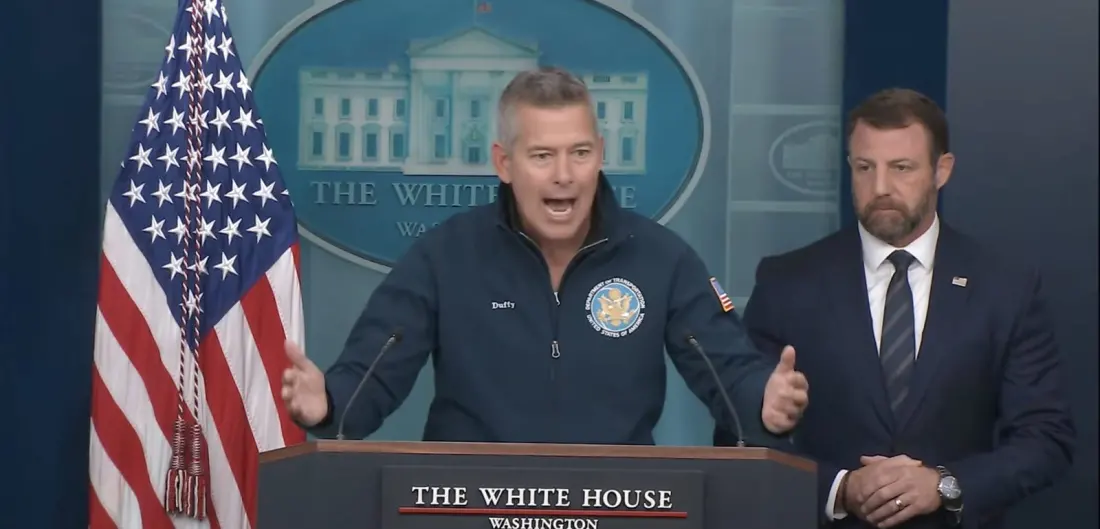
Transportation Secretary Sean Duffy pointed at old hardware. The routers and switches, he said, were 'overloaded with data' and began returning inconsistent information, forcing the FAA to shut the system down. His key defence was that the brand-new IP switches stayed online — so Congress should fund the rest of the modernisation. But old equipment does not turn fragile overnight, which left the obvious question hanging: what actually changed on Friday?
Homeland Security Secretary Markwayne Mullin filled in the gap Duffy skipped. The working theory, he said, is that the process of installing patches and new technology into the system overwhelmed the older network it was supposed to improve. In other words, the modernisation effort itself may have triggered the failure. The two accounts can technically coexist — new kit can stay up while the changes around it destabilise legacy equipment — but Duffy's framing conveniently omitted the possibility that the transition was mismanaged.
Instead of a candid root-cause explanation, the briefing featured praise for the president, blame aimed at Congress, and a funding demand — Duffy asked for $50 billion, up from the $30 billion he and White House budget director Russell Vought had requested that same morning. Congress did already approve $12.5 billion over five years in July 2025 for air traffic control upgrades and controller hiring. The writer's point is a fair one for anyone who flies: even a fully funded modernisation would still go through the same risky transition period, so money alone does not answer why a software or hardware change could halt departures nationwide.
There are a few reassuring notes for travellers. Stopping departures when communications become unreliable is exactly what the safety system is designed to do, and the FAA restored operations the same evening. But if you are flying through or within the US while this modernisation unfolds, expect occasional disruption risk as old and new systems coexist — and know that a ground stop is a precaution, not a sign the skies are unsafe.
What travellers and industry watchers should watch for next is the FAA's completed root-cause analysis. If the investigation confirms that an inadequately tested update caused the outage, the conversation shifts from funding levels to testing standards, rollback procedures and change management — the unglamorous details that determine whether your next connection survives a system upgrade.