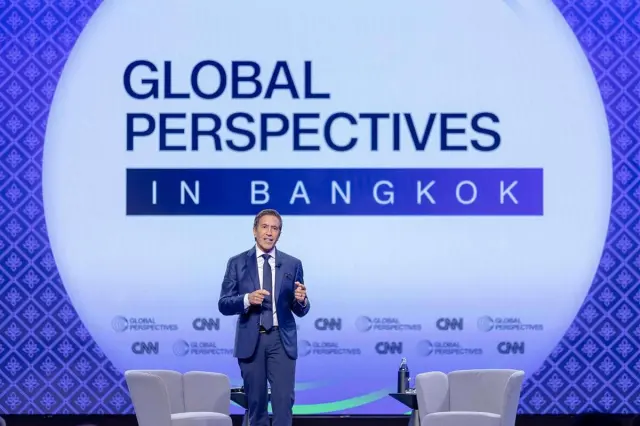
Bangkok's One Bangkok Forum turned into a sea of flags and sequins on Saturday night as Eurovision held its first-ever Asian edition — a bold test of whether the world's biggest televised live music event can win over a region already saturated with pop talent shows.
Eleven countries competed for the inaugural Asia crown, and the line-up mixes household names with unlikely choices. Malaysia sent ballad powerhouse Aina Abdul performing 'Bluest Sky'; Vietnam brought pop star Toc Tien; South Korea fielded Junhee; and Thailand's own hopes rested on Mang x Daou with 'Aroma'. Perhaps the most intriguing entrant is Mongolia's Beck, an economist who advises the deputy prime minister by day and arrived on stage in an orange-and-gold outfit he called a 'suit of a warrior'. The Philippines' Carmelle sang about female empowerment, and Nepal's Pratik Himal Rai — a self-declared Bryan Adams fan — performed a rock number with masked dancers.
The voting formula is the same as in Europe: half from national juries, half from viewers, with no country allowed to vote for itself. In Europe that has often made the results a proxy for diplomatic relationships, but executive producer Assaf Blecher described the Asian edition as 'a little bit more innocent', with no visible geopolitical friction so far.
The timing is notable. Eurovision is celebrating its 70th birthday — and launching Abba and Celine Dion along the way — while under strain: 2026 viewing figures dropped 35 million year-on-year after five countries boycotted over Israel's participation. Organisers insist the Asia expansion has nothing to do with that controversy, pointing out they've been trying to grow the brand for years. An American version in 2022 flopped, and the signs in Bangkok were mixed: India, Japan and China all stayed away, and tickets were still on sale hours before showtime. EBU director Martin Green was realistic about the challenge, saying it could take two, three or five years to establish the brand — and reminding reporters that the very first Eurovision featured seven singers, two songs each, a pot plant and a microphone.
So why should a traveller care? The show was broadcast on commercial TV in participating countries and streamed on YouTube, with results announced around 11pm. For music lovers already in Southeast Asia, it's a rare chance to see a pan-Asian pop spectacle — and if the contest returns, Bangkok could become an annual pilgrimage for the kind of devoted fans who show up in corsets matching their favourite singer's stage colours, as one Malaysian superfan did. For now, it's an experiment worth watching: a 70-year-old European institution betting that Asia, home to the world's biggest populations and some of its most passionate music fans, is ready for its own glitter-fuelled voting night.