A new deal in Nepal will see four suspension bridges rebuilt in the Tanahun district, where a hydropower project currently under construction will flood parts of the river valley. The reservoir company behind the Tanahun Hydropower Project has signed an agreement with a Kathmandu-based joint venture contractor to replace the crossings at Chulesi, Tunibote, Dhwang and Tutuwa, with completion targeted for mid-2028.
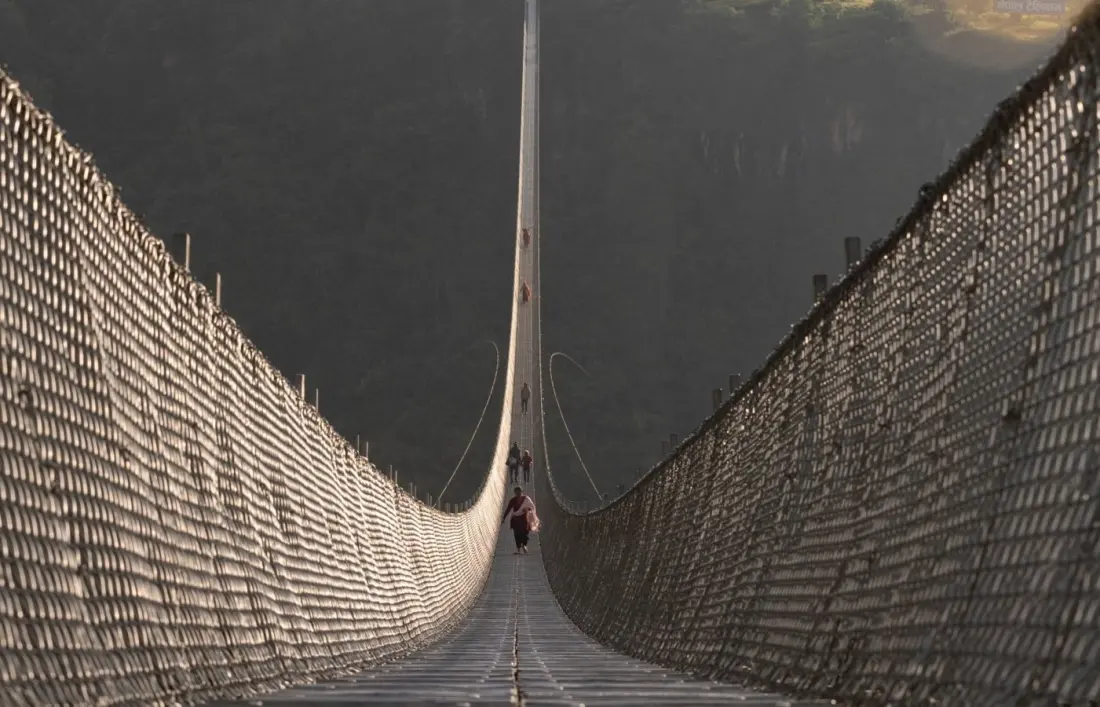
The arrangement follows a familiar pattern in Nepal's hydropower developments: when a dam creates a reservoir, existing crossings that connect villages on opposite banks have to be rebuilt at higher points or redesigned. Suspension bridges are the classic solution. Nepal has thousands of them, strung across gorge rivers from the Trishuli to the Dudh Koshi, and for rural communities they are not a picturesque extra but the only practical way to reach schools, markets and health posts.
Tanahun sits on the main corridor between Kathmandu and Pokhara, along the Marshyangdi and Trishuli river systems, and it is a district most travellers pass through without stopping. The new bridges will matter most to locals during construction, when water levels and access routes shift. For visitors, the wider takeaway is that Nepal keeps investing in the small-scale infrastructure that makes off-the-highway travel possible — the footbridges, trails and river crossings that turn a bus ride into a walking trip.
Anyone who has crossed a Nepali suspension bridge knows the peculiar thrill: swaying steel, a river churning far below, a goat calmly trotting past. They are also genuinely useful for independent walkers. Districts like Tanahun, Gorkha and Lamjung offer ridge and valley routes where you will rely on these crossings daily, well away from the crowded Annapurna and Everest trails.
Why should a traveller care? Partly timing — if you are planning a trip through Tanahun in the next couple of years, expect construction activity around the hydropower site and check locally which river crossings are open. Partly it is a reminder that Nepal's walking culture depends on infrastructure most guidebooks never mention. The bridges being replaced here are lifelines first and photo opportunities second, and their rebuild by mid-2028 should leave the valley better connected than before the dam arrived.
If your Nepal plans revolve around Pokhara and the Annapurna region, Tanahun makes an easy detour: it is close enough for a day trip or an overnight stop, with far fewer tourists. The district also holds landmarks like the hilltop temple of Bhairung at Damauli, the district headquarters. Travellers who enjoy seeing how a country actually works — its engineers, contractors and village life — will find the hydropower-and-bridges story playing out all along Nepal's middle hills.
First reported by Nepali Times.