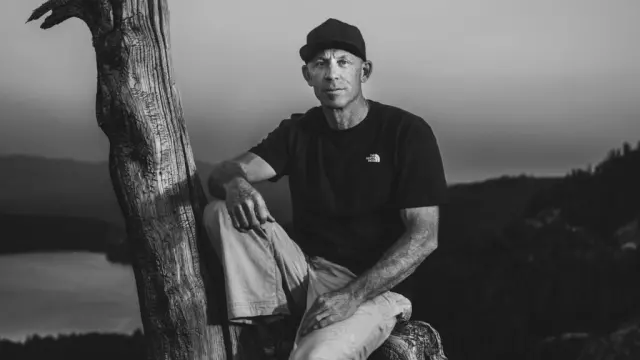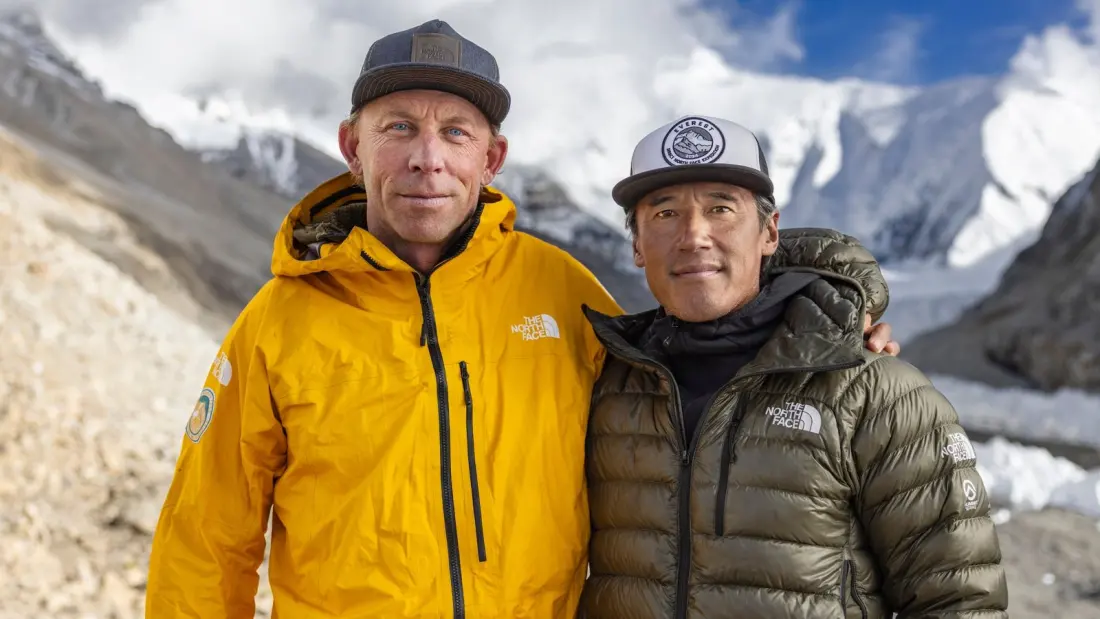
Three years ago, on 26 September 2022, ski mountaineers Hilaree Nelson and Jim Morrison stood at 26,781 feet on the summit of Manaslu, the world's eighth-highest peak. They were partners on the mountain and in life, training for a descent no one had ever completed: skiing the direct North Face of Everest. Moments after they clicked into their skis, an avalanche swept Nelson off the slope and out of Morrison's sight. Her body was found two days later, buried in the snow below the summit pyramid.
A new documentary directed by Jimmy Chin and Elizabeth Chai Vasarhelyi, the team behind Free Solo, tells what happened next. Everest: The Other Side follows Morrison as he wrestles with grief and eventually returns to finish the goal he and Nelson shared — the North Face ski line, a route linking the Hornbein and Japanese Couloirs that drops more than 9,000 vertical feet of no-fall skiing at extreme altitude. Only five people have ever climbed the mountain via those couloirs. The sole previous attempt to descend it, by snowboarder Marco Siffredi in 2002, ended with his disappearance.
The film is as much about loss as it is about altitude. Chin learned of Nelson's death in a 3 a.m. phone call from Conrad Anker and flew straight to Kathmandu; producer Anna Barnes, photographer Christopher Murphy and cinematographer Savannah Cummins followed to capture Morrison's rawest moments, including the question every mountain loss raises: why did we do this? The story also spotlights Pemba Sherpa, who filmed Nelson and Morrison on Manaslu and helped recover Nelson's body, and high-altitude cinematographer Erich Roepke. Pemba grew up in Phortse, Nepal, and first met Chin and Anker at 15 while visiting the Khumbu Climbing Center; he went on to climb K2, Broad Peak and Nanga Parbat before joining this project.
There's a broader Everest story woven in, too. The Nepali south side remains crowded — more than 1,000 climbers summited in spring 2026, with 274 on a single day in May — while the north side in China was closed to foreign climbers that season. Morrison's team ran its fall-season attempt under different pressures: post-monsoon snowpack, a short window, and the threat of winter's jet-stream winds.
For travellers, the film offers something rare: an honest look at the people and communities behind Himalayan expeditions, from Sherpa families in Phortse to the porters and cinematographers who make these projects possible. It's a compelling watch for anyone drawn to the Himalaya — or weighing how much risk is worth a summit.