If your China trip is a list of Beijing's imperial sights and Shanghai's skyline, you're missing a quieter corner of the country. Fuzhou, the capital of Fujian province on China's southeast coast, keeps a low profile despite being a city of several million people with a history stretching back more than two thousand years.
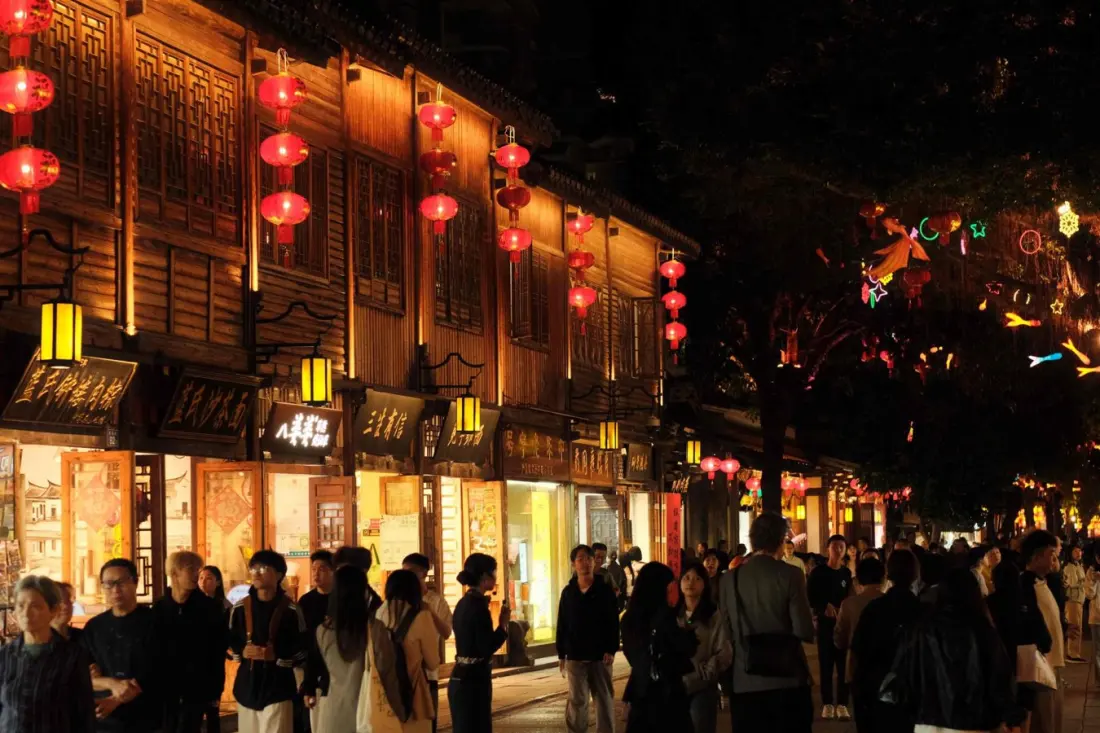
Its signature experience is the Three Lanes and Seven Alleys (Sanfang Qixiang), a beautifully preserved quarter of Ming and Qing dynasty streets, whitewashed walls and sloping gable roofs. Once the neighbourhood of scholars, officials and merchants, it's now a walkable district of tea houses, small museums and snack stalls where you can try local specialities like 'lychee pork' — sweet-and-sour pork that apparently tastes nothing like lychee — and fish balls served in broth.
Fuzhou's other calling card is banyan trees, so many that the city is nicknamed the Banyan City. They shade its parks and temple grounds, including the hillside Yantai Mountain area and the pagoda-topped hills that give the city its skyline. Add river islands like Zhongzhou, a Buddhist temple scene at Xichan Temple, and hot springs that have drawn bathers for centuries, and you have a city that rewards a slow couple of days rather than a photo stop.
There's also a maritime story here. Fuzhou was one of China's great historic ports and the departure point for the Treasure Fleet voyages of the Ming dynasty, and it remains the ancestral home of huge overseas Chinese communities — which is why you'll hear Fuzhou dialect spoken from New York to Southeast Asia. The city's shipyard heritage at Mawei, near the Min River mouth, tells that seafaring chapter in more detail.
Practically speaking, Fuzhou sits squarely on the southern China rail map. High-speed trains run along the coastal corridor linking it with Xiamen, Quanzhou, Wenzhou and onward to Shanghai and Shenzhen, so it slots naturally into a route rather than demanding a detour. Its airport has growing domestic and regional connections, and Fujian's other headline act — the UNESCO-listed tulou earthen roundhouses of the Hakka people — is reachable as a side trip.
Why does this matter for travellers? Because China's most famous cities can feel like a conveyor belt of tour groups. Fuzhou offers a genuinely local version of a Chinese city: authentic food at local prices, historic streets you can actually stroll, and few Western visitors. If you're travelling between Xiamen and Shanghai, it's an easy half-way stop that most guidebooks barely mention — and that's exactly its appeal.