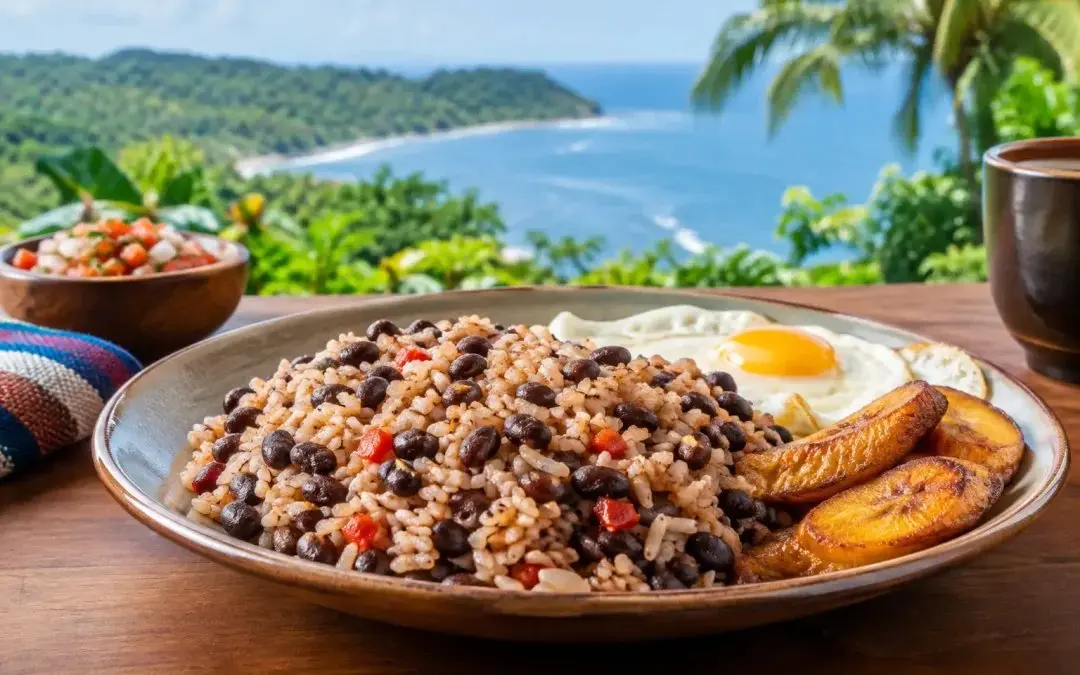
Before the coffee finishes brewing in most Costa Rican kitchens, there's already a pan going: onion and sweet pepper softening, cilantro waiting, beans and yesterday's rice about to come together as gallo pinto. The name translates as "spotted rooster," a nod to the way white rice grains get flecked dark by the beans. It's the country's unofficial national breakfast, cheap, filling and endlessly forgiving.
There's no single official version. In the Central Valley around San José, black beans are the default; in Guanacaste, cooks often favour small red beans and a looser, brothier finish. What stays constant is the method: day-old rice, beans with some of their cooking liquid, fresh aromatics and Salsa Lizano, a thin, tangy-sweet brown condiment found on every Costa Rican table. No Lizano where you live? A mix of two teaspoons Worcestershire sauce, a teaspoon of mild vinegar and a pinch of brown sugar gets you close, though purists will notice the difference.
The technique is forgiving but has a few rules worth keeping. Cold rice matters, chilled grains stay separate instead of clumping; if you've only got fresh rice, spread it on a tray and refrigerate it uncovered for 20-30 minutes first. Don't drain the beans too hard, either: the broth is what stains the rice and carries the savoury depth. A workable ratio is three cups of cold cooked rice to one and a half cups of beans plus about a third of a cup of broth. Soften the onion and pepper, simmer the beans with a tablespoon of Lizano, fold in the rice gently rather than mashing it, and cook five to seven minutes until the liquid is absorbed. Cilantro goes in at the end. Total active time is around 15 minutes.
The classic mistakes are easy to avoid: hot sticky rice, no bean broth, or piling in cumin and smoked paprika until the dish stops tasting Costa Rican. Keep the seasoning simple and let the beans lead.
To serve it properly, build a full desayuno: fried or scrambled eggs, avocado, a warm tortilla, fresh cheese and plantains browned in a little oil. A scoop of natilla, Costa Rica's answer to sour cream, is the weekend-brunch upgrade, and a bowl of pineapple, papaya or mango keeps things bright. Coffee, ideally Costa Rican, is non-negotiable. Leftovers keep four days refrigerated and many argue gallo pinto tastes better on day two, reheated in a skillet with a splash of broth.
For travellers, this is the dish you'll eat every single morning in Costa Rica, often without realising it's a point of national pride, so knowing how it's made adds a layer to the trip. For anyone who has just come back from Costa Rica and misses that first breakfast of the day, this recipe is the easiest way to bring a bit of it home. And if you're headed to the Caribbean coast, note that rice and beans there is a distinct cousin dish, cooked with coconut milk and spices, not the same thing at all.
Full recipe details via Howler Costa Rica.