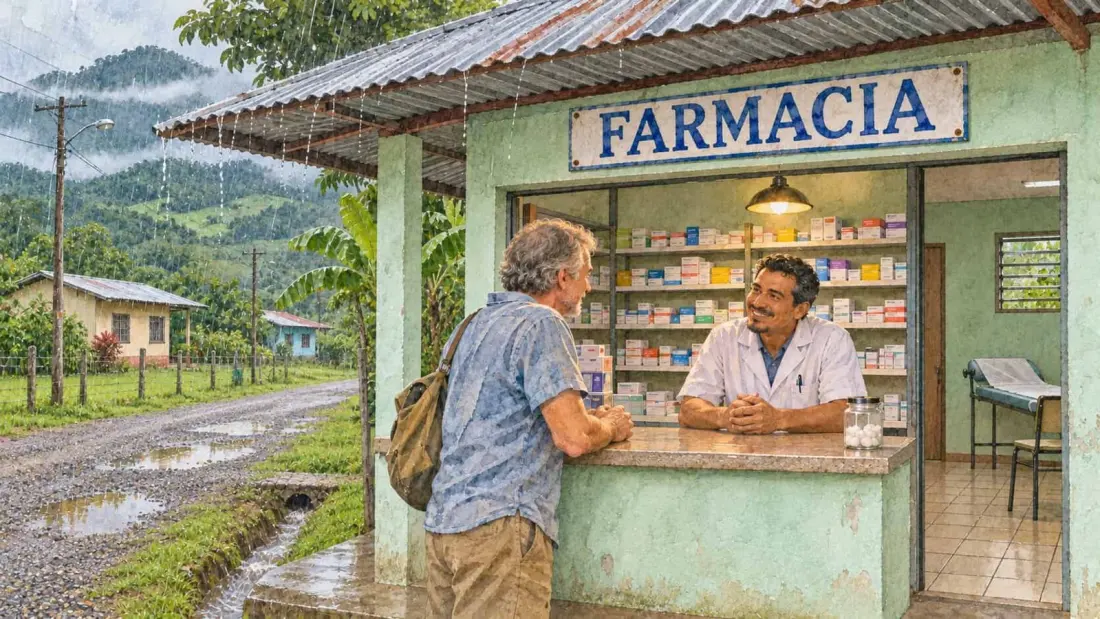
A pharmacy in Costa Rica is not just a place to fill a prescription. For expats and long-term travellers, the neighbourhood farmacia often doubles as a walk-in clinic, injection room and all-round health stop — and the rules about what you can buy over the counter have changed recently in ways worth knowing.
Until a law passed last year, many stronger medications — antibiotics, painkillers, sedatives — could be bought directly from a pharmacist with little more than a convincing story. One anecdote doing the rounds involves a visitor walking in with 'clonazepam' scribbled on paper, claiming a US prescription for insomnia, and walking out minutes later with high-potency valium. That era is largely over: the new law requires a doctor's prescription for antibiotics and other powerful drugs. The workaround is built in, though — many pharmacies now keep a doctor on duty during business hours who can write the needed prescription on the spot.
What hasn't changed is the hands-on nature of the service. The writer behind this account describes being led behind the counter into a back room during a severe asthma attack, in rainy season near the Fila Tinamastes ridges in the country's southern zones, and given an adrenaline injection straight into the thigh by the pharmacist — instant relief after a sleepless night of gasping in a half-finished cabina. No appointment, no waiting room, no paperwork. Another episode: a pinched nerve in the neck and shoulder. A syringe and several ampules of painkiller bought over the counter, then injected at home by a family member who happens to be a hospital nurse. Again, no doctor involved.
There are still smaller mom-and-pop pharmacies without a resident doctor that will dispense medication based on your described symptoms. If you trust your own diagnosis — or have a medical professional in your circle — these places can save you time and fees. The system is flexible and informal compared with the US or Europe, and that cuts both ways: quick help when you need it, but fewer safety rails. Standard precautions apply, like being told to stay seated after an adrenaline shot due to a possible drop in blood pressure. In the story above, the pharmacist never mentioned it; the patient knew from a childhood experience with a US doctor.
For travellers, the takeaway is practical. If you get sick or injured in Costa Rica, your first stop can be a farmacia rather than an emergency room. Ask if there's a doctor on duty — many do during business hours — and expect competent, personal service at a fraction of stateside prices. Bring a list of symptoms in Spanish, or have a local help you translate. It's a small window into why so many expats settle here: healthcare that runs on common sense and a back room when necessary.