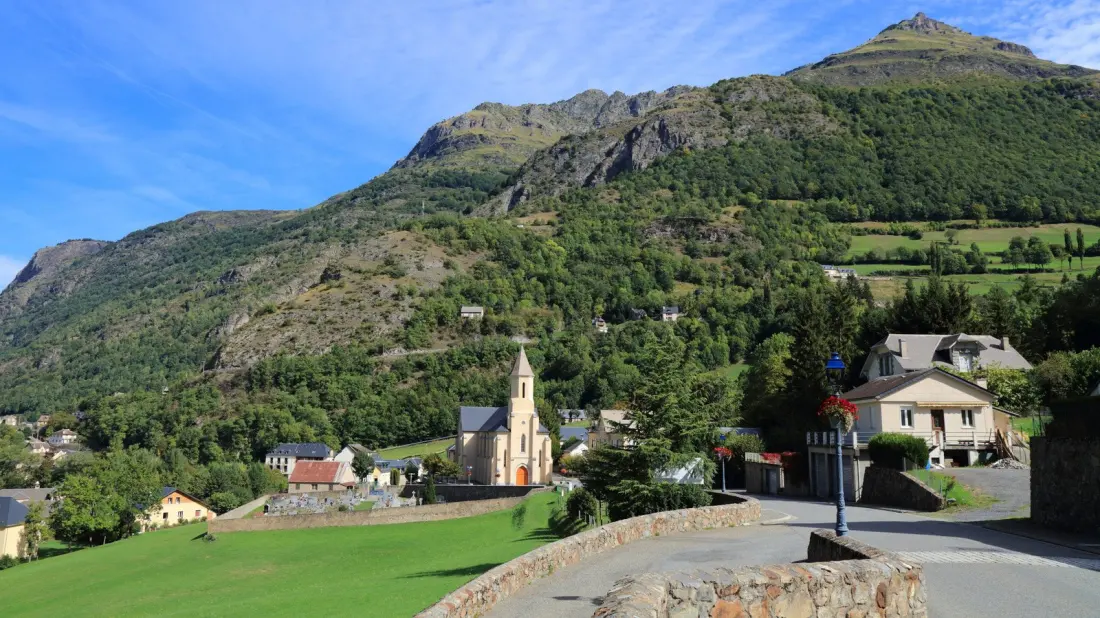
Two hours south of Lourdes, deep in the French Pyrenees, a merged commune called Gavarnie-Gèdre gives walkers front-row seats to some of Europe's most dramatic mountain scenery — without demanding an alpine expedition to see it. The area sits inside Pyrénées National Park and forms part of the UNESCO-listed Pyrénées – Mont Perdu landscape, recognised for both its geology and old pastoral traditions like transhumance, the seasonal movement of herds up to high summer pastures.
The headline act is the Cirque de Gavarnie, a vast glacial bowl ringed by grey limestone walls. A wide, mostly easy trail leaves from opposite the Gavarnie tourist office and follows the Gave de Gavarnie river past a stone bridge and cattle pens to the Hôtellerie du Cirque. Round trip it's just under five miles, and the payoff is the Gavarnie Falls, which drop 1,385 feet — one of the tallest waterfalls in France. If you fancy a much longer trek, the commune sits reasonably close to the Chemin du Piémont Pyrénéen, one of the historic walking routes toward Santiago de Compostela.
The second half of the hyphenated name matters too. Gèdre, about 15 minutes away by car, is the launchpad for the two other cirques: Troumouse and Estaubé. The Estaubé route starts at Lac des Gloriettes, a green-blue mountain lake with an easy loop of under two miles through heathland and wetlands, or a longer 4.2-mile round-trip walk into the cirque itself, threading alpine meadows, grazing animals and cascades as the walls rise ahead of you.
After the walking's done, both villages hold up as more than trailheads. Gavarnie is the busier of the two, with cafés and restaurants along its main street serving Pyrenean staples: mountain cheeses, local lamb and trout from the streams. La Kantine, one of the village's top-rated restaurants on Tripadvisor, does regional dishes on a balcony over the river — the raclette gets plenty of praise — while La Chaumière serves crêpes and omelettes on a terrace with cirque views. Gèdre is quieter, with traditional houses scattered across meadows, a neo-Gothic church, and the Millaris interpretation centre, which explains the valley's farming heritage with miniature models of all three cirques. Its standout table is Lakota, which puts a twist on mountain food — think veal sausage from a local Gèdre farm and pizzas topped with duck breast and plums.
One practical catch: public transport here is seasonal. A liO bus runs from Lourdes rail hub to the commune's tourism offices from June to September and again from December to March. Outside those windows you'll need a rental car. For hikers who find the Alps crowded and pricey, this corner of the Pyrenees is a quieter, arguably wilder alternative — big walls, big waterfalls, and a hot plate of cheese afterward.