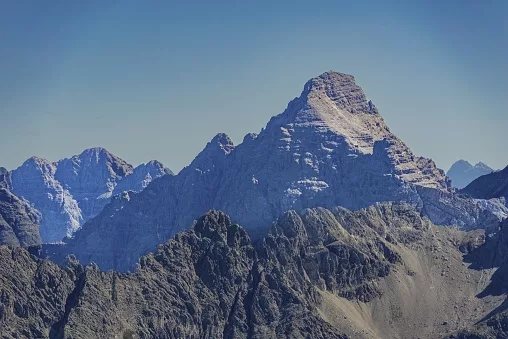
Hochvogel, a 2,592-metre summit in the Allgäu Alps straddling the German-Austrian border, is being watched around the clock by scientists who believe a major rockslide could be brewing. Estimates suggest between 250,000 and 400,000 cubic metres of rock and debris might eventually shear off the mountain.
The warning signs have been building for a while. A large fissure on the summit, first recorded back in the 19th century, has widened dramatically. In 2024, researchers at the Technical University of Munich measured it at up to six metres wide, 35 metres long and roughly 60 metres deep. In June this year, about 2,000 cubic metres of rock broke away, underlining how unstable the peak has become.
The monitoring operation is serious business. Sensors have been permanently installed since 2018 as part of a 12-year research effort, and more than 30 of them now track movement across the summit to millimetre precision, beaming data back several times an hour. Spring readings showed the mountain shifting by up to five millimetres a week — remarkably fast when you consider that typical movement across the Alps averages around 1.8 millimetres a year. A newer crack on the southwest ridge, dubbed Fissure 6, is moving at some of the highest rates of all. A team led by geology professor Michael Krautblatter returned to the summit in early October to check the terrain and equipment first-hand.
Weather appears to be a key accelerant. Johannes Leinauer of the TUM team told Deutschlandfunk that researchers have documented a clear link between intense rainfall and changes in the mountain's movement, with water and melting snow seeping into fractures and changing conditions inside the rock. With climate change making thunderstorms and downpours more frequent and intense, the fear is that rockslides could both occur more often and develop more quickly.
Hochvogel's early-warning network is one of only three of its kind, alongside setups at Partnach Gorge and Höllental Gorge in Germany. Rockslides can telegraph themselves just hours or days in advance, so the goal is to recognise the signals early enough for authorities to act.
For hikers, the practical picture is this: the Austrian-side approach to Hochvogel is already closed, while the route up from the German side remains open for now. That could change depending on what the sensors show, so anyone planning an Allgäu Alps trek should check current access notices before setting out — and think twice about the summit in heavy rain or immediately after, when the rock is most likely to be on the move.