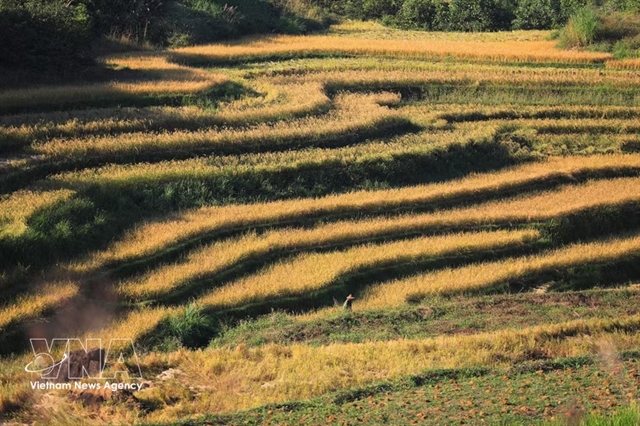
For a few weeks each autumn, the hillsides of Thượng Cốc Commune in Vietnam's Phú Thọ Province turn a deep gold as the Miền Đồi terraced rice fields ripen. On 25 October, the commune marked the moment with its 2026 Miền Đồi terraced field festival, pulling in thousands of visitors for a day built around harvest scenery and Mường culture.
The festival is organised by the local People's Committee, and its premise is simple: put the cultural and sporting programme right in the middle of the ripe fields, then let the landscape do the heavy lifting. Winding terraces wrap around forested hills, and the setting doubles as a showcase for the area's push into community-based ecotourism. Officials have framed heritage tourism as a way to lift local incomes while keeping Mường traditions alive — vice chairman Bùi Mạnh Cường described the event as a tribute to the generations who carved the terraces in the first place.
The emotional centre of the day is the new rice ceremony, a Mường ritual rooted in agricultural belief. It gives thanks to ancestors, nature and sacred beings for a good harvest and carries wishes for a peaceful, prosperous year ahead. Around it, the programme rolls out folk games, performances and community singing and dancing, including traditional thường rang and bộ mẹng melodies performed by local artisans — a chance for older culture-bearers to pass the repertoire to younger residents while visitors watch.
There's a shopping angle too. Stalls selling One Commune One Product (OCOP) goods and local farm produce let travellers take a piece of Miền Đồi home, and the committee sees linking product sales with tourism as a way to open new markets for small farmers.
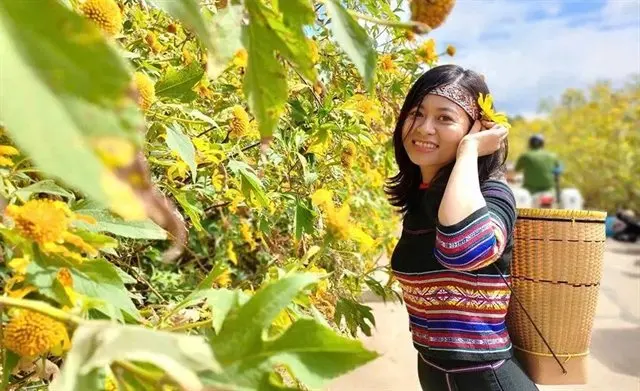
Visitors, at least, seem sold. One traveller from Quảng Ninh Province told organisers her group came specifically for harvest season and left impressed by the unspoilt fields, the golden slopes and the cool air — plus plenty of photos.
Why it matters: as Vietnam's better-known terraced-rice spots like Sapa and Mù Cang Chải get busier, Thượng Cốc is positioning itself as a lower-key alternative with a distinct Mường identity rather than the Hmong culture of the northern highlands. The harvest window is short, so timing is everything — aim for late October, when the gold peaks and the festival typically runs. Come for the views, stay for the ritual, and you'll be supporting a community that's trying to grow tourism on its own terms.