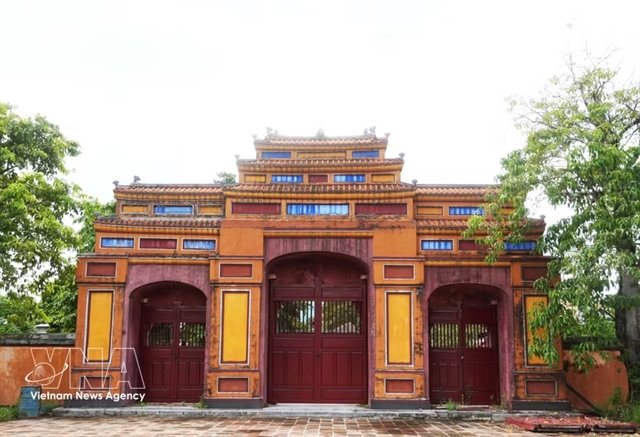
Huế is putting serious money and speed into reviving its imperial past. The former royal capital is running a string of restoration projects on Nguyễn Dynasty (1802–1945) sites, and several are finishing well ahead of schedule — good news for anyone planning a trip to central Vietnam in the next few years.
The headline project is the Nam Giao Esplanade, just south of the Huế Citadel. Built in 1806 under King Gia Long, this was where the emperors performed rituals to Heaven, and it's the only surviving altar of its kind in Vietnam still relatively intact. A conservation effort costing more than VNĐ40 billion (about US$1.55 million) launched in late 2024 was due to wrap up in mid-2027, but the Huế Monuments Conservation Centre now expects completion around October or November 2026 — roughly seven months early.
Inside the Imperial Citadel itself, two big sites are getting attention. Cần Chánh Palace, raised in 1804 and once the setting for royal audiences, diplomatic receptions and court banquets, was destroyed in 1947 and survives only as foundations. A VNĐ200-billion restoration launched in 2025 was slated to run to April 2029; it's now tipped to finish by November 2027. Nearby, the Thái Miếu — the dynasty's ancestral temple, also dating to 1804 and also destroyed in 1947 — is in the first phase of a VNĐ52-billion project covering gates, walls and foundations. That phase was meant to conclude in 2028 but should now be done by late December 2026, some 20 months early. Reconstruction of the main temple structure follows in early 2027, backed by more than VNĐ220 billion and targeted for 2031.
The bigger picture: Huế has poured nearly VNĐ4.8 trillion into restoring more than 200 heritage structures, most within the Complex of Huế Monuments, and another 27 projects worth over VNĐ1.59 trillion are planned for 2026–30.
Why should this matter to travellers? Huế's citadel has long been a place where you imagine grandeur rather than see it — war damage left many structures as foundations and outlines. These accelerated restorations mean that within the next couple of years, visitors will encounter substantially rebuilt palace and temple complexes rather than ruins under scaffolding. If you visited a decade ago, the city will look noticeably different on a return trip; if you've never been, 2027 onwards is shaping up as a strong time to go, once Cần Chánh Palace and the Nam Giao Esplanade work is complete. Note that some sites will still be active construction zones through the decade, so check what's open before you visit.
Huế slots easily into a central Vietnam route, paired with the beaches of Da Nang and Hoi An's old town a few hours south, and it's a recognised food capital — think bun bo Hue and imperial-style banquets.