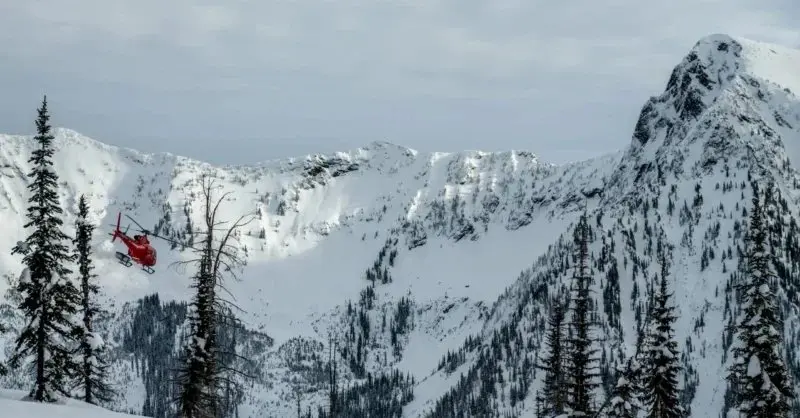
Heli-skiing skips the lift queue entirely: a helicopter drops you into backcountry powder, glaciers and open bowls that no groomed resort can touch. But the right trip depends heavily on who you're skiing with and what you want from it, which is why picking the destination matters as much as booking the helicopter.
First, the basics. Most programmes are built for strong intermediates and up — you should be comfortable off-piste, ideally around trees, though open alpine terrain offers a gentler line when visibility allows. Weather is the other big factor: helicopters can't fly in bad conditions, so check an operator's typical fly rate before booking, and favour destinations with lift-served skiing as a backup.
British Columbia dominates the sport, hosting an estimated 90 percent of the world's heli-skiing. Revelstoke claims to be its birthplace and backs it up with around 700 inches of annual snowfall in Eleven's heli terrain and a 90 percent fly rate. Revelstoke Mountain Resort covers grounded days, and the town has a solid spread of hotels and restaurants beyond lodge-based options like Eleven's.
Alaska trades reliability for scale. In the Tordrillo Mountains west of Anchorage, you get glaciers, steep alpine faces and genuine wilderness rather than tree skiing — but you need flexible dates and patience for grounded days. Tordrillo Mountain Lodge is the obvious base for skiers happy to commit several days to the mountain.
Chile runs the season in reverse. Valle Nevado in the Andes opens roughly July to September, advertising 125,000 hectares of terrain and descents of up to 1,500 vertical metres, with guides and avalanche kit included. It's one of the few operators offering refunds when weather grounds the helicopter, and the resort sits right by the heli base, so you can mix lift days and backcountry days easily.
Iceland's Troll Peninsula offers something stranger and lovelier: ridgeline runs skied toward the Arctic Ocean, plus hiking and geothermal pools on rest days. Deplar Farm is the luxury pick, and specialists rate it especially well late in the season.
Europe is more complicated — heli-skiing is banned outright in France, and Austria permits it only at Lech Zürs, from designated sites at Mehlsack and Schneetäli, with no weekend or holiday flights and a state-certified guide required. That makes Lech Zürs an add-on to a classic Arlberg ski holiday rather than a heli-first trip, though Hotel Arlberg Lech and the area's extensive lift network soften the constraints. Verbier sits similarly: designated helicopter descents can be arranged through specialists within the Four Valleys, and luxury chalet operators like Bramble Ski by Le Collectionist cater to groups who want big mountain days with good dinners.
The cleverest workaround may be the Tarentaise Valley. You can ride lifts up at La Rosière, ski into La Thuile in Italy, and be picked up by helicopter for a full day of Italian-terrain runs before skiing back to your French chalet. With seven resorts at varied elevations, the season stretches into April with warm spring snow — a good fit for families and mixed-ability groups who like a short ski and a long lunch.