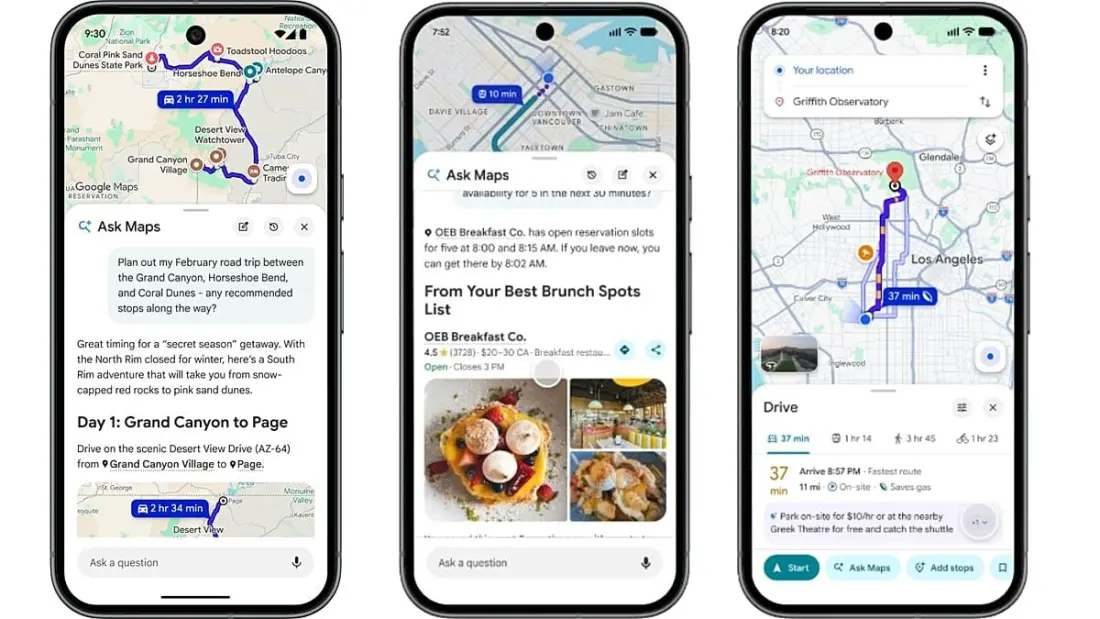
Google has switched on its Ask Maps feature across more than 30 European countries, in what the company calls the biggest update to Maps in over a decade. If you've been saving restaurants, viewpoints and hotels for a trip you keep postponing, the tool can now sift through all of that and turn it into an actual day-by-day itinerary.
The feature, powered by Google's Gemini AI, first appeared in the US and India in March this year, then spread to Australia, Brazil, Canada, Indonesia, Japan and Mexico. Its European rollout covers major markets including Spain, Germany and the UK. Under the hood it taps Google's database of over 300 million places, informed by reviews from more than 500 million contributors.
For travellers, the pitch is simple: ask Maps natural-language questions and get useful answers. You could request a three-day road trip with stops for coastal hikes and oceanfront dinners, and receive a numbered, pinned schedule with tips for each stop. Or something smaller — a festive shopping day out, a public tennis court nearby, or a spot to charge your phone. You can also search through hundreds of your own saved places using AI, rather than scrolling manually.
The itineraries come with real-time context: traffic, opening times and, in Google's words, "what the vibe is at your next stop". Plans can be shared with travel companions and exported to Google Docs from a desktop, which is handy for anyone who likes a printed or shared itinerary rather than everything buried in one phone app.
Two caveats for European users. First, itineraries and list search are available everywhere Ask Maps has launched, but the "Know Before You Go" feature — route info on potential delays and tolls — and the agentic booking tools (say, finding a 4pm nail appointment nearby) are US-only for now, with other regions to follow.
Why it matters: this shifts trip planning from a stack of screenshots and notes apps into the map itself, and it's free with the Maps app you probably already have. It's most useful for self-planners — road trippers, city-breakers and anyone juggling a long saved-places list — though the scheduling is only as good as Google's data, so it's worth sanity-checking opening times and seasonal closures for smaller spots. With the festive season approaching, Google is clearly betting on people using it for shopping trips and short getaways. Try it on your next weekend away and see whether the AI's route beats your own.