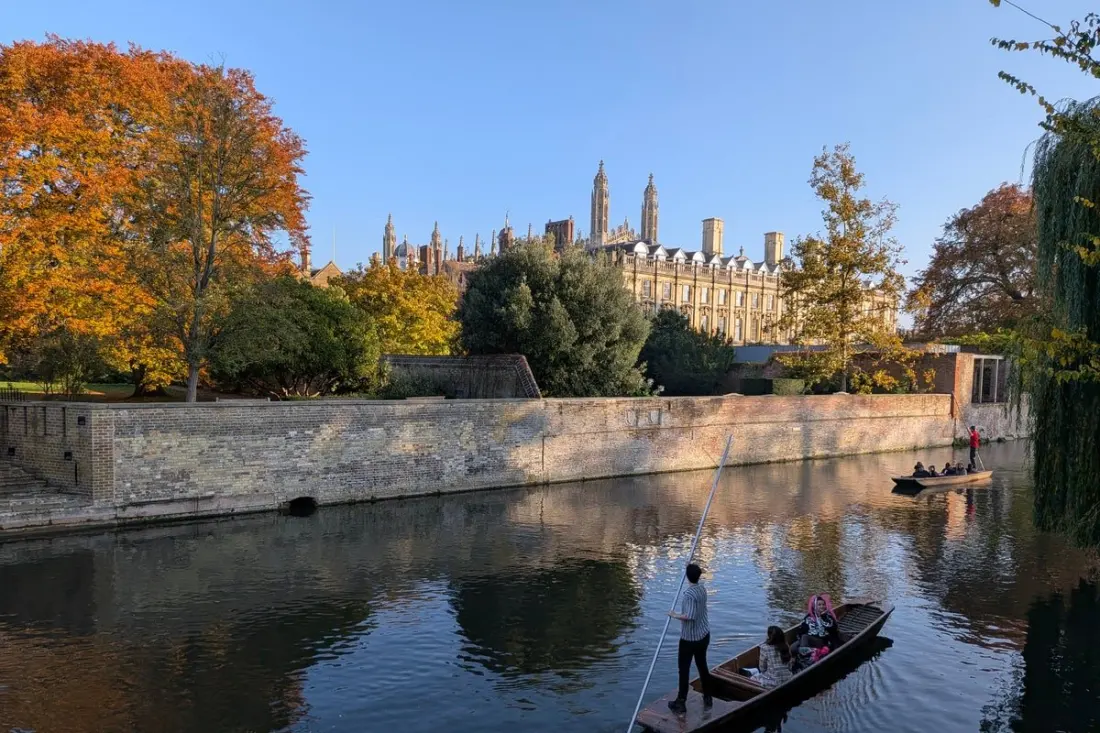
Cambridge looks its best in October, when the colleges and the River Cam are ringed with autumn colour — but that's also peak season, timed with the new student intake. Push your trip to November and you keep the atmosphere while losing the crowds. A recent first-person guide to the city suggests it's the ideal window for a weekend built around books, art and food.
Start at the train station end: the Cambridge University Botanic Garden is prime leaf-peeping territory, with tree-lined avenues plus hothouses for colder days. Two minutes away, the Fitzwilliam Museum is free to enter and currently hosting 'A Call to Art: William Morris and the Pre-Raphaelites' (running to May 2027), which spotlights some of the movement's lesser-known female makers. Nearby Pages, a laptop-limited independent coffee house, makes a good caffeine stop.
Cross town to Mill Road for the city's quirkier side: antique shops, cafes and eateries like Dutch-inspired Buren and the French Fancett's (book ahead). The David Parr House — an unassuming terrace hiding hand-painted Arts and Crafts interiors by the working-class craftsman who lived there — is an easy add-on.
Bookish travellers have plenty beyond the famous Heffer's (a fixture since 1876). Try secondhand G. David's off St Edward's Passage or Henry Hardinge by the market, or Bodies in the Bookshop for crime fiction only — a few doors from the former home of Cambridge's last working hangman. For a full immersion, the University Arms, Cambridge's oldest hotel, runs a two-night 'Stay for the Story' reading retreat with a book butler, a curated reading list and a reading journal; rooms start at £200 a night, and its brasserie Parker's Tavern is a destination in itself.
Culture-wise, skip the queue at the big university museums for the independent Museum of Cambridge, in a 17th-century coaching inn, where the 'Folklore' exhibition (to May 2027) gathers fenland superstitions and 'witches bottles'. Next door, Kettle's Yard — free entry — pairs a gallery of Picasso, Miró and Brancusi with the beautifully preserved home of former Tate curator Jim Ede. For colleges, Trinity offers guided tours and the Wren Library, which holds Shakespeare first folios and original Winnie-the-Pooh manuscripts; the guide notes Virginia Woolf conceived A Room of One's Own after being refused entry there.
The classic half-day out is the riverside walk or cycle to Grantchester via Newnham, stopping at the Orchard Tea Rooms — once frequented by Woolf, E.M. Forster and Rupert Brooke — for cream tea, then a pint by the fire at The Blue Ball. In town, The Eagle (where DNA's discovery was announced) and CAMRA-backed King Street local The Champion of the Thames cover pub history old and living. And yes, still take a punt: Scudamore's trips along the Backs give you the college views without committing to one.
Trains run direct to Cambridge from London, Norwich, Brighton and Birmingham, making this an easy two-night break from much of England — best saved for the quieter, browner weeks of November.