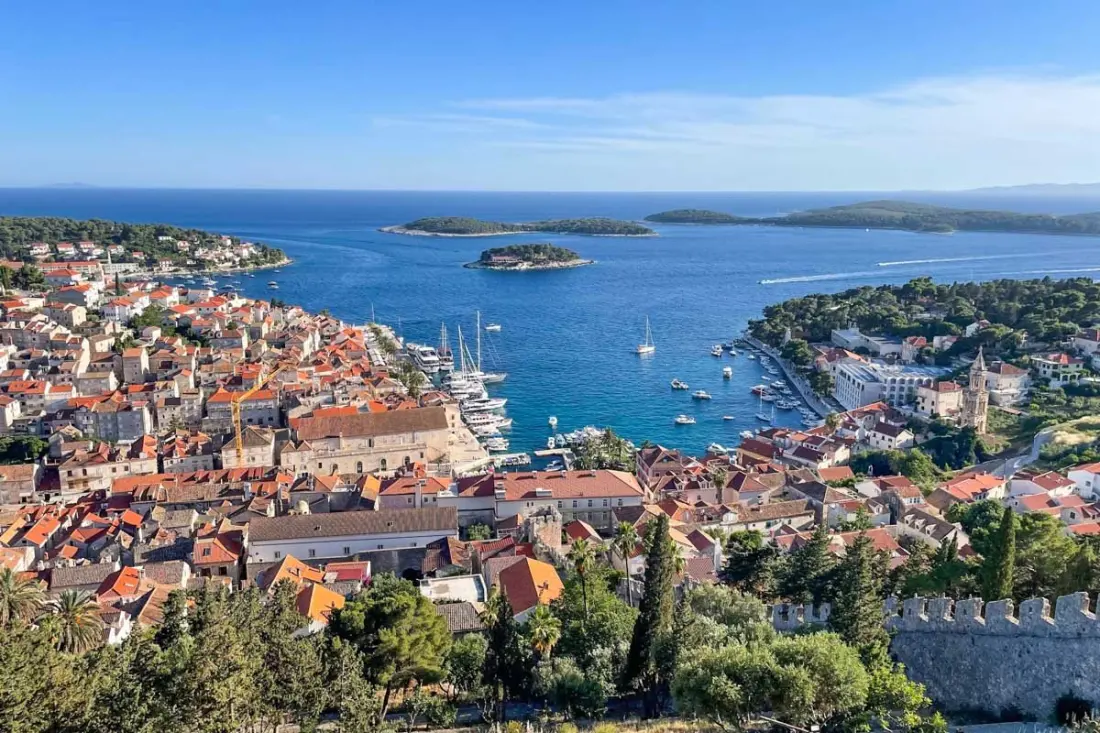
Hvar has a reputation for being Croatia's party-and-yachts island, but a recent first-hand guide from Destinationless Travel makes the case that there's far more going on here than sunset cocktails. Between kayak trips to the Pakleni Islands, a famous glowing sea cave, abandoned stone villages and family-run wineries, the island packs a surprising amount into a small area.
The single standout experience, according to the guide, is a full-day speedboat tour that hits several highlights at once: a swim in the Blue Lagoon, the Blue Cave on Biševo (where light refracting through an underwater opening turns the water electric blue), Stiniva Cove on Vis — a hidden beach wedged between towering cliffs once voted Europe's most beautiful — and a lunch stop on Vis Island, which happens to be where Mamma Mia! Here We Go Again filmed its Greek-island scenes. The day wraps at Palmižana on Sveti Klement, a turquoise bay in the Pakleni Islands lined with waterfront bars.
Closer to town, the Pakleni Islands are an easy self-guided kayak trip. Rental includes a double kayak, map, dry bag and snorkelling gear, with up to eight hours to paddle between beaches and swim at your own pace. The writer recommends setting off in the morning and leaving time for a seafood lunch at Tri Grede in Ždrilca Bay.
Back on land, Hvar Town rewards unhurried wandering. St. Stephen's Square is the largest square in Dalmatia, the Franciscan Monastery houses a museum and a notable Last Supper painting, and the Riva promenade is the place for an evening drink once the harbour lights come on. Above town, the Spanish Fortress (also called Fortica or Španjola) offers the best views over the rooftops and out to the Pakleni Islands. It's a steep 15–25 minute uphill walk — or you can reach it on a private tuk-tuk tour that also stops at Malo Grablje, a stone village abandoned in the 1960s when residents moved to the coast for tourism work, plus Velo Grablje, once a lavender-producing hub. Entry to the fortress costs €12 and includes the dungeon and passages where residents sheltered during the Ottoman attack of 1571.
Wine lovers should head inland: Hvar has a long Dalmatian winemaking tradition, and tastings at family-run wineries near Jelsa — often paired with local olive oil — are an easy afternoon from town. Beach fans can also opt for a private boat day to the dramatic Red Rocks, quiet Lucisca Beach and Dubovica Beach on the island's south coast.
Practical notes worth knowing before you book anything: Hvar Town is compact but hilly, so travellers with mobility concerns should stay near the waterfront, and some hotels involve lots of stairs. Cash still matters — several businesses offer 10–20% discounts for paying in cash, though watch ATM fees and always withdraw in euros. And in summer, book restaurants, boats and tours well in advance; the island gets seriously busy. The writer suggests a three-day split: tuk-tuk and Old Town plus kayaking on day one, the Blue Cave and Vis by speedboat on day two, then e-biking and wine tasting on day three.