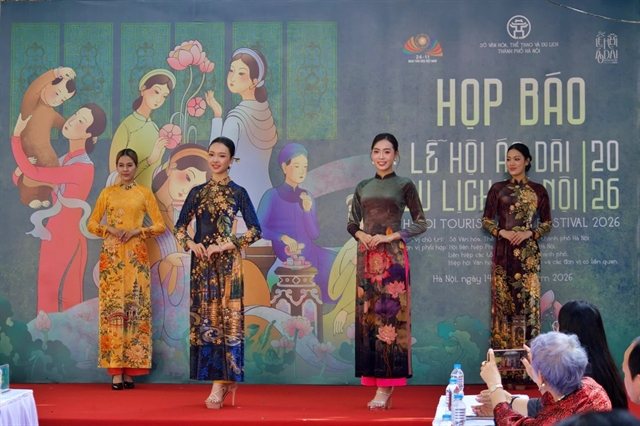
If you're drawn to Vietnamese culture rather than just beaches, there's a new date worth pencilling in. Hà Nội will host its Tourism Áo Dài Festival from 21 to 23 November 2026, centred on the Hà Nội Museum with events spilling out across the capital — all celebrating the country's flowing traditional long dress.
The opening night on 21 November features an artistic programme with nine áo dài collections from designers and artisans. But the big draw comes the next morning, when around 1,300 participants parade around Hoàn Kiếm Lake, the leafy heart of the old city. Organisers are also aiming for a national record: the largest-ever gathering of men wearing áo dài, with 500 signed up. That's a notable twist for a garment usually associated with women, and it should make for an unusually photogenic scene against the lake's temple-backed waterfront.
Elsewhere in the programme, the Hà Nội Women's Union stages a mass performance themed around capital women and Vietnamese pride, an online photo contest hands out awards, and 50 high-achieving female students receive áo dài of their own. The design contest Traditional Beauty – Contemporary Spirit brings ten student collections from five Hà Nội universities to the final, while Mầm Di Sản (Seeds of Heritage) puts children and teenagers on stage to keep the tradition alive with the next generation.
For hands-on travellers, the museum grounds will host four exhibition spaces across all three days — traditional craft village products, áo dài collections, handmade accessories and student design ideas. Artisans from the Trạch Xá and Vạn Phúc craft villages in Mỹ Đức will demonstrate traditional tailoring, and you can try painting, embroidery, jewellery-making and tea tasting, plus folk games and photo sessions. The festival closes on 23 November with a final fashion programme led by designer Nhật Thực and colleagues from the Vietnam Áo Dài Cultural Association.
There's a bigger story behind the party. Officials are compiling a scientific dossier to seek UNESCO recognition for the áo dài on the Intangible Cultural Heritage list during 2027–2030, and the city wants the dress worn in daily life — not pulled out only for festivals. In that sense, the festival doubles as a marketing push for Hà Nội as a creative, heritage-rich destination.
Why should a visitor care? Because late November is one of the gentler times to see Hà Nội, and the festival packs three days of free-ish, walkable culture into a compact area. Timing your trip to 21–23 November means you'd catch the Hoàn Kiếm Lake parade, meet working artisans from nearby craft villages, and see student fashion that's usually locked away in university studios. Even outside festival dates, the museum and the lake make an easy combined half-day. If you've ever thought about having an áo dài tailored, watching the Vạn Phúc silk weavers and Trạch Xá tailors at work is a rare chance to see the craft end to end — and maybe get measured while you're there.
Story via Vietnam News Life.