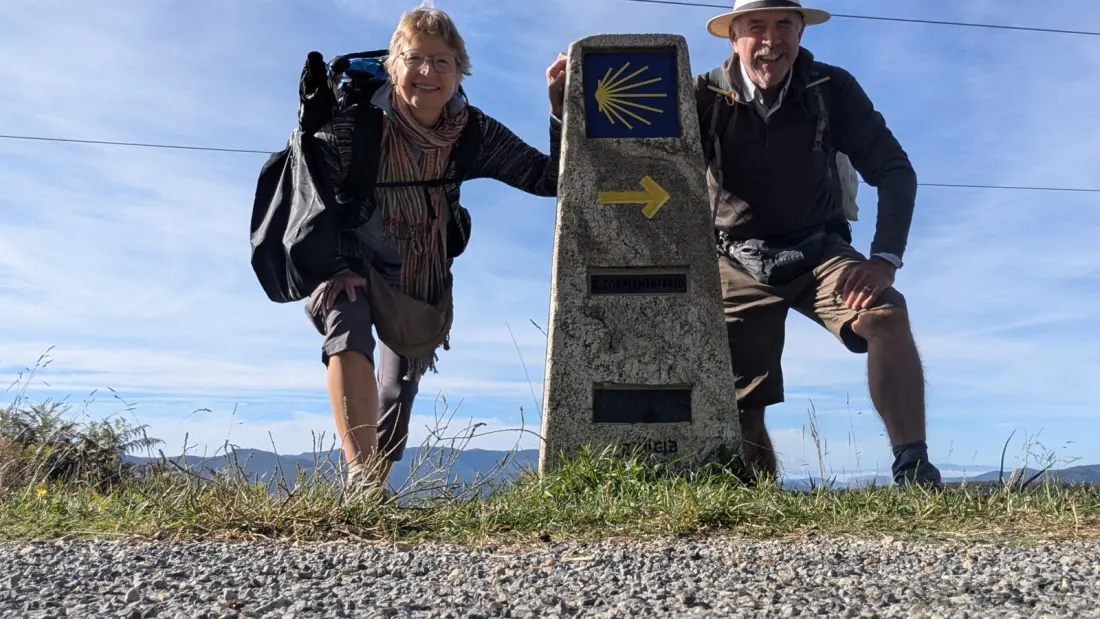
Somewhere in the green hills where Galicia begins, the Camino de Santiago crosses its final serious climb: O Cebreiro. A walking couple marking their 40th wedding anniversary recently passed through here on days 17 and 18 of their pilgrimage, and their diary is a nice window into what this stretch of the trail actually feels like.
O Cebreiro is famous for its pallozas — round, thatched stone houses dating back centuries — and its position at the top of the ascent means it lives on tourist-bus traffic. Arrive after the coaches have left and you may find the cafés closing around you. The couple's reward for the morning climb was a cold tuna empanada and cold drinks from the one café still willing to serve them, its power briefly out while an electrician worked on the wiring. A friendlyTexan pilgrim named Steve, fluent in Spanish and walking slowly after an injury from Saint-Jean-Pied-de-Port, ended up translating them out of the predicament.
From there they took the older mountain path down rather than the newer route beside the highway — a quieter choice that keeps traffic noise at bay through farm fields before rejoining the road near Fonfría. They bedded down at A Reboleira Hostel, where a private room had been given away but the hosts opened an empty dorm section just for them; four pilgrims slept in a room built for 24. Dinner that night was served in a traditional palloza, with around fifty pilgrims at long common tables.
The next day was a NERO — pilgrim slang for a "near-zero" day, with just a 90-minute stroll to O Biduedo. That meant a lazy morning of coffee and toast, an early arrival at Casa Quiroga, and an afternoon of watching cows parade through the village lanes (leaving fresh evidence everywhere). One lesson from the day: checking the news headlines for the first time in over two weeks instantly punctured the trail's calm. The couple also solved the classic two-stamps-a-day puzzle by sneaking into an empty albergue for a second credential stamp — a requirement for earning the Compostela certificate in Santiago.
Over dinner they mapped out 40 years of relocations — universities in Texas and Ghana — and realised the walk itself was their anniversary gift to each other. That's the Camino in a nutshell: long conversations, small villages, and time to notice things.
Why it matters: this stage is a realistic preview for anyone planning the final week of the French Way into Santiago. Expect steep climbs, limited afternoon food service in bus-oriented villages, simple family-run hostels, and the two-stamp rule that shapes even your rest days. Slow days like this one are part of the experience, not a failure of itinerary.