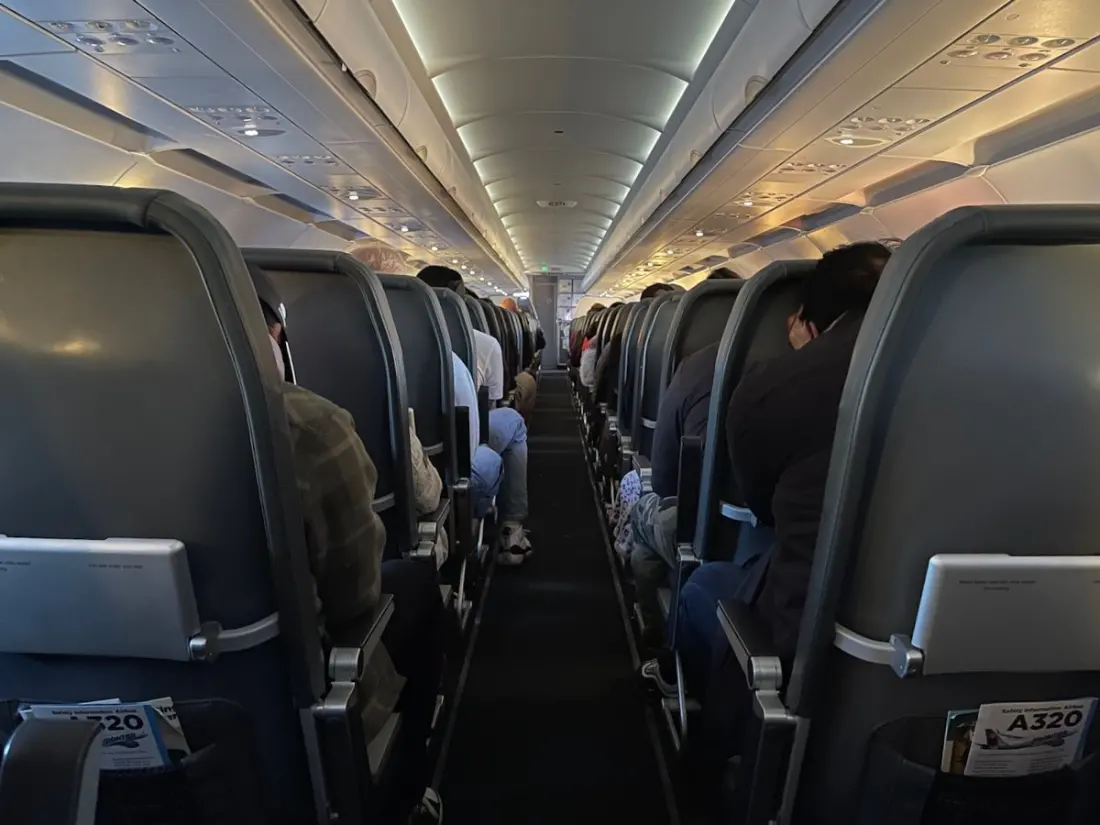
A dispute on a Frontier Airlines flight has sparked a wider conversation about what an assigned seat actually guarantees. According to a witness account posted on Reddit, a passenger boarding Frontier flight 1550 from Atlanta to Jacksonville found another man already sitting in his aisle seat, 28C. That man's explanation: he wanted to sit next to his wife, and the displaced passenger could take his middle seat, 30E, two rows back instead.
The account, which the original poster has since deleted, says a flight attendant heard the exchange but did not resolve it. Rather than escalate, the man who held the aisle assignment gave in, reportedly saying "I just want to get home," and settled into the middle seat. It is an unverified story from a single witness, and there may be missing context — but the scenario it describes is familiar enough that it merits a closer look.
The core issue is the difference between asking and taking. Seat swaps are a normal part of flying, and most travellers are happy to move when a couple ends up separated. But there is a proper way to do it: make the request from your own seat, explain the situation, and accept a no. Occupying someone's assigned seat before they board and offering your worse seat in exchange is not a negotiation — it is a done deal presented as one. A fairer approach would have been to ask the passenger next to the middle seat whether they wanted the wife's seat, leaving the aisle-seat holder out of it entirely.
The alleged crew inaction is the part that stings most. Frontier has fully unbundled its fares, and seat selection is one of the things travellers explicitly pay extra for. If seat assignments are worth charging for at booking, they should mean something on board. The straightforward resolution would have been simple: check both boarding passes, ask the man in the wrong seat to move, and only then explore voluntary swaps if anyone wanted to help.
That said, it is easy to insist you would never back down until you are the one standing in the aisle after a long day. The passenger's surrender does not make him foolish; it makes him tired. But airlines should not run aircraft where the pushiest passenger wins and the accommodating one absorbs the loss. That dynamic rewards exactly the behaviour crews ought to shut down, and it erodes trust in the seat you paid to pick.
For travellers, the practical takeaways are clear. Keep your boarding pass handy and be ready to cite your seat assignment calmly. If a crew member does not help, ask for another crew member or a gate agent before the doors close. And if you are the one hoping to sit beside a partner, ask before you sit — the worst answer you can get is no, which beats a confrontation at 30,000 feet.